

Spicy rabbit heads 麻辣兔头
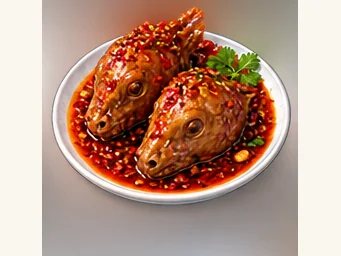
Rabbit head is a Sichuan snack strongly associated with Chengdu, especially Shuangliu’s rabbit-head shops. Expect richly seasoned, often chili-and-Sichuan-pepper-spiced meat eaten by hand from around the small bones; recipes and heat vary by shop.
What it is
Rabbit head (兔头, tùtóu) is a slow-eating, bone-in snack rather than a boneless meat dish. Chengdu’s best-known local association is Shuangliu: the district’s 2025 intangible-heritage catalogue lists Shuangliu Laoma Rabbit Head at provincial level, alongside a separate district-level rabbit-head craft entry for another maker. That confirms a local craft tradition, not that every rabbit head sold in Chengdu follows one recipe or that the dish originated exclusively here.
A reported account traces Shuangliu Laoma’s business to the 1990s, when its founder sold seasoned rabbit heads from a malatang stall. Today’s vendors have their own house styles. For the named Shuangliu Laoma craft, the source describing the heritage technique identifies a sequence of selecting and preparing the heads, coloring, controlled braising, seasoning and storage; it describes a glossy reddish-brown braise and a tender, springy finish. Those are claims about that named craft, not a citywide formula.
Flavour, texture and variations
Chili and Sichuan peppercorn give the Sichuan-style version its familiar hot-and-numbing direction, while braising spices build a deeper, savory aroma. The meat is in small pockets around the cheeks, jaw and tongue, so expect a mix of tender meat and the tactile work of eating around bone. Shop recipes, spice blends and heat levels differ; reporting also documents braised, stir-fried and dry-pot rabbit-head preparations in Chengdu. Ask the vendor which style and heat level are being served rather than assuming every shop’s version is the same.
Do not confuse rabbit head with Zigong cold-eating rabbit (自贡冷吃兔). The latter is a distinct, diced rabbit-meat dish cooked in a wok and eaten cooled; the Sichuan provincial gazetteer describes it as a Zigong specialty. It is useful context for the region’s rabbit cuisine, but it is neither a rabbit-head recipe nor a Chengdu place to visit.
How to eat it
Rabbit head is often shared as a snack, including during casual evening gatherings. It is commonly eaten by hand; napkins or disposable gloves help with the oily seasoning. A practical first approach is to pull the lower jaw away from the upper part, then pick the meat from the cheeks and tongue area. Take care around the small bones, and follow the shop’s own serving guidance.
Where to eat it
You can find Spicy rabbit heads all over Chengdu, so there is no need to seek out one particular restaurant. To find one near you, search for “麻辣兔头” in Meituan (美团) or Amap (高德地图) and check recent reviews, distance and opening hours.
More dishes to compare
Explore related local specialties and compare their names, preparation notes and ordering guidance.
Sichuan mixed-spice broad beans 怪味胡豆 →
The beans are prepared and fried or otherwise crisped, then coated with a seasoned sugar mixture. As the coating sets, it forms the rough, flavourful surface that distinguishes the snack from plain roasted beans. Expect crunch followed by sweetness, salt, chilli and sometimes Sichuan pepper numbness. The balance differs between brands; unusual flavour is not a standard measure of heat.
Zhong dumplings 钟水饺 →
Small pork-filled dumplings are boiled and dressed with sweetened soy sauce, chili oil and garlic. The sauce is a defining part of the dish rather than an optional splash of plain soy. The wrapper is tender, the filling savory, and the dressing balances sweetness, heat and fresh garlic.
Sources & reading
Recipes and servings vary between kitchens.
- Shuangliu District Intangible Cultural Heritage Project Catalogue
- Journey down the rabbit hole of Sichuan rabbit head
- Shuangliu Laoma rabbit-head braising craft
- Why rabbit head remains a Sichuan favorite
- Zigong cold-eating rabbit
- Chengdu entries in Sichuan's sixth provincial intangible heritage list
- Local food reference