

Stir-fried dough nuggets 炒疙瘩
Chao geda (炒疙瘩) is a Beijing-associated dish of small wheat-dough pieces, boiled and then stir-fried until glossy and golden with meat or seafood, vegetables and seasoning. The nuggets are springy and chewy; recipes and toppings vary, so ask what is in the particular plate.
Tap any red Chinese text to hear it in Mandarin.
What it is
The name describes the dish’s defining pieces: small, irregular nuggets of wheat dough. They are not dumplings with a filling, and this is not the soft dough-drop soup known as geda tang. Chao geda is a substantial, one-plate noodle-style meal associated with Beijing, where it is remembered as part of the city’s traditional Muslim snack repertoire. Similar dough pieces appear in other northern Chinese foods, so the Beijing connection does not mean every form of geda is unique to the capital.
From dough to wok
A Beijing food-history account describes firm wheat dough rolled or pressed out, cut into strips and pinched into small pieces. The nuggets are boiled first, drained and briefly cooled or rinsed; they are then stir-fried with meat and vegetables. The preliminary boiling cooks the centre, while the hot-wok finish coats the pieces with oil and seasoning and gives them their browned, savoury surface.
There is no single fixed mix-in list. Accounts describe beef or mutton, and also shrimp, chicken, egg, or combinations with diced cucumber, green vegetables, bean sprouts, peas or soybeans. Some preparations use yellow soybean paste; a Beijing food historian also describes later restaurant versions seasoned with soy sauce. The ingredients depend on the cook and the version ordered, rather than a universal recipe.
What to expect on the plate
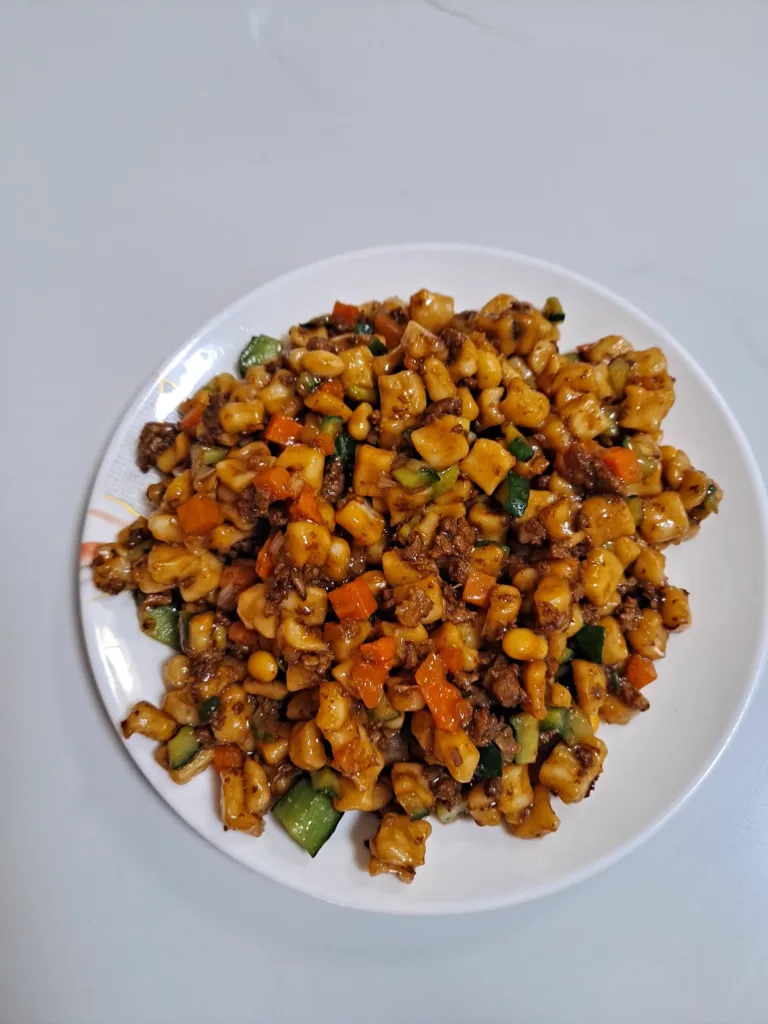
Look for nuggets ranging from small and rounded to slightly flattened, with a golden or deeper brown sheen. They should be tender inside but resilient and chewy rather than soft like soup dough. Meat, soy-based seasoning and the browned surfaces make many versions savoury and full-flavoured; crisp or juicy diced vegetables add colour and a fresher bite. Beijing descriptions emphasize the contrast of yellow-gold dough with green seasonal vegetables.
Eat it hot, while the dough pieces still have their spring. A plate can serve as both staple and stir-fry, rather than merely as a side dish. One Beijing food historian suggests pairing it with hot soup; vinegar, garlic and pickled vegetables are also recorded as home-style accompaniments, not requirements for every restaurant serving.
A Beijing story with more than one telling
The dish is well established in Beijing food writing, but the exact first inventor is not settled by the accounts available. A 2023 Beijing Daily feature, drawing on senior food writer Chen Liansheng’s research, traces its early commercial story to Guangfuguan, a Muslim noodle shop near Hufangqiao run by a mother and daughter surnamed Mu. The account says they developed the dish by boiling dough pieces and then frying them with yellow soybean paste, meat and vegetables.
Ziguangyuan’s own account gives the Ai family a separate early-twentieth-century story for its “Ai family” version and lists modern variations such as seafood, beef, lamb and muxu egg. These accounts support a longstanding Beijing tradition and changing restaurant styles, but do not justify presenting one uncontested origin story as fact.
Ordering notes
Show 炒疙瘩 Chǎo gēda when ordering. Ask 有牛肉还是羊肉? Yǒu niúròu háishi yángròu? (“Is it beef or lamb?”), 有猪肉或海鲜吗? Yǒu zhūròu huò hǎixiān ma? (“Does it contain pork or seafood?”), or 可以做素的吗? Kěyǐ zuò sù de ma? (“Can you make it vegetarian?”). Recipes based on wheat dough contain wheat; some sauces use soybean paste or soy sauce, and meat, seafood or egg may be included. Confirm the actual ingredients with the restaurant. A traditional Muslim-food history does not by itself certify the ingredients or preparation of a particular modern restaurant’s plate.
More dishes to compare
Explore related local specialties and compare their names, preparation notes and ordering guidance.
Chaogan 炒肝 →
Pork intestines and pieces of liver cook in a glossy, starch-thickened broth with plenty of garlic. Despite the name, the finished dish is ladled into a bowl rather than served as a dry liver stir-fry. Expect soft offal, a gelatinous gravy and a pronounced garlic aroma. It is richly savory rather than delicately seasoned.
Honey-dipped ear pastries 糖耳朵 →
Thin pieces of sweetened dough are folded into ear-like shapes, fried and dipped in syrup. The syrup penetrates the folds rather than simply forming a dry sugar coating. Fresh pieces combine a lightly firm surface with a dense, chewy interior. Their lasting sweetness makes plain tea a useful accompaniment.
Sources & reading
Recipes and servings vary between kitchens.
Image credits & notes (1)
- A beef version of chao geda, with browned dough pieces, diced vegetables and soybeans. Photo: H2v5o68zPhoto: CC0 1.0