

Three-shred spring rolls 三丝春卷
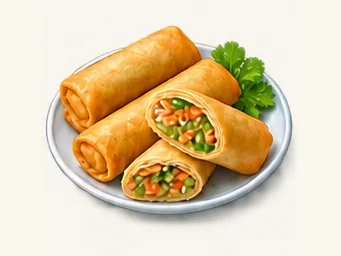
Shanghai-style savoury spring rolls wrap a finely cut, usually pork-and-vegetable filling in a thin sheet and fry it until crisp and golden. The soft, lightly bound centre may combine cabbage with shiitake, bamboo shoots or other ingredients; “three shreds” does not prescribe one universal trio. Serve hot, plain or with vinegar if offered.
Tap any red Chinese text to hear it in Mandarin.
What the name means
San si chun juan (三丝春卷) literally means “three-shred spring rolls.” In Shanghai-associated savoury versions, the shreds can include pork, napa cabbage and shiitake mushrooms. Another recipe adds winter bamboo shoots, while other recipes build around cabbage and pork and treat mushrooms or bamboo as additions. The name is a useful ordering clue, not a guaranteed ingredient list.
These rolls are part of Shanghai’s food repertoire, but the available recipes do not establish that Shanghai invented spring rolls or that every local kitchen follows a single formula. Sweet red-bean-paste rolls also appear alongside savoury versions in descriptions of Shanghai spring rolls.
How the filling is made
A Shanghai-style filling is often cooked before it goes into the wrapper. One local-flavour recipe stir-fries pork with baby napa cabbage, shiitake and winter bamboo shoots. A family recipe uses pork, napa cabbage and dried shiitake, seasoning them with Shaoxing wine, soy, white pepper and sesame oil. These are examples, not a required recipe.
The vegetables release moisture as they cook. Some recipes add a little starch slurry to thicken that liquid around the filling, rather than leaving it watery; others describe the cabbage and pork as a soft, cohesive “烂糊肉丝” mixture before wrapping. The cooked filling is cooled, spooned onto a thin wrapper, folded into a compact parcel and sealed. The wrapped rolls are then fried until the outside turns golden. Cooking the filling first helps keep excess moisture from softening the wrapper, while a well-fried shell should be crisp against the tender centre.
What to look for on the plate
Expect a slim, golden-brown roll with a brittle outer layer. Inside, the finely cut filling should be moist and tender rather than a loose pile of dry strands. Pork gives the savoury versions body; cabbage brings a mild, sweet vegetable note, while shiitake contributes a deeper aroma. Bamboo shoots, when included, add another distinct texture. Seasoning varies from kitchen to kitchen, so one roll may taste more peppery, wine-scented or sesame-fragrant than another.
Eat it while hot, but let the centre cool briefly after frying. Try the first bite without sauce to notice the filling; if the restaurant offers vinegar, use a little for the next bite. Vinegar is suggested with several Shanghai-style recipes, but it is not documented as a compulsory accompaniment everywhere.
Ordering and ingredient questions
Show 三丝春卷 or say sān sī chūn juǎn. Ask 里面的“三丝”是哪三样? (“Which three ingredients are in the filling?”). If you avoid meat, ask 里面有猪肉吗? Lǐmiàn yǒu zhūròu ma? (“Does it contain pork?”); recipes called spring rolls can have very different fillings, and the name alone is not a dietary guarantee.
A useful final check is 可以配醋吗? Kěyǐ pèi cù ma? (“Could I have vinegar with it?”). Let a freshly fried roll cool for a moment before biting into its centre.
More dishes to compare
Explore related local specialties and compare their names, preparation notes and ordering guidance.
Pork chop with rice cakes 排骨年糕 →
A seasoned pork chop is cooked, often with a fried coating, and served with soft rice cakes and a savory-sweet sauce. Both elements are prepared to retain their distinct textures. The meat offers browned edges and a firm bite, while the rice cakes are sticky, elastic and good at holding sauce.
Crab-and-pork soup dumplings 蟹粉小笼 →
Crab meat or roe is mixed with pork and a broth-setting component, enclosed in thin pleated wrappers and steamed. Heating turns the broth component liquid inside the dumpling. The filling is rich, savory and distinctly crab-scented, with a tender wrapper holding a very hot center. The crab-to-pork balance affects intensity and price.
Sources & reading
Recipes and servings vary between kitchens.