

Tibetan butter-and-curd cake 藏式酥酪糕
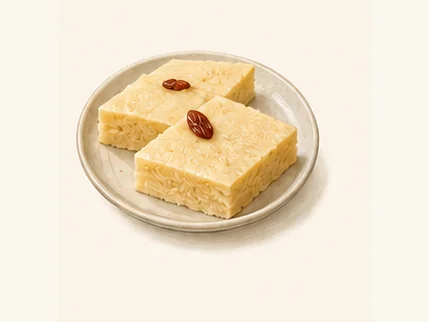
A dense Tibetan dairy sweet made from a dried, milk-derived powder mixed with butter, sugar and optional dried fruit and nuts, then shaped and steamed. In Lhasa, show 藏式酥酪糕 and ask which version is available that day.
Tap any red Chinese text to hear it in Mandarin.
What it is
藏式酥酪糕 is a regional Tibetan pastry rather than a fixed restaurant brand. The Ministry of Culture and Tourism’s Lhasa-area rural route lists 酥酪糕 among its local foods, while a national ethnic-culture resource page describes it as a pastry served to guests in Tibetan homes. These sources place it in a wider Tibetan food tradition; they do not prove that every Lhasa restaurant makes it daily.
The English word “cake” is a practical guide to its shaped form. The documented method is to shape a dairy mixture and steam it, not to bake an airy wheat sponge. Expect a compact, rich dairy sweet whose exact firmness and sweetness depend on the maker.
Ingredients and preparation
Chinese descriptions call the base a pale, milk-derived powder made after cream is extracted, known as 曲热 (qure). It is mixed with butter or cream, sugar, and additions such as 人参果/蕨麻 Rénshēnguǒ / Juémá (ginseng fruit, also called 角麻 in some descriptions), raisins and peach kernels. The mixture is shaped into round or square pieces; red and green threads may be used to form auspicious patterns, and the shaped cake is steamed in a basket. It may be presented whole or cut into slices.
This is why the dish can look more like a pressed or steamed dairy confection than a Western baked cake. Recipes vary between kitchens, so “butter-and-curd cake” should not be read as a single legally fixed recipe or a guarantee of a particular filling.
How to order and what to ask
Show the Chinese name 藏式酥酪糕 Zàngshì Sūlàogāo. You can ask: 这里有藏式酥酪糕吗? Zhèlǐ yǒu Zàngshì sūlàogāo ma? (“Do you have Tibetan butter-and-curd cake?”) Then ask whether today’s batch contains butter, milk-derived curd or powder, sugar, dried fruit, or nuts. The documented versions contain dairy, so this is not a dairy-free food. Peach kernels and other nuts may be used; do not assume an allergy-safe recipe, vegan version, or protection from cross-contact. No meat is listed in the traditional descriptions, but confirm with the maker if your diet is strict.
A small portion is a sensible first order because the recipe is concentrated and dairy-rich. Ask the seller how the batch should be stored and whether it is intended to be eaten warm, at room temperature, or taken away. A recent English Lhasa food guide also mentions related yogurt and cheese-curd cakes at bakeries and snack stalls, but it uses the different Chinese names 酸奶饼 and 奶渣饼; do not assume those names identify this exact preparation.
Where to eat it
You can find Tibetan butter-and-curd cake all over Tibet (Xizang), so there is no need to seek out one particular restaurant. To find one near you, search for “藏式酥酪糕” in Meituan (美团) or Amap (高德地图) and check recent reviews, distance and opening hours.
More dishes to compare
Explore related local specialties and compare their names, preparation notes and ordering guidance.
Yogurt rice 酸奶拌饭 →
Cooked rice is combined with dairy yogurt, either mixed together or served so the diner can adjust the proportions. Sugar or other sweet additions may be offered. The rice is soft and mildly sweet from its grain, while the yogurt is creamy and distinctly tart; temperature also changes the contrast.
Butter tea 酥油茶 →
Strong tea is blended with butter and salt until the fat is dispersed through the liquid. It is served warm and may be replenished during a meal or visit. The flavor is savory, tea-bitter and rich, with a smooth fatty mouthfeel rather than the sweetness of commercial milk tea.
Sources & reading
Recipes and servings vary between kitchens.