

Butter tea 酥油茶
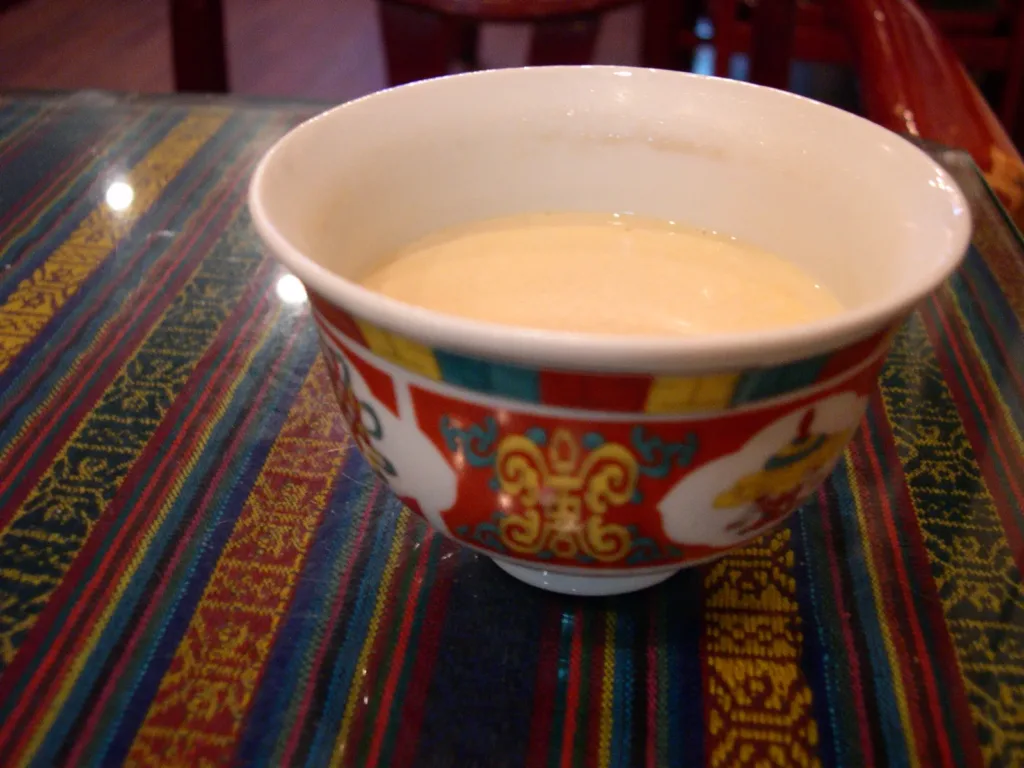
Butter tea is a hot, savoury Tibetan drink made by blending strong tea with butter and salt. In Lhasa, it is a taste of everyday hospitality and a natural partner for tsampa—not a sweet milk tea and not a treatment for altitude sickness.
Tap any red Chinese text to hear it in Mandarin.
What you are tasting
A traditional batch starts with brick tea or another dark tea simmered into a strong infusion. The tea is combined with butter and salt, then churned or vigorously stirred until the fat is dispersed into a creamy-looking liquid. The tea, dairy, salt, strength and degree of emulsification can vary between kitchens; there is no single restaurant recipe that should be treated as the only authentic version.
In Tibet, butter tea sits alongside tsampa, the roasted barley-flour staple, and belongs to everyday food and hospitality rather than to a special ceremonial menu only. It may appear at breakfast, with a snack, or when a host offers tea. In Lhasa, ask a restaurant or tea house whether it is serving 酥油茶 that day rather than assuming that every tea menu uses the same recipe.
Flavour and texture
Expect tea bitterness, salt and a pronounced buttery or dairy richness rather than sugar. When it is freshly mixed and hot, the drink should feel smooth and rounded, although a little surface fat may remain. The flavour can be unfamiliar if you expect sweet milk tea. Start with a small cup when that option is available, then sip slowly.
The Chinese name to show when ordering is 酥油茶 (suyou cha). Lhasa sweet tea is a different drink: strong tea with milk and sugar, not a sweeter name for butter tea.
Ingredients, variation and dietary questions
Butter tea normally contains dairy butter and salt, so it is not vegan or dairy-free. Local accounts describe different dairy sources and tea bases, and a kitchen may adjust the salt or richness. If you have a milk allergy, need to avoid dairy, or need a lower-salt drink, ask before ordering; do not infer ingredients from colour alone. It is also better understood as food and hospitality than as a remedy for altitude symptoms.
If tea is served in a home or hosted meal, follow the host’s lead: refilling can be part of the conversation rather than a one-time cup service. If you do not want more, pause and say so politely. If a meal is connected with a monastery or another religious setting, ask before taking photographs and keep the place’s devotional purpose ahead of the food experience.
Practical tips
Where to eat it
You can find Butter tea all over Tibet (Xizang), so there is no need to seek out one particular restaurant. To find one near you, search for “酥油茶” in Meituan (美团) or Amap (高德地图) and check recent reviews, distance and opening hours.
More dishes to compare
Explore related local specialties and compare their names, preparation notes and ordering guidance.
Lhasa sweet tea 拉萨甜茶 →
Strong black tea is mixed with milk and sugar, then kept hot for pouring into small cups. The milk type and sweetness vary between teahouses. The drink is mellow, sweet and milky, with enough tea strength to remain noticeable beneath the dairy.
Tibetan butter-and-curd cake 藏式酥酪糕 →
The ingredients are worked into a cohesive sweet or rich cake-like preparation and portioned for serving. Expect a dense dairy richness with a different texture from an airy baked sponge cake.
Sources & reading
Recipes and servings vary between kitchens.
Image credits & notes (1)
- A shallow patterned bowl holding Tibetan butter tea, photographed on 5 July 2005. Photo: YosomonoPhoto: CC BY 2.0