

Wuchang fish 武昌鱼
Wuchang fish (武昌鱼) is a Hubei freshwater-fish dish associated with Wuhan, prized for delicate, lightly fatty flesh and for the contrast between clear-soup steaming and fuller braising. Its older geographic story points to the Liangzi Lake–Fankou area by today’s Ezhou, while Wuhan helped turn the name into a widely recognized city dish.
Tap any red Chinese text to hear it in Mandarin.
What you are eating
On a menu, Wuchang fish usually means a whole-fish preparation of tuantou bream (团头鲂), the fish now generally identified with the name. It is not a single fixed recipe: Wuhan and Hubei kitchens steam, braise, fry, or otherwise season it, so ask which preparation is being served.
This geographic distinction matters. In the older history, “Wuchang” referred to the area now called Ezhou; the fish’s best-known source tradition is tied to Liangzi Lake and Fankou, not to a claim that every fish served in Wuhan was caught in the city. The species was later bred widely, so a Wuhan serving can be a city food experience even when its fish is farmed elsewhere.
Start with steaming
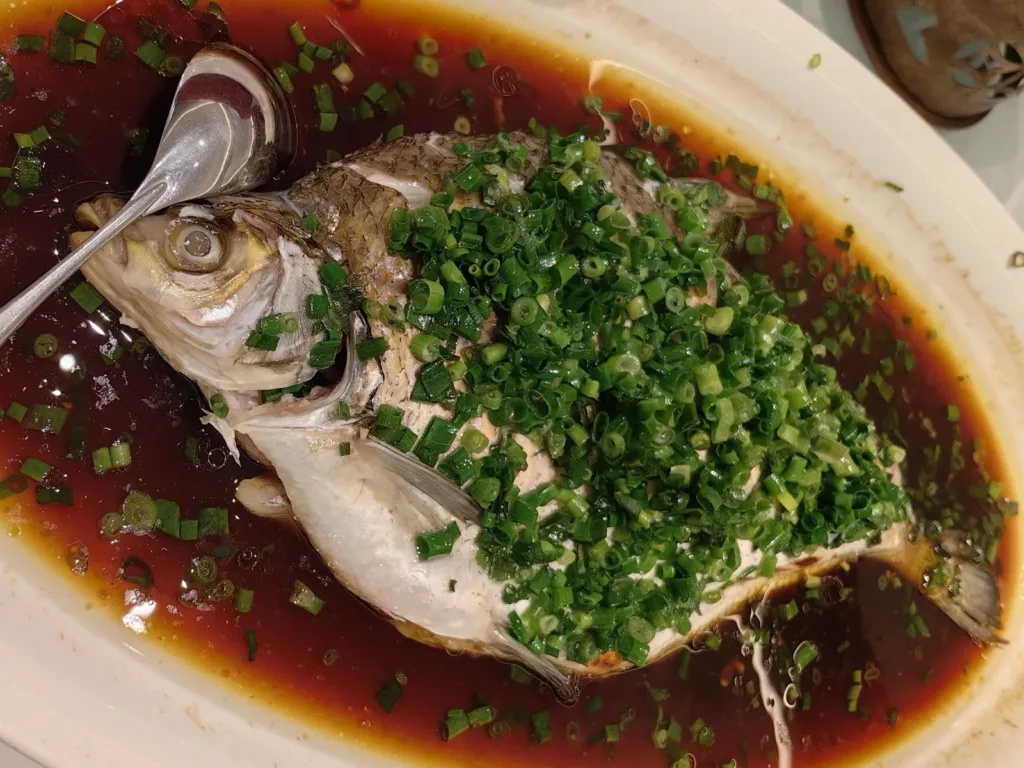
A clear-soup steamed version lets you read the ingredient: pale, tender flesh, a mild flavour, and a richer note from the fish’s fat. The Hubei government’s English food guide calls steaming in clear soup the best-flavoured preparation; braising gives you a deeper sauce and a more assertive finish.
A traditional transmitted preparation can be more elaborate than the restrained home-style description suggests. One Ezhou account starts with a cleaned, scored fish, salt and a brief blanch, then uses aromatics and ingredients such as winter bamboo shoots, shiitake, ham, scallions and ginger before finishing with chicken stock. Treat those ingredients as a documented traditional version, not a compulsory formula for every restaurant.
How to order
Show the Chinese name 武昌鱼 Wǔchāng Yú and choose the cooking method first. Ask whether the serving is whole fish, how large it is, and what the kitchen adds to the stock or sauce. It is sensible to expect bones rather than a boneless fillet. If you avoid pork or chicken, ask directly: traditional versions can include ham, pork fat, or chicken stock, and recipes vary by kitchen.
Look for it on a Hubei or Chu-cuisine menu in Wuhan and judge the actual preparation, rather than assuming that a dish with the same English name uses the same garnishes everywhere. Because the species is now widely cultivated beyond its historic waters, a restaurant’s current sourcing may differ from the Liangzi Lake story.
Why it matters in Wuhan
The name carries more than a menu description. Historical references to “Wuchang fish” predate the present-day city boundaries; later, Mao Zedong’s 1956 visit to Wuhan and the line “又食武昌鱼” helped make it familiar far beyond Hubei. Wuhan’s mid-20th-century chefs then developed a recognizable local restaurant tradition around steaming, braising and other preparations.
That is why the dish works as a Wuhan food stop when understood carefully: it connects water-rich Hubei cooking with a history that runs through Ezhou, Liangzi Lake and the modern city. The useful first order remains simple—ask for 武昌鱼 Wǔchāng Yú, choose a method, and take your time with the bones.
Where to eat it
You can find Wuchang fish all over Hubei, so there is no need to seek out one particular restaurant. To find one near you, search for “武昌鱼” in Meituan (美团) or Amap (高德地图) and check recent reviews, distance and opening hours.
More dishes to compare
Explore related local specialties and compare their names, preparation notes and ordering guidance.
Braised longsnout catfish 红烧鮰鱼 →
Pieces of longsnout catfish are cooked in a savory braise, allowing the fish and its skin to contribute body to the sauce. Aromatics and the balance of soy, wine and other seasonings vary. The flesh is tender, and the skin can feel rich and gelatinous. Sauce makes this a substantial rice accompaniment rather than a light fish soup.
Jingzhou steamed fish cake 荆沙鱼糕 →
Fish flesh is worked into a paste with binding ingredients, often including pork, and steamed into a firm cake. It is cooled or rested enough to cut into neat slices. The cake is tender and springy, with a fine-grained texture and mild fish savoriness rather than visible flakes of whole fish.
Sources & reading
Recipes and servings vary between kitchens.
Image credits & notes (1)
- Steamed Wuchang fish (武昌鱼) at 湖锦酒楼, photographed on 25 February 2026. Photo: AuongkinghePhoto: CC BY-SA 4.0