

Aksu Roast Lamb Ribs 阿克苏烤羊排
Aksu Roast Lamb Ribs is featured among the local specialties of Xinjiang.
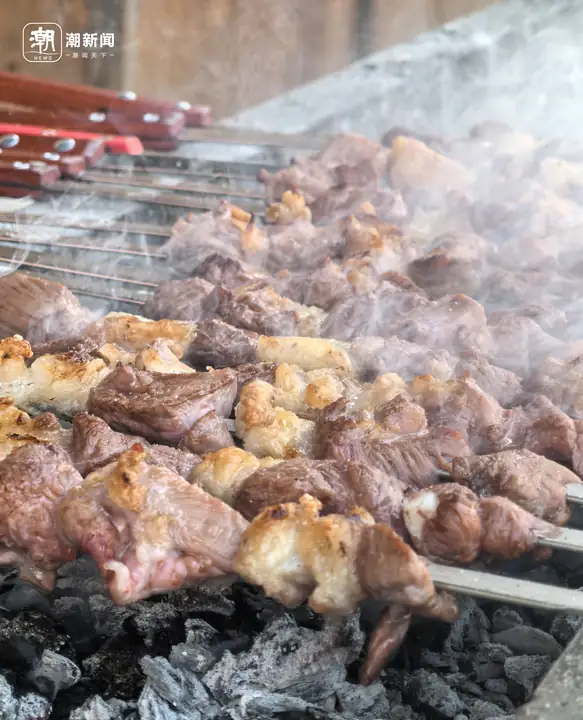
Image notes
Resized for the web; the photo itself has not been edited.
Aksu Roast Lamb Ribs (阿克苏烤羊排) is a grilled-lamb entry listed for the Aksu Prefecture area of Xinjiang; 羊排 names the rack and 烤 names the grilling.
Why a rack needs slower heat
烤 covers everything from a quick turn over hot coals to a long roast in a closed oven, and a rack sits at the slow end of that range. Because the meat stays attached to the bones in one thick piece, a fierce direct heat will blacken the surface while the middle is still pink. Cooks usually work over moderate coals or an indirect fire, turning the rack so the fat along the bone renders gradually and bastes the meat.
Char, fat and salt
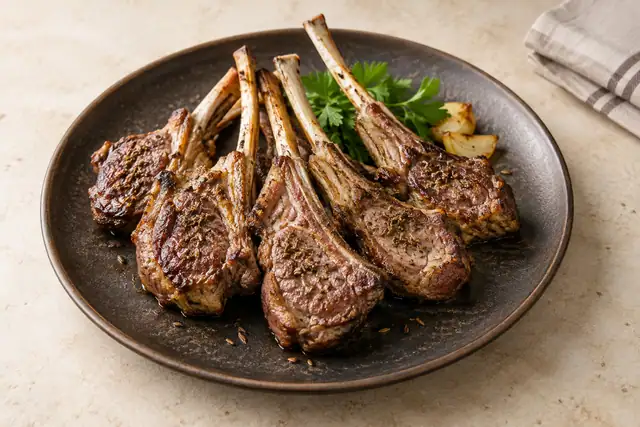
Done well, a rack has a dark, slightly crisp outside, a layer of softened fat beneath it and meat that still gives when it is cut. The seasoning is usually salt, cumin, chilli or a dry rub rather than a wet sauce, which keeps the surface dry enough to brown. Where the fat has not rendered, the mouthfeel turns heavy and the flavour flattens, and where the fire was too hot, the surface tastes bitter rather than savoury.
The place name in front
Several grilled-lamb dishes carry different place names, so the location in front of 烤羊排 is what distinguishes one from another rather than marking a different technique. This entry is associated with Aksu Prefecture, and the marinade, the fuel and the serving style remain kitchen decisions.
Ingredients and dietary checks
Lamb rack, salt and dry spices are the base, with onion, garlic or a yoghurt marinade sometimes used, and bread or a dough lining under the rack in some versions. Two questions are worth asking in advance. Anyone avoiding dairy should ask 用酸奶腌的吗 (is it marinated in yoghurt). Anyone avoiding wheat should ask 下面有饼吗 (is there bread underneath), since the fat drips onto it and it becomes part of the dish.
How to order it
Show 阿克苏烤羊排 and ask 一份多少 (how big is a portion), 够几个人吃 (how many people is it for) and 辣不辣 (how spicy). Because racks are counted rather than weighed in many places, ask 有几根 (how many ribs) so you know what arrives. If you would rather not cut it yourself, ask 能帮我们切一下吗 (can you cut it up for us).
Eating it at a shared table
A rack is usually placed in the middle of the table and divided by hand or with a knife, so order rice, bread and a sharp vegetable dish to go with it. Eat from the hotter end first, since the fat firms as the plate cools. Sprinkling more salt at the table is common; adding sauce is not, because it softens the crisp surface that the grilling produced.
More dishes to compare
Explore related local specialties and compare their names, preparation notes and ordering guidance.
Xinjiang lamb skewers 烤羊肉串 →
Xinjiang lamb skewers (烤羊肉串) are the neighbouring entry: small pieces of lamb on a stick, cooked fast and turned often. 阿克苏烤羊排 keeps the meat on the bone in one thick piece, so it needs slower heat and more patience, and it arrives as a shared rack rather than as a handful of sticks.
Questions before you order
Is the rack cooked quickly over a high fire?
Usually not, because a thick rack would burn outside before the centre is done. Good versions cook over moderate heat and turn often; ask 烤多久 (how long is it grilled) if you want to know what to expect.
What is served underneath the rack?
Some kitchens line the grill or plate with bread or dough so the dripping fat is caught and eaten. Ask 下面有饼吗 (is there bread underneath) if you avoid wheat or want to know what else is coming.
Sources & reading
The supplied food list supports this name and regional association. The culinary terms below are explained as menu vocabulary; a local recipe, origin story and venue availability have not been independently verified.