

Altay Fat-Tailed Sheep Hand-Grabbed Meat 阿勒泰大尾羊手抓肉
Altay Fat-Tailed Sheep Hand-Grabbed Meat is featured among the local specialties of Xinjiang.
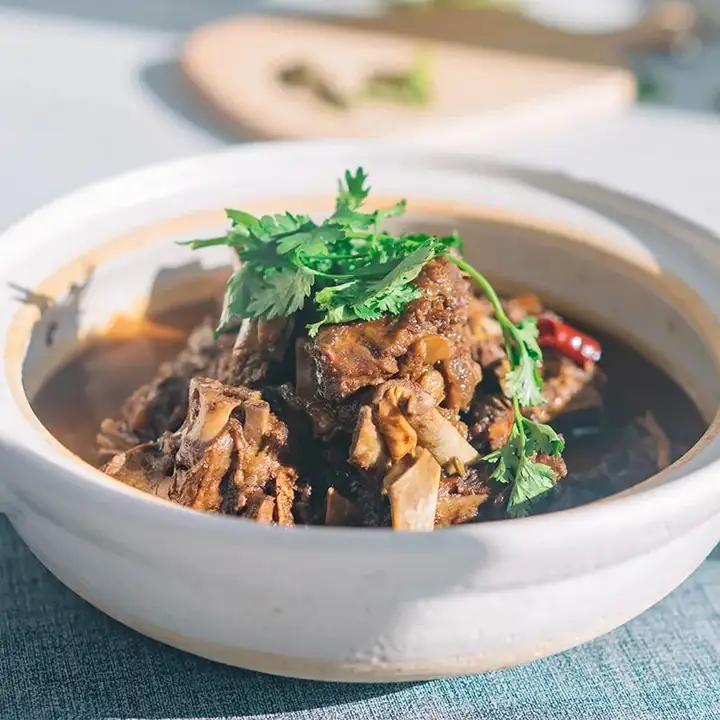
Photo adjustments
EXIF orientation normalized; resized without changing aspect ratio; converted to WebP. No subject edits.
Altay Fat-Tailed Sheep Hand-Grabbed Meat (阿勒泰大尾羊手抓肉) is bone-in mutton from the Altay fat-tailed sheep of Altay Prefecture (阿勒泰地区) in northern Xinjiang. A Xinhuanet article on Fuyun County (富蕴县) calls this sheep the first choice for hand-grabbed meat, pilaf and whole roast lamb, and says local people especially like to serve it to guests.
Ingredients
Xinhuanet names Fuyun County as the place of origin of the Altay fat-tailed sheep, nicknamed the 'thousand-li sheep' (千里羊). It describes the meat as rich without being greasy, full-flavoured without a gamey smell, and firm in texture. Altay Daily notes that the breed stores a large amount of fat in its tail and has a larger pelvis than ordinary sheep.
How it is eaten
Altay Daily describes the customs for serving the bone-in meat of the winter slaughter in Altay, when one family it follows buys animals from herders in mid to late December. Folk-custom experts told the paper that a sheep is usually cut into 13 bone-in pieces, and the pieces carry set meanings about who receives them. The head is the most honoured part, prepared for respected elders, in-laws or guests from far away, while the tongue and ears go to children. The pelvis, meat that is evenly fat and lean, ranks second and is offered to elders and highly respected guests. The foreleg bone goes into the pot first; in the pastoral areas, once it is gnawed clean, people thread a small stick through it and hang it around the livestock pen as a charm for the animals' safety.
The lower hind leg is given to sons-in-law, daughters-in-law and young married couples, and the thighbone mostly to nephews and unmarried young people. The shoulder blade is not usually given on its own but shares a platter with the head and pelvis; Altay Daily quotes the saying that a host who does not know what meat to give a guest gives the shoulder blade.
Sources & reading
Written from the linked sources and checked sentence by sentence against quoted extracts by a separate reviewer on 2026-09-25. Recipes and servings vary between kitchens.