

Bashibai Lamb 巴什拜羊
Bashibai Lamb is featured among the local specialties of Xinjiang.
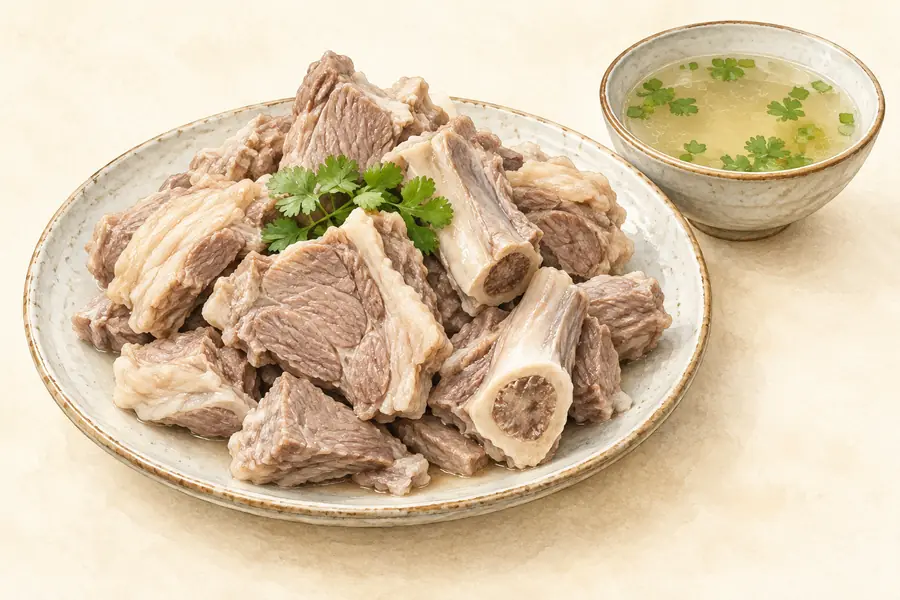
Bashibai Lamb (巴什拜羊) is a sheep breed from Yumin County in Xinjiang, named after the herder who developed it by crossing wild argali with local sheep.
Why a breed name changes the cooking
Naming a breed rather than a cut tells a kitchen that the animal is the product, so the cooking is usually kept simple: boiled or steamed with salt, or roasted over direct heat, so the meat can be judged on its own. Fat, not lean, carries most of the aroma in lamb, so a cut trimmed hard will taste flatter than a fattier one cooked the same way. Tough cuts want long moist heat; rib and loin sections want a short, hot cook.
A meat worth cooking plainly
Expect a firm, fine-grained meat with a flavour often described as milder than ordinary mutton, which is why plain boiling is a fair test of it rather than a compromise. The breed's reputation rests on that flavour, so a plate that arrives heavily spiced is not the best way to judge it. Fat at the edge of a chop carries the aroma, so leave some on the meat.
A breed named after a man
The breed takes its name from 巴什拜·乔拉克, the herder credited with developing it in Yumin County in Tacheng Prefecture by crossing wild argali with the local sheep. That is why the name of an animal here is also the name of a person, and why the same words on a menu and in a market mean the same animal rather than two different products.
Ingredients and what to ask
Lamb, salt and water are the whole recipe in the plainest version, with onion, carrot, cumin and chilli as the usual additions when a kitchen goes further. Because the meat is the point, heavy marinades work against the name. Ask 什么部位 (which cut), 怎么做的 (how is it cooked) and 是不是巴什拜羊 (is it this breed) if the breed is what brought you to the dish.
How to order it
Order by the cut rather than by the dish: 手抓肉 (boiled, for eating by hand), 烤肉 (roasted) and 清炖 (plain boiled) are different plates, and 一斤 (half a kilo) is a normal unit. Ask 一份多少 (how big a portion) and 是什么部位 (which cut) before choosing, and whether the meat is on the bone, since that changes both the price and the way it eats.
Serving and building a meal
Boiled lamb is eaten hot with salt on the side and firms as it cools, so it does not wait on the table. Raw onion, garlic and a plain bread or noodle dish are the usual companions, and a sour vegetable dish balances the fat. If broth comes with the meat, keep it: it carries the flavour of the animal more directly than the meat does.
More dishes to compare
Explore related local specialties and compare their names, preparation notes and ordering guidance.
Yumin Bashibai Lamb 裕民巴什拜羊 →
Yumin Bashibai Lamb (裕民巴什拜羊) is the same animal with Yumin County spelled out in front of the breed name. Reading the two together shows how Xinjiang menus stack place and animal: one form assumes the reader knows where the breed comes from, the other states it, and neither claims a different way of cooking the lamb.
Questions before you order
Is 巴什拜羊 a dish?
No. It is a sheep breed developed in Yumin County and named after the herder behind it, so on a menu it tells you which animal you are eating rather than how it is cooked.
How is it normally cooked?
Plainly, most often boiled or roasted with salt, because the breed is the selling point. Ask 怎么做的 to find out which method the kitchen uses.
Source introduction: Wikipedia contributors: 裕民县 · CC BY-SA 4.0. English guide adapted from the cited material, with additional preparation and ordering guidance.
Sources & reading
The supplied food list supports this name and regional association. The culinary terms below are explained as menu vocabulary; a local recipe, origin story and venue availability have not been independently verified.