

Bole Roast Lamb 博乐烤羊肉
Bole Roast Lamb is featured among the local specialties of Xinjiang.
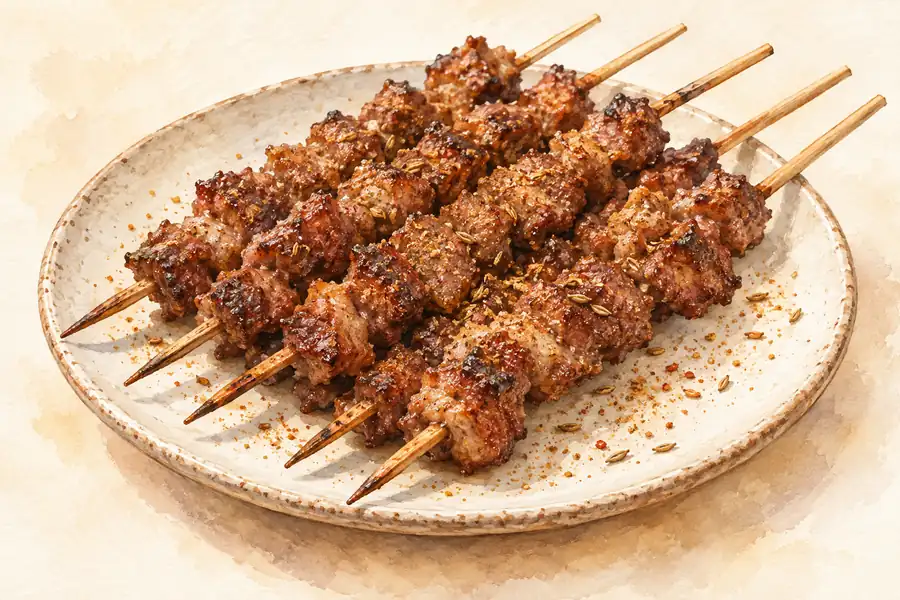
Bole Roast Lamb (博乐烤羊肉) puts a town and a method together: 博乐 is Bole, and 烤羊肉 says the lamb is roasted over heat rather than boiled.
A short, hot technique
Roasting over direct heat is a short, hot method, so the cuts are chosen for it: ribs, loin and leg slices that cook through before they dry. The meat is usually cut small or left on skewers so the heat reaches the middle quickly, and the cook turns it often to keep one side from burning. Salt goes on last in the simplest version, because salting early pulls water to the surface and steams the crust.
Tasting the animal, not the spice
Plain roast lamb should taste of the animal rather than of the spice rack: a crisp, fatty surface and a juicy interior, with salt and a little cumin doing the work. Overcooking shows up immediately, because there is no sauce to cover a dry slice. It is a straightforward plate, and the easiest way to judge the quality of the meat behind the name.
Every town, one method
Bole sits in Bortala Mongol Autonomous Prefecture in northern Xinjiang, and roasting lamb over charcoal is the ordinary street food of the region rather than a dining-room novelty. Putting the town in front of the name says where the kitchen claims to be cooking it, while 烤羊肉 states the method plainly and leaves the rest open to the cook.
Ingredients and what to ask
Lamb, salt and often cumin make up the whole list in the plainest version, with chilli, onion or a light marinade as common additions. Fat content matters more than the seasoning, and the cut decides the cooking time more than anything else. Ask 什么部位 (which cut), 有没有肥的 (is there fat on it) and 辣不辣 (how spicy), because plain and spiced versions can share one name.
How to order it
Order by the skewer or by weight, and ask whether the meat is being cut fresh or coming from a batch that has already been over the coals, since the two taste different. 要瘦一点的 or 肥一点的 (leaner or fattier) is a normal request, and 打包 if you want it wrapped to take away. Skewers are cheap enough to order in two rounds rather than guessing at one.
Serving and eating it
Eat skewers straight from the grill, sliding the meat off with a piece of bread rather than a fork, and take raw onion between pieces. The fat makes the plate rich, so a plain salad or a bowl of yoghurt balances it better than a second meat dish. Tea afterwards is standard, and it does more for the palate than a sweet drink.
More dishes to compare
Explore related local specialties and compare their names, preparation notes and ordering guidance.
Xinjiang lamb skewers 烤羊肉串 →
Xinjiang lamb skewers (烤羊肉串) are the same meat on a stick, sold everywhere from street carts to restaurants and usually seasoned with salt, cumin and chilli. Comparing them with 博乐烤羊肉 shows what a place name adds: the method is nationwide, the town is a claim about how well it is done here, and the cut and fattiness are what you are really choosing between.
Questions before you order
Is 烤羊肉 always on skewers?
No. The name only says the lamb is roasted, so it may arrive as skewers, ribs or a larger cut; ask 怎么烤的 to find out.
How much should I order?
Order in rounds rather than all at once. Half a kilo shared with bread and onion is usually enough for two people, and skewers are easy to add to.
Sources & reading
The supplied food list supports this name and regional association. The culinary terms below are explained as menu vocabulary; a local recipe, origin story and venue availability have not been independently verified.