

Mutton Stir-Fried with Scallions 葱爆羊肉
Mutton Stir-Fried with Scallions is featured among the local specialties of Xinjiang.
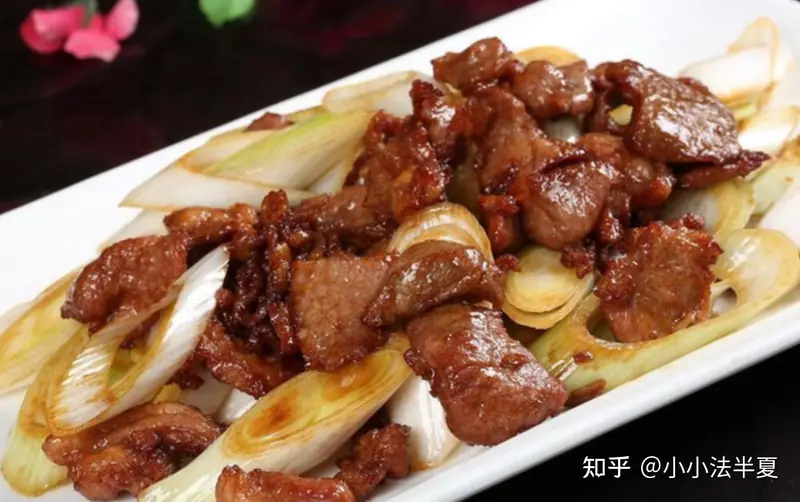
Image notes
Resized for the web; the photo itself has not been edited.
Mutton Stir-Fried with Scallions (葱爆羊肉) reads as a cooking instruction: 葱 for scallion, 爆 for a fast high-heat toss, and 羊肉 for mutton or lamb. Those three words are the whole dish: meat, allium and speed.
What 爆 means here
爆 is a short cook over strong heat, so the pan is hot before the meat goes in and the whole dish is finished in minutes. Slicing the meat thinly and across the grain is what keeps it tender at that speed. Because nothing simmers for long, the pan has to be hot enough to brown the meat rather than steam it.
Scallion goes in two stages in most kitchens: the white parts early, to flavour the oil, and the green parts late, so they stay sweet and crisp rather than softening into the sauce.
Flavour and texture
The dish tastes of browned meat and sweet scallion rather than of a heavy sauce, and the seasoning is usually just salt, soy and a little vinegar or wine. Mutton carries a stronger aroma than beef, which is the point of pairing it with so much allium.
Eat it while it is hot: the meat firms and the scallion goes limp once the plate has stood for a while. The scallion holds its bite for only a few minutes, so the dish is at its best the moment it reaches the table.
Where it sits on the menu
Lamb and mutton are central to cooking across Xinjiang and the wider northwest, and a fast scallion toss is one of the quickest ways those cuts reach the table.
The technique itself is northern Chinese rather than regional, so the local colour is in the meat used rather than in the method.
Beyond the two words in the name
The name names the meat and the scallion; everything else is seasoning. Ask whether the kitchen uses lean leg meat or a fattier cut, because the fat is what carries the aroma when the pan is hot.
If you would rather the dish came without soy or vinegar, say so when ordering, since those are typically added in the wok rather than at the table. A spoonful of stock or wine often goes in at the end to loosen the pan, which is why the plate can arrive slightly wet.
How to order it
Order it as a hot dish to share with rice or noodles, and ask how large the portion is, because a fast stir-fry is small by nature.
If you want more heat, ask for dried chilli to be added in the wok rather than at the table.
At the table
It comes out fast and should be eaten first, while the scallion still has bite. Rice suits it better than bread, since the point is the aroma rather than the sauce.
If the meat tastes dry, ask for a second plate rather than reheating this one; a reheated 爆 dish loses what made it work.
More dishes to compare
Explore related local specialties and compare their names, preparation notes and ordering guidance.
Mori Lamb 木垒羊肉 →
Mori Lamb (木垒羊肉) is the Xinjiang entry built on the meat itself, from a county known for its lamb, rather than on a quick wok technique. Comparing the two is a lesson in how the same animal reads differently: one plate lets the cut speak, the other uses heat and scallion to lift it.
Questions before you order
Is 葱爆羊肉 made with lamb or mutton?
Both are used, and the difference shows in the aroma and the amount of fat. Ask which one the kitchen is cooking.
Why is there so much scallion in the dish?
The scallion is an ingredient as well as a seasoning, so it is meant to be eaten with the meat rather than pushed aside.
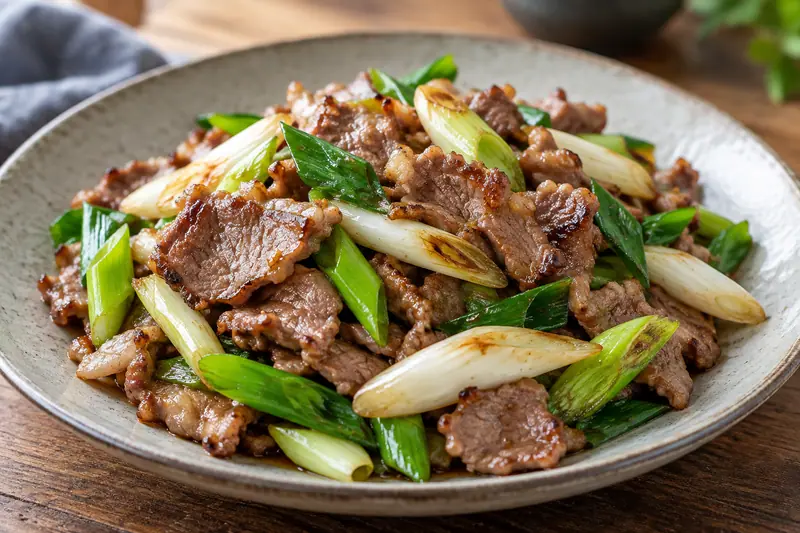
Sources & reading
The supplied food list supports this name and regional association. The culinary terms below are explained as menu vocabulary; a local recipe, origin story and venue availability have not been independently verified.