

Walnut Candy Slab 核桃麻糖
Walnut Candy Slab is featured among the local specialties of Xinjiang.
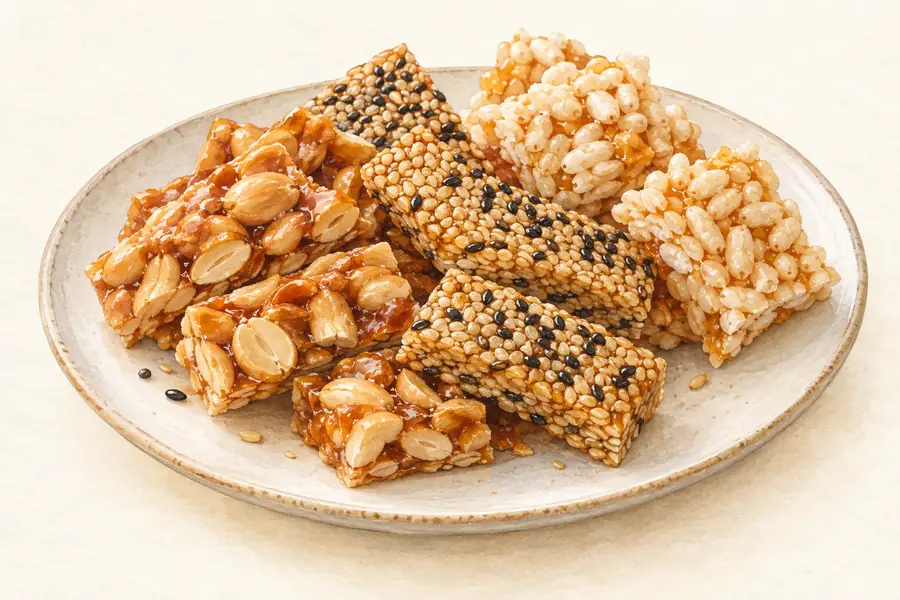
Walnut Candy Slab (核桃麻糖) is matang, a Uyghur sweet of walnut kernels set in thick sugar syrup, also called hetao marentang (核桃玛仁糖). Kashgar (喀什) and Hotan (和田) in southern Xinjiang are generally held to be where it comes from, and at the new-year fair in Lop County (洛浦县), Hotan, it is sold beside red dates, walnuts and raisins.
Ingredients
The traditional version uses only walnut kernels, or mostly walnut, which is where the name walnut matang comes from. Other makers build it on almonds, peanuts or sunflower seeds to cut costs or change the taste. CCTV News describes the matang at the Lop County fair as made from walnut kernels, raisins and honey.
How it is made
The nuts and fruit are bound in a boiled sugar syrup and cooked down through several steps. At a food company in Moyu County (墨玉县), China News Service saw workers sorting the raw ingredients, boiling the syrup and drying the mixture until it set, before cutting and packing it. The company's head calls it a local product made mainly from walnuts and a speciality of Moyu, the core growing area for Hotan thin-shell walnuts (和田薄皮核桃), a geographical-indication product.
How it is eaten
In Xinjiang, Walnut Candy Slab is usually sold ready cut into pieces about 2 centimetres wide, or wrapped like ordinary sweets. Elsewhere in China it is often sold loose as a large block, with pieces cut off to order, which gave it the nickname qiegao (切糕), 'cut cake'. Its high sugar content means it keeps well.
Sources & reading
Written from the linked sources and fact-checked against them on 2026-09-25. Recipes and servings vary between kitchens.