

Rack-Grilled Meat 架子肉
Rack-Grilled Meat is featured among the local specialties of Xinjiang.
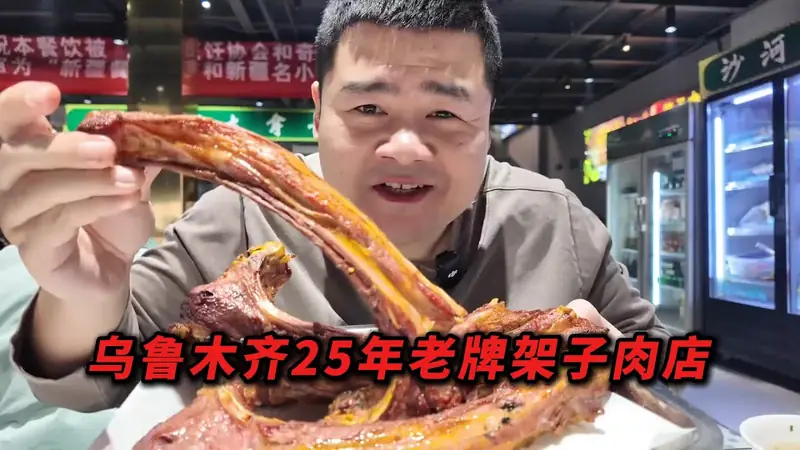
Photo adjustments
EXIF orientation normalized; resized without changing aspect ratio; converted to WebP. No subject edits.
Rack-Grilled Meat (架子肉) is listed among the local specialties of Ürümqi, Xinjiang. The name joins 架子 (a rack or frame) with 肉 (meat), so it describes meat cooked on a rack rather than a named cut or sauce.
Cooking on a rack
Meat hung or laid on a rack cooks in dry, circulating heat, so the surface browns while the inside stays moist and fat drains away instead of pooling. Ask whether the version you order is roasted in an oven or grilled over coals, because the two give different crusts.
Racks are turned during cooking so more than one side browns, and the fat that drips away carries off some of the richness. That is why rack meat tastes drier than a braise of the same cut. If the rack arrives whole, ask for the pieces to be cut down at the table.
What to expect on the plate
Dry heat concentrates the outside and leaves a firmer bite than a stew does. Seasoning is usually salt, pepper and cumin applied before or during cooking, so the meat flavour stays forward. Ask for the seasoning on the side if you want to taste it plain.
Cumin and chilli sit on the surface rather than inside the meat, so the first slice tastes strongest and the later ones milder. A bite of raw onion between pieces resets the palate. The meat closest to the bone is usually the juiciest part of the rack.
Why it fits Ürümqi menus
Ürümqi menus draw on Kazakh, Uyghur, Hui and Han cooking, and rack-roasted meat sits comfortably in all of them. Restaurants citywide keep a version for groups, which is why the name turns up in small barbecue shops and large dinner houses alike.
Cut, meat and seasoning
The dish is defined by the cut and by the rack rather than by a fixed marinade. Lamb and mutton are the usual meats, with salt, cumin and chilli as common seasonings. Ask which animal the rack holds today and whether the meat was marinated.
Pricing and portions
Rack meat is usually sold by weight, so ask for a specific amount and confirm the price before it goes on the fire. Say 架子肉 and 半公斤 to fix the size of the portion. Add 不要辣 if you want no chilli.
At the table
It comes off the rack in pieces, often with a knife for cutting and a small dish of seasoning. Eat it while hot, because the crust softens as it cools. Ask for the bones to be separated if you would rather not deal with them at the table.
If the meat arrives on the rack itself, take from the ends first, since they cool fastest. Ask for a second small dish of seasoning rather than tipping more over the whole tray. Keep the bones at the edge of the plate so the table stays manageable.
More dishes to compare
Explore related local specialties and compare their names, preparation notes and ordering guidance.
Mug-Braised Meat 缸子肉 →
Mug-Braised Meat (缸子肉) is named for the mug-like pot it cooks in, while this rack version is named for the frame it roasts on. Setting the two names side by side shows how much Xinjiang menu language depends on the vessel rather than on a fixed recipe.
Questions before you order
Is 架子肉 roasted or grilled?
Both styles exist. Ask the kitchen whether the rack goes into an oven or over coals.
How is 架子肉 priced?
Usually by weight. Ask for the price of the amount you want before it is cooked.
Sources & reading
The supplied food list supports this name and regional association. The culinary terms below are explained as menu vocabulary; a local recipe, origin story and venue availability have not been independently verified.