

Rack-Grilled Meat 架子肉
Jiazi rou (架子肉) is a Xinjiang rack-roasted meat dish, usually lamb or mutton; Ürümqi lists it among its local specialties, but the dish is regional rather than an Ürümqi-only invention, and the exact preparation depends on the kitchen.
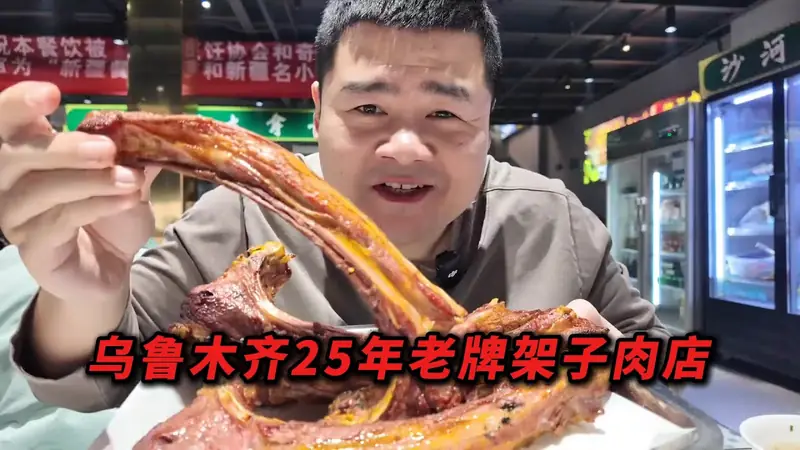
Image notes
Resized for the web; the photo itself has not been edited.
Tap any red Chinese text to hear it in Mandarin.
What it is
Jiazi rou (架子肉) takes its name from 架子 Jiàzi, a rack or frame. It describes meat roasted on that frame rather than one fixed cut, sauce, or restaurant recipe. The current Ürümqi directory lists 架子肉 among 14 local specialties, but a directory listing is a reason to look for the dish in the city, not proof that Ürümqi invented it.
A Xinjiang government portal’s April 2026 report places 馕坑架子肉 Náng Kēng Jiàzi Ròu among the region’s ten classic grilled foods. In September 2026, the Ürümqi Food and Beverage Service Association announced a group standard for nang-pit rack-grilled meat, effective 20 October 2026. Those notices show current regional recognition and local industry standardisation; they do not mean that every restaurant uses one recipe or has it on the menu every day.
How the rack changes the bite
The rack is the cooking setup that makes this dish distinct. A reference description of the Dawakun version in southern Xinjiang uses young lamb, cuts the meat into pieces, coats it with a flour-and-egg mixture, adds onion and pepper seasoning, then hangs the pieces on a circular iron rack inside a sealed nang pit. This is one regional version, not a universal formula for every plate called 架子肉.
Roasting on a rack can give the exposed surface a browned, firmer bite while the result still depends on the cut, fat, marinade, and heat source. Ask whether today’s batch is cooked in a nang pit, an oven, or over coals: the crust and smoky note can be different. If the rack arrives whole, ask whether the kitchen will cut it into manageable pieces before serving.
What may be on the plate
Lamb or mutton is common in descriptions of 架子肉, but the Chinese name alone does not tell you which animal, cut, or coating a particular kitchen is using. Onion and pepper appear in the documented southern-Xinjiang version; other kitchens may keep the seasoning simpler or adjust the chilli. Ask what meat is being served, whether it was marinated, and whether a flour-and-egg coating is used.
Eat it hot, while the browned surface is at its best. If the plate comes with raw onion or a separate seasoning dish, try a small piece first so you can judge the meat before adding more spice. Do not treat the appearance of the dish as proof that it is halal, vegetarian, or free from allergens.
How to try it in Ürümqi
Search the exact Chinese name 架子肉 Jiàzi Ròu in Meituan (美团) or Amap/Gaode Maps (高德地图). If the first search is sparse, also try 馕坑架子肉 Náng Kēng Jiàzi Ròu. Open nearby listings rather than following a platform ranking, and check the current menu, dated recent reviews, opening status, and same-day supply. Before ordering, ask: “架子肉今天有吗?按公斤还是按份?是馕坑烤、烤箱烤还是炭火烤?可以不要辣吗?”
Confirm the portion basis and price before cooking, because neither the dish name nor the regional standard sets a citywide price. If you have dietary restrictions, ask about the animal, flour or egg coating, oil, seasoning, and possible cross-contact. This is a dish rather than a venue: it has no fixed address, visitor entrance, ticket, passport check, reservation counter, opening timetable, seasonal window, or dish-specific public-transport route. Once you choose a current restaurant listing, use that establishment’s own address and hours.
More dishes to compare
Explore related local specialties and compare their names, preparation notes and ordering guidance.
Gang Zi Rou 缸子肉 →
Gang Zi Rou (缸子肉) is named for the mug-like pot it cooks in, while this rack version is named for the frame it roasts on. Setting the two names side by side shows how much Xinjiang menu language depends on the vessel rather than on a fixed recipe.