

Mori Lamb 木垒羊肉
Mori Lamb is featured among the local specialties of Xinjiang.
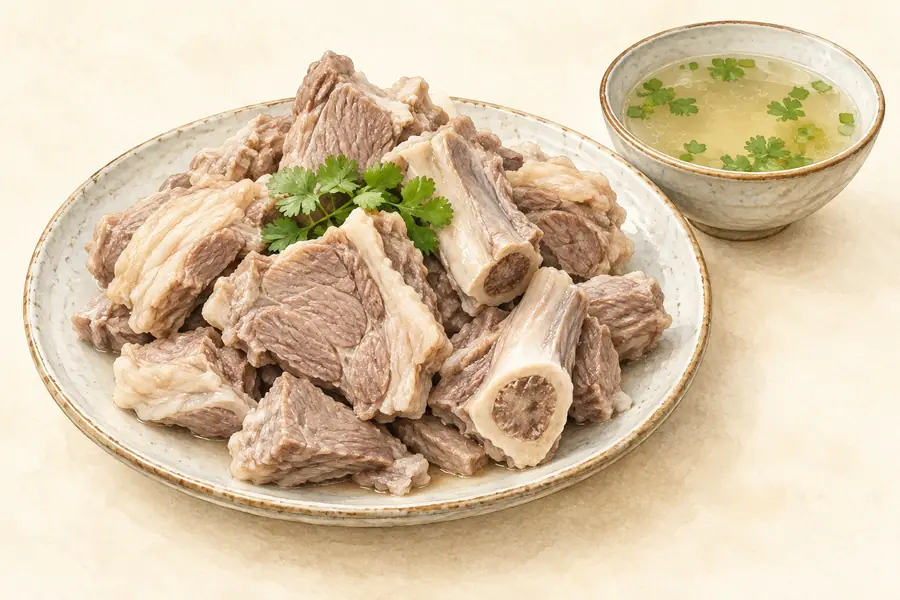
Mori Lamb (木垒羊肉) is lamb from Mulei Kazakh Autonomous County, sold across Changji as a named local meat rather than as one fixed dish, so the cooking depends on the kitchen.
What naming the lamb changes
Putting a place name in front of the meat changes the kitchen's default. Once the lamb is the selling point, cooks tend to keep the method short so that the meat can be tasted: plain boiling or steaming with little more than salt is common, and the same animal may also arrive as a fast stir-fry over high heat. A long, heavily seasoned braise works too, but it is the one approach that hides what the name is advertising.
Leaner meat, cleaner flavour
Lamb from dry, cold grazing country is usually described as leaner and less strongly scented than meat from milder climates, with a firm grain that stands up to plain cooking. Fat, not lean, carries most of the aroma, so a trimmed cut can taste flat even when it is tender. Expect a clean, savoury flavour when the kitchen keeps things simple, and more spice and sauce when it does not.
Where Mulei sits
Mulei is a Kazakh autonomous place in Changji Hui Autonomous Prefecture, on the northern side of the Tianshan range, where sheep are raised on dry grassland. The name appears in local kitchens, at holiday tables and in markets where the meat is sold by name, so the same words can describe a dish, a cut or a purchase. That is why the place word is worth keeping when you read a menu.
Ingredients and dietary checks
Lamb, salt and water are the whole recipe in the plainest version, with onion, carrot, chilli and cumin as the usual additions when a kitchen goes further. Some cooks add beer, tomato or a spoon of vinegar to soften a stronger cut. A boiled plate is usually just meat, salt and water, while a stir-fried one picks up sauce, so ask 是炖的还是炒的 (boiled or stir-fried) if soy is an issue.
How to order it
Say 木垒羊肉 and then fix the method, because 清炖 (plain boil), 手抓 (boiled for eating by hand) and 炒 (stir-fried) are different plates at different prices. Ask 一份多少 (how big a portion) and 是哪里的羊 (where is the lamb from) if the place name is what brought you to the dish. For a small table, 小份 with bread and a vegetable is usually enough.
Serving and eating it
Boiled lamb is eaten hot with salt on the side, and it firms as it cools, so it does not wait well on the table. Raw onion, garlic and a plain dough or noodle dish are the usual companions, and a sour vegetable dish balances the fat. If the plate arrives with broth, keep it: it is normally the best part and it is easy to let the kitchen take it away by accident.
More dishes to compare
Explore related local specialties and compare their names, preparation notes and ordering guidance.
Mutton Stir-Fried with Scallions 葱爆羊肉 →
Mutton Stir-Fried with Scallions (葱爆羊肉) is the high-heat reading of the same animal: thin slices of lamb tossed with plenty of spring onion so the dish is done in minutes. Set against 木垒羊肉, it shows the two ends of the scale. A place name invites a kitchen to cook plainly so the meat can speak, while a stir-fry name sells the technique and lets the texture of the lamb decide whether the dish works.
Questions before you order
Is 木垒羊肉 a dish or an ingredient?
It can be either. The words name lamb from Mulei, so a menu may use them for boiled meat, a stir-fry or a cut sold by weight. Ask 怎么做 to find out which one you are being offered.
Do I need to order it in advance?
Usually not for a single portion, but whole cuts and holiday plates are often cooked to order, so ask 现在有吗 (is it available now) and how long the kitchen needs.
Sources & reading
The supplied food list supports this name and regional association. The culinary terms below are explained as menu vocabulary; a local recipe, origin story and venue availability have not been independently verified.