

Nang Oven-Roasted Meat 馕坑肉
Nang Oven-Roasted Meat (馕坑肉) is a Xinjiang lamb dish cooked in the hot, enclosed oven used for baking nang, with a browned crust and a tender centre; in Ürümqi, look for the Chinese name rather than assuming one fixed recipe or restaurant.
Tap any red Chinese text to hear it in Mandarin.
What the dish is
Nang Oven-Roasted Meat is lamb cooked in a nang pit (馕坑), the clay or earthen oven traditionally used for baking nang flatbread. The current China Revealed food guide describes it as a Xinjiang specialty and explains the basic connection between the dish and the bread oven. Ürümqi’s current city directory includes 馕坑肉 Náng Kēng Ròu among its 14 local specialties, but that listing establishes a city association, not an exclusive origin or a single standard recipe.
A food-science review describes nang-pit barbecue as a traditional Xinjiang food and notes that ingredients and methods differ between regions. It classifies the method as an enclosed, radiant-heat roast rather than an ordinary open-flame kebab. That distinction is what makes the dish worth seeking out: you are tasting both lamb and the heat of a bread oven, not simply ordering a larger skewer.
How the pit changes the meat
In the usual workflow, cooks heat the pit with wood or charcoal, remove the direct flame and loose ash, then place seasoned lamb inside. The hot wall and remaining heat roast the meat in a covered space. A Chinese food feature likewise describes the lamb as cooking over the embers left after nang has been baked, without direct contact with an open flame.
One clearly documented version from Cele County cuts lamb into roughly fist-sized pieces and coats them with a batter made from egg, turmeric, pepper, cumin, salt and flour before pressing the pieces onto the inner wall of the pit for about half an hour. This is a useful example, not a universal Ürümqi formula. The research review records regional forms including nang-pit lamb skewers, ribs and whole roast lamb, while the Cele government page lists skewers, lamb ribs and roast lamb neck as common forms.
The result is usually a browned or crisp outside with a more tender, moist centre than a piece exposed continuously to an open flame. The enclosed heat and the fat from fresh lamb create a roasted aroma; meat pieces are generally larger than the small cubes used for an ordinary lamb skewer. If a menu distinguishes between skewers, ribs and neck, choose according to the texture you want rather than treating one as the only authentic version.
Cele’s locally described “original” style is a particularly useful contrast. Instead of hanging the meat on a rack, cooks press it directly onto the oven wall and use little more than salt. The official description says this produces a drier, more charred and fragrant crust with less greasiness than the more seasoned, rack-roasted style. It is a local variation, not a reason to reject a softer or more heavily seasoned preparation in Ürümqi.
How to look for it in Ürümqi
Search 馕坑肉 Náng Kēng Ròu in Meituan (美团) or Amap/Gaode Maps (高德地图) around where you are staying. If the search is thin, try the closely related Chinese wording 馕坑烤肉 Náng Kēng Kǎo Ròu. Open the current menu rather than relying on a ranking, then check recent reviews, the venue’s current opening status and whether the dish is available that day. Ask which cut is being served and whether it was cooked in a true nang pit or in another type of oven; recipes and service formats vary by kitchen.
This is a dish, not a single attraction. It has no central ticket, reservation system, passport rule, fixed opening hours or dedicated transport route. The restaurant or food stall you select determines whether it is serving the dish, how it is prepared and how you get there and return. No particular restaurant or brand is recommended here.
Dietary and ordering notes
The meat is lamb. Depending on the kitchen, the coating or marinade may include egg, flour, onion, cumin, pepper, turmeric and other seasonings. Ask for the exact ingredients and cooking method if you have an allergy or avoid particular foods. Do not infer halal status, vegetarian suitability or the absence of allergens from the appearance of the meat or from the Chinese name alone. For a first order, ask whether the shop can serve a small portion or identify the cut, then eat it hot while the crust is still distinct from the tender centre.
Sources & reading
Image credits & notes (1)
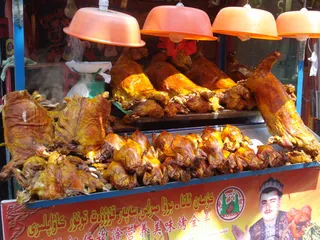
- Tandyr kabob (nang-pit roasted meat) displayed at a food stall in Ürümqi, photographed in 2005; a historical reference for the dish, not evidence of current supply. Photo: AbdullaevPhoto: Public domain