

Sachima Sweet Pastry 萨其马
Sachima (萨其马, also written 沙琪玛 or 沙其马) is a soft, sweet square made by frying thin egg-and-flour strands and binding them with sugar syrup. It appears in the Kashgar Prefecture food list, but its Manchu-linked name and broad Chinese history mean it is better understood as a widely shared Chinese sweet than as a Kashgar invention.
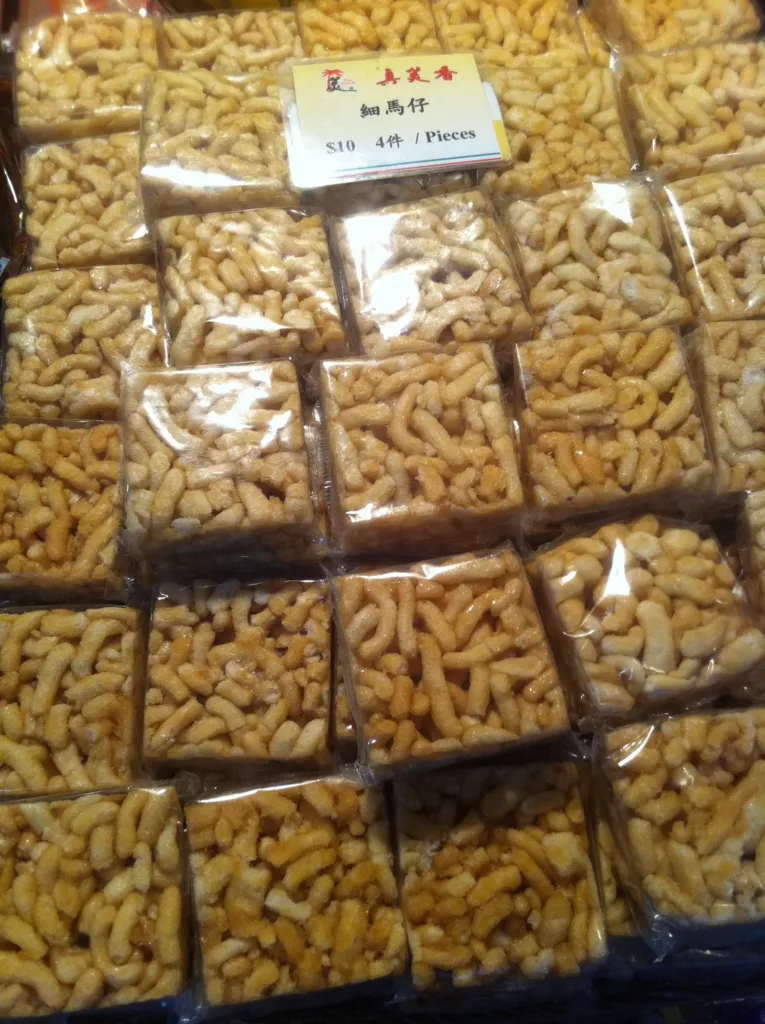
What it is
A piece of sachima is not a sponge cake. It is a compact block of short fried strands, held together by a cooked sugar coating. The Beijing tourism authority describes the basic form as fried noodles mixed with sugar and cut into small blocks, with a pale-golden colour and a soft, loose bite.
The name has several useful forms to recognize. Chinese sources use 萨其马, 沙琪玛 and 沙其马; the Manchu-linked spelling is usually given as sacima. The same sweet is also called 马仔 or 玛仔 in Hong Kong. These are naming variants, not evidence of a separate Kashgar recipe.
How the texture is built
The standard process starts with a flour-and-egg dough. It is rolled thin, cut into short strips and deep-fried, then mixed with a sugar syrup, pressed into a rectangular mould and cut into portions. The fried strands provide the light, airy structure; the syrup binds them and supplies the sweetness. High-gluten flour is useful because the dough needs to stretch before it is cut.
The syrup is the part that most changes the eating experience. A well-made piece stays soft and slightly yielding rather than turning into a hard brittle candy. A representative recipe uses sugar and maltose and warns that overcooked syrup produces a harder, crisper result; this is a recipe-level illustration, not a fixed formula for every shop.
Many versions add sesame, nuts, dried fruit or coconut after the syrup stage. Some commercial products also offer other flavourings. If you are comparing pieces, look for the contrast between the fried strands and the binding syrup rather than assuming that every square has the same filling or topping.
What it means in Kashgar
The Kashgar-area list records sachima among regional foods, but the local listing does not describe a Kashgar-specific ingredient set or claim that the sweet originated there. The wider record connects the name and pastry tradition to Manchu food culture and to its later spread through China. Treat the Kashgar connection as a place where the name may appear in a regional food guide, not as a claim of local invention.
This distinction matters when reading menus or packaged-food labels. “萨其马” identifies a type of sweet; it does not by itself tell you whether the batch was made in Kashgar, elsewhere in Xinjiang or in another part of China.
Ingredients and dietary questions
Flour and egg are core ingredients in the descriptions above, so ordinary sachima contains wheat and egg. Sugar syrup is essential to the familiar sweet texture. Nuts, sesame, dried fruit, coconut and different frying fats may be added or substituted, so do not assume that a plain-looking square is free of a particular allergen or suitable for a vegan diet. Ask the seller or read the packaged ingredient label before buying.
The sources do not establish a single Kashgar recipe, universal halal certification, or a guaranteed allergen-free version. Those questions belong to the individual shop or package, not to the name of the pastry.
Practical tips
For carrying it onward, a sealed package is easier to protect than loose pieces. Keep the label: regional versions and toppings vary, and the ingredient list is the safest way to check wheat, egg, nuts, sesame or other additions.
Where to eat it
You can find Sachima Sweet Pastry all over Xinjiang, so there is no need to seek out one particular restaurant. To find one near you, search for “萨其马” in Meituan (美团) or Amap (高德地图) and check recent reviews, distance and opening hours.
More dishes to compare
Explore related local specialties and compare their names, preparation notes and ordering guidance.
Nang bread 馕 →
Nang bread (馕) is a Xinjiang flatbread baked against the wall of a tandur oven, savoury, chewy and eaten with meals or tea. 萨其马 is the opposite position on the same table: a square sweet pastry of flour and egg, soft and sugary, cut into pieces and eaten as a confection. One is everyday bread, the other is a sweet bought by weight.
Sources & reading
Image credits & notes (1)
- Bagged Sachima sweet snack (薩其馬仔餅) at the 2012 Chinese New Year Fair in Victoria Park, Hong Kong; a Hong Kong example of this widely shared sweet, not a Kashgar-specific product. Photo: Zhu Fok GamPhoto: CC BY-SA 3.0