

Xinjiang Yogurt 酸奶
Xinjiang Yogurt is featured among the local specialties of Xinjiang.
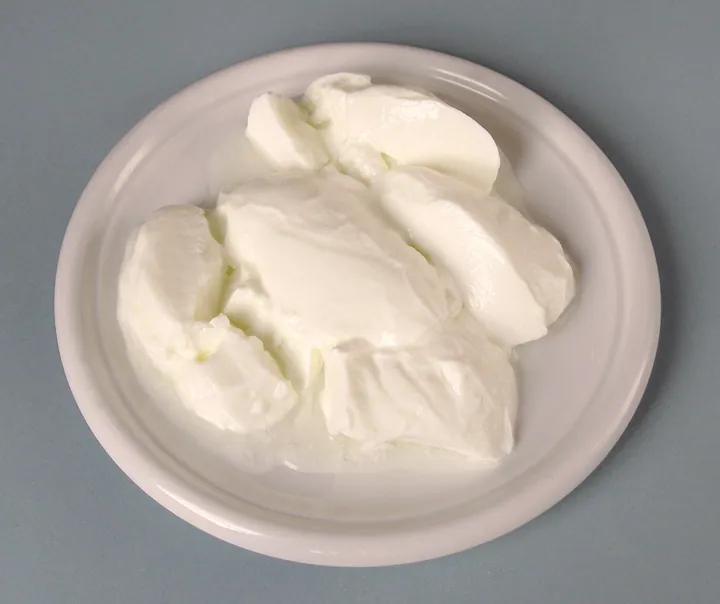
Xinjiang Yogurt (酸奶) is Xinjiang’s plain fermented milk, made from cow, sheep or mare milk and eaten as it is, with raisins, with cucumber, or thinned over ice as a summer drink.
How it is made
Milk is left to ferment until it sets. In Xinjiang the milk can come from cows, sheep or mares, and the fermented result is described as taking on a pale yellow colour, which is a marker of the local style rather than the white set yogurt sold in supermarkets.
From there the kitchen goes two ways. It can be served as it is, thick and spoonable, or thinned with water and poured over crushed ice as a sweet-sour summer drink, sometimes lightened with syrup.
Flavour and texture
Expect a sharper, more lactic sourness than a mild supermarket yogurt, with a pronounced dairy aroma and a slightly grainy, heavy texture when it is fresh.
Sweetness usually comes from what is served with it rather than from the yogurt itself. Raisins are the common pairing, which turns the sourness and the concentrated sugar of the dried fruit into a balanced bowl.
Local roots
Yogurt belongs to a table built on lamb and beef, where a sharp dairy dish is the natural counterweight to rich meat. That is why it turns up twice in the region’s own list of dishes: once as yogurt with raisins among the sweets, and once as a yogurt-and-cucumber salad among the cold dishes.
It is also a drinks culture. Iced yogurt thinned with water is a summer fixture, sold from stalls in the warm months, and the same fermented milk is the base of that drink rather than a separate product.
Ingredients and dietary questions
Fermented milk, which means dairy is the whole dish and it is not suitable for anyone avoiding lactose or milk protein. The sugar, when present, comes from added syrup or from the raisins served with it.
The milk may be from cows, sheep or mares, and that changes the flavour, so ask 是牛奶还是羊奶 if you want to know. If a thin drink is being served, ask whether sugar or syrup has been added.
How to order it
Ask for 酸奶. It comes as a small bowl, either plain or with raisins, and the usual choice is whether you want it 加糖, with sugar, or as it comes.
Ask for 酸奶黄瓜沙拉 if you want the savoury version, which is served alongside the meat rather than after it. If you want a thick set yogurt to take away, ask 有没有瓶装的.
How to eat it
Eat it with a spoon, straight from the bowl, and stir the raisins through so their sweetness is spread rather than left at the bottom. As a cold dish it belongs on the table with the meal, not only at the end of it.
One bowl is enough for one person and it is rich, so order it as a side rather than a course. In summer, the same yogurt is served over ice as a drink, which is the refreshing version rather than a dessert.
More dishes to compare
Explore related local specialties and compare their names, preparation notes and ordering guidance.
Kazakh dried yogurt curds 酸奶疙瘩 →
Kazakh dried yogurt curds take fermented milk and dry it into firm, sour, shelf-stable pieces, so the dairy can be carried and kept. 酸奶 is the fresh form: the same fermentation left soft and spoonable, served in a bowl and often eaten with raisins or cucumber.
Questions before you order
Is 酸奶 sweet or sour?
It is sour by default. Sugar is added only if you ask, and the sweetness in a bowl of yogurt with raisins comes mainly from the dried fruit rather than the yogurt.
Can it be drunk instead of eaten?
Yes. The same fermented milk is thinned with water and poured over crushed ice as a summer drink, sometimes with syrup, and sold from stalls in the warm months.
Source introduction: Wikipedia contributors: 酸奶 · CC BY-SA 4.0 (Wikipedia text, attribution required). English guide adapted from the cited material, with additional preparation and ordering guidance.
Source introduction: Wikipedia contributors: 新疆菜 · CC BY-SA 4.0 (Wikipedia text, attribution required). English guide adapted from the cited material, with additional preparation and ordering guidance.
Source introduction: Wikipedia contributors: 刀克 · CC BY-SA 4.0 (Wikipedia text, attribution required). English guide adapted from the cited material, with additional preparation and ordering guidance.
Sources & reading
The supplied food list supports this name and regional association. The culinary terms below are explained as menu vocabulary; a local recipe, origin story and venue availability have not been independently verified.
Image credits & notes (1)
- A plate of thick, fresh set yogurt (suan nai) · 一盘浓稠的凝固酸奶 Source-recorded photograph date: 4 April 2006 (original upload date).Photo: No machine-readable author provided. Rainer Zenz assumed (based on copyright claims). · CC BY-SA 3.0Resized for the web; the photo itself has not been edited. Thumbnails may show a cropped view.
