

Meatball Soup 丸子汤
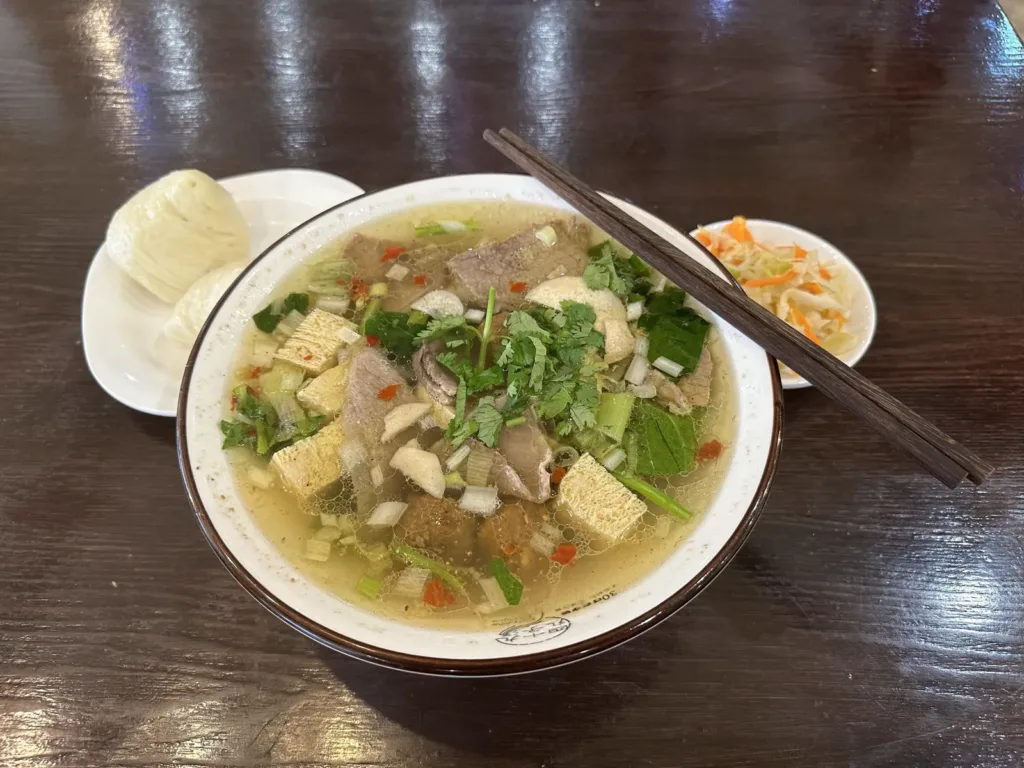
A Xinjiang regional soup of fried beef meatballs simmered in beef-bone broth, served with varied savoury ingredients and often youtazi; in Ürümqi, use the Chinese name to find a current bowl without treating any one restaurant as the city’s official version.
Tap any red Chinese text to hear it in Mandarin.
What the dish is
丸子汤 is a Xinjiang regional soup, not a dish that should be presented as an Ürümqi invention. A China News report describes it as a Hui specialty that developed from the banquet tradition known as “nine bowls in three rows” (九碗三行子). Ürümqi’s city food directory lists 丸子汤 among its 14 local specialties, so the city is a sensible place to look for it; the recipe itself belongs to a wider Xinjiang food culture.
How a representative bowl is built
The reported version starts with a broth made from beef leg bones. Fresh beef is shaped into meatballs, fried, and then simmered in the broth. The pot may also contain cubes of starch jelly (凉粉), king oyster mushrooms, sliced beef, glass noodles, spinach, and frozen tofu, with pepper in the broth. The point of the bowl is the contrast: a browned, tender meatball beside slippery, soft, chewy, or crisp ingredients, followed by a pepper-scented broth. These are a documented representative combination, not a fixed recipe; kitchens can leave items out or change the proportions.
A bowl is commonly accompanied by a small side dish of vegetables and youtazi (油塔子), the layered steamed bread associated with this meal. The Xinjiang Commerce Department also notes that the Urumqi food-service association issued a group standard for Wanzi Tang in 2014. That records an established local food-service context, but it does not make every current bowl identical.
How to order it in Ürümqi
Search 丸子汤 Wánzi Tāng in Meituan (美团) or Amap/Gaode Maps (高德地图) first; add 新疆丸子汤 Xīnjiāng Wánzi Tāng if the shorter search returns too many results. Open each nearby candidate’s menu rather than relying on a ranking. Check that the menu actually names 丸子汤, read recent reviews for reports that it was being served, and confirm the listing’s current opening status and same-day supply before setting out. Soup, side dishes, and opening hours are venue-specific, so the map listing is a way to find options, not an endorsement of a particular restaurant.
Keep the Chinese name handy when asking. The common version described here uses beef balls and beef-based broth, so it is not a vegetarian choice. Do not infer halal status, vegetarian suitability, or the absence of allergens from the appearance of the soup. Ask the venue about the stock, cooking fat, meat, whether items such as youtazi or noodles are included, and any ingredient that matters to you. There is no ticket, reservation, passport check, or dish-level transport route for the food itself; those details belong to the individual venue you select and should be checked separately.
Sources & reading
Image credits & notes (1)
- A bowl of Xinjiang meatball soup photographed at the time-honored Sishijiu Wanzitang in Ürümqi; it is a representative food image, not a venue endorsement. Photo: HaziiDozenPhoto: CC BY-SA 4.0