

Yanbian cold noodles 延边冷面
Yanbian cold noodles are buckwheat-led noodles pressed, boiled and chilled, then served in a clear, sweet-sour beef-and-bone broth with fresh toppings. Their firm bite and very cold broth express Yanbian’s Korean-Chinese food tradition; in Yanji, the same style is commonly listed as 延吉冷面.
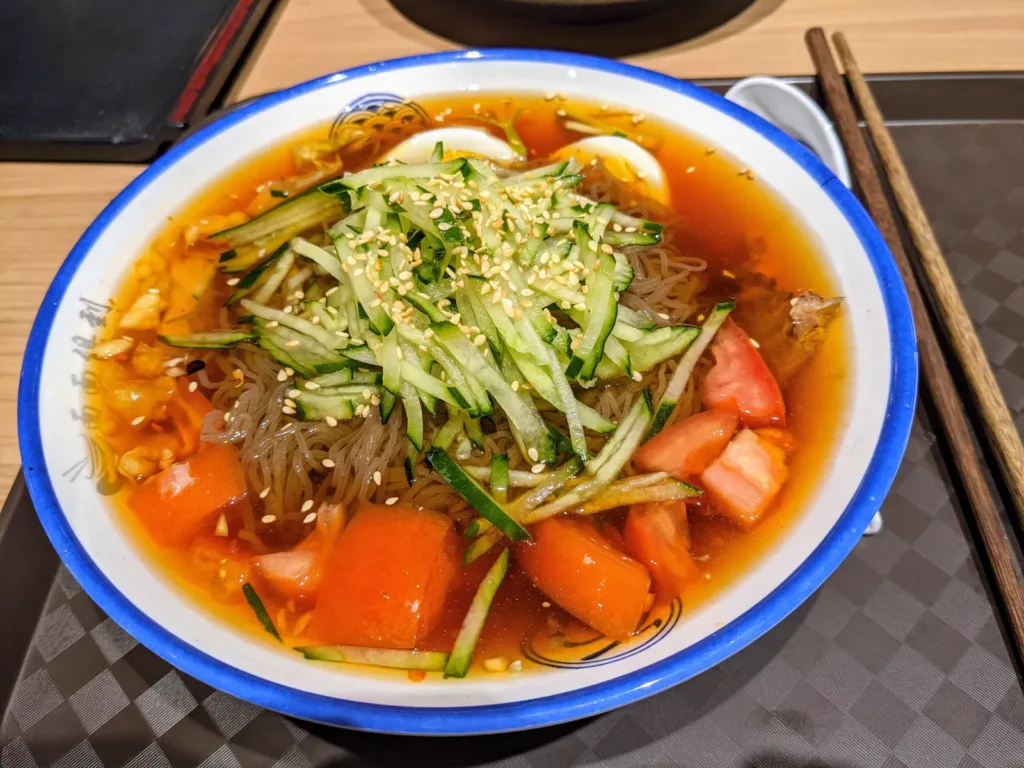
In brief: Yanbian cold noodles are buckwheat-led noodles pressed, boiled and chilled, then served in a clear, sweet-sour beef-and-bone broth with fresh toppings. Their firm bite and very cold broth express Yanbian’s Korean-Chinese food tradition; in Yanji, the same style is commonly listed as 延吉冷面.
A broth noodle, not a dry cold-noodle salad
The defining feature is the cold liquid. A bowl of 延边冷面 brings chilled noodles together with a clear broth, rather than dressing noodles in a sesame or chilli sauce. The regional name is useful across Yanbian; 延吉冷面 is the name you will often see when searching in Yanji. The dish is part of the area’s Korean-Chinese food culture alongside northeastern eating habits.
How the noodles and broth are made
“Buckwheat noodles” does not necessarily mean a single-grain or gluten-free noodle. A government cultural reference for Northeast Korean-Chinese food describes cold noodles as a mixture that may include buckwheat, wheat flour and starch, pressed through a noodle machine. That helps explain why shops can produce different colours and levels of resilience.
Yanbian descriptions place the dough under pressure, then boil and cool the strands before they reach the bowl. In some shops, the press sits above the boiling pot so freshly made noodles drop directly into the water. The result is a smooth, springy strand that can be surprisingly resistant to the bite; scissors may be provided for easier eating.
The broth is usually built from beef and beef bones. Local reporting describes skimming, settling and repeated filtering to keep it clear, then chilling it for service. Its balance can be gently sweet and sour, more fruity in one kitchen and more savoury in another. Common toppings include thin-sliced beef, boiled egg, cucumber, spicy pickled cabbage and seasonal fruit. Chicken meatballs, bellflower-root pickles, sesame, sauce or other additions appear in some versions, but no single topping list is universal.
How to taste it
Start with the broth: local experts describe it as the part diners judge first, not a background sauce. Then lift a manageable bundle of noodles; if the strands are too long, use the restaurant’s scissors rather than trying to bite through the whole bundle.
The most recognisable Yanbian variation is the cold-and-hot pairing with 锅包肉, the region’s crisp sweet-and-sour fried pork. Dip a piece into the cold noodle broth for a contrast of crackling coating and icy, tangy liquid. Some venues also serve “ice-bowl” cold noodles or turn the broth into a semi-frozen slush, but these are venue-specific formats, not requirements for every bowl.
Long noodles also carry a social meaning in Korean-Chinese custom: they are associated with longevity and may appear at birthdays, weddings, festivals or other celebratory meals. The dish is not limited to summer in local cultural descriptions, although a particular venue’s opening and daily supply still need checking.
Find a bowl without choosing a restaurant for you
Search for “延边冷面” on Meituan (美团) or Amap / Gaode Maps (高德地图). If results are sparse in Yanji, try the common city name “延吉冷面”. Check the menu, recent reviews, opening information and today’s availability before choosing; map ranking is not proof of quality or authenticity.
Cold noodles are a regional dish rather than a single attraction, so they have no universal address, entrance, ticket or return route. Once you choose a current listing, save its Chinese address and verify the actual entrance, last-leg directions and return options in the map app. Do not plan around a shop name copied from an old guide.
Ingredients and questions before ordering
The usual beef-and-bone broth means a clear-looking bowl should not be assumed vegetarian. If you avoid beef, eggs, wheat or other ingredients, ask the selected venue what is in both the noodles and the stock. Because the noodle blend can include wheat flour or starch, the presence of buckwheat alone does not establish that the bowl is gluten-free.
You can also ask whether the broth is served fully chilled or with ice, which toppings are included, whether scissors are available, and whether the kitchen can adjust sweetness or sourness. Recipes and servings vary between kitchens, so these questions are more reliable than judging the noodle colour or assuming that every “延边冷面” listing describes the same bowl.
More dishes to compare
Explore related local specialties and compare their names, preparation notes and ordering guidance.
Jilin pressed noodles 吉林饸饹条 →
Dough is pushed through a noodle press into hot water to form regular strands, then served with a savory broth or topping. The flour mixture and garnishes should be checked at the particular Jilin shop. The pressing method produces a substantial, even bite. Broth softens the surface while the center can retain a pleasing firmness.
Manchu Wula hotpot 满族乌拉火锅 →
Meats and vegetables are arranged in a communal pot and heated together in a savory broth. Wula-style combinations can include several preserved or fresh ingredients rather than one fixed selection. The flavor develops as the ingredients warm through, while vegetables soften and absorb the meat broth.
Sources & reading
Recipes and servings vary between kitchens.
Image credits & notes (1)
- A bowl of Dongbei liangmian (东北冷面), a Northeast China style cold noodle with chilled broth, fine noodles and fresh toppings; representative rather than a claim of a specific Yanbian restaurant or current venue. Photo: JpatokalPhoto: CC BY-SA 4.0