

Yangjiao spiced dried tofu 羊角豆干
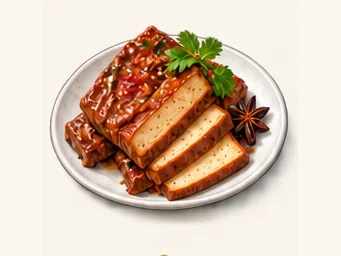
A savory, resilient dried tofu associated with Yangjiao in Wulong District, made from pressed soy curd and traditionally finished with layered spiced brining. Its concentrated bean aroma and chewy texture make it a distinctive Wulong specialty rather than a dish unique to every part of Chongqing.
A Wulong specialty with a specific home
Yangjiao dried tofu takes its name from Yangjiao, in present-day Wulong District, southeastern Chongqing. Chongqing municipal sources identify it as a signature Wulong bean product, and the municipal archives trace the named tradition to the Yangjiao area and the late eighteenth century. It is therefore best understood as a Wulong regional specialty within Chongqing—not as a food that originated uniformly across the whole municipality. Packaged products may be made or distributed beyond the original town, so the name describes a food tradition, not a guarantee that every packet was produced in Yangjiao.
How it is made and tastes
The traditional process starts with soybeans: they are soaked, ground, cooked and filtered into soy milk, then coagulated and pressed into a firm white tofu base. The municipal archives describe repeated seasoning with a blend of spices, including star anise, Sichuan pepper and tsaoko, using a “three brines, three drying” sequence; some products are then colored with a traditional syrup technique. This is a description of the documented traditional method, not a fixed formula for every contemporary brand or flavor.
The finished classic tofu is compact and resilient rather than pudding-soft. Its brown, glossy exterior contrasts with a pale cream-to-yellow interior. Expect a dense, springy chew, a clear soybean aroma and a lingering savory-sweet fragrance from the seasoned brine. The archive account describes the traditional piece as fine-textured and aromatic; a 2020 Chongqing Daily report likewise characterizes it as smooth, chewy and strongly bean-scented.
Flavors and ways to try it
Five-spice is a useful first taste if you want the bean curd and aromatic brine to lead. Chili-forward, pickled-pepper and barbecue seasonings are also documented product styles. Modern Yangjiao-branded ranges extend beyond plain pressed tofu to mushroom-flavored pieces and other soy-protein foods, so check the package name and ingredient list rather than assuming every item has the same recipe or texture.
For a simple comparison, taste a small slice plain first, then try a seasoned piece; thin slices make the firm, layered texture easier to notice. Choose the spice level from the package or seller’s description. Follow the packet’s storage and serving directions, especially for sealed products, and check the ingredients if you avoid soy or a particular seasoning. The dish is commonly sold as a snack and packaged food gift, but current stock and the range of flavors vary by seller.
Where to eat it
You can find Yangjiao spiced dried tofu all over Chongqing, so there is no need to seek out one particular restaurant. To find one near you, search for “羊角豆干” in Meituan (美团) or Amap (高德地图) and check recent reviews, distance and opening hours.
More dishes to compare
Explore related local specialties and compare their names, preparation notes and ordering guidance.
Dianjiang stone-ground tofu pudding 垫江石磨豆花 →
Soybeans are stone-ground, cooked and lightly set into tender curds. The curds are served with a separate savory dipping mixture rather than being fully dressed in the bowl. The tofu is mild, moist and softly textured, while chili, herbs and other condiments supply a much stronger flavor.
Wushan leaf jelly 巫山翡翠凉粉 →
A local edible plant is processed to create a green jelly, which is set, cut and served with a dressing. The dish is plant jelly rather than ordinary wheat noodles. The jelly is cool, smooth and softly yielding, with the sauce providing much of its salt, acidity or heat.
Sources & reading
Recipes and servings vary between kitchens.