

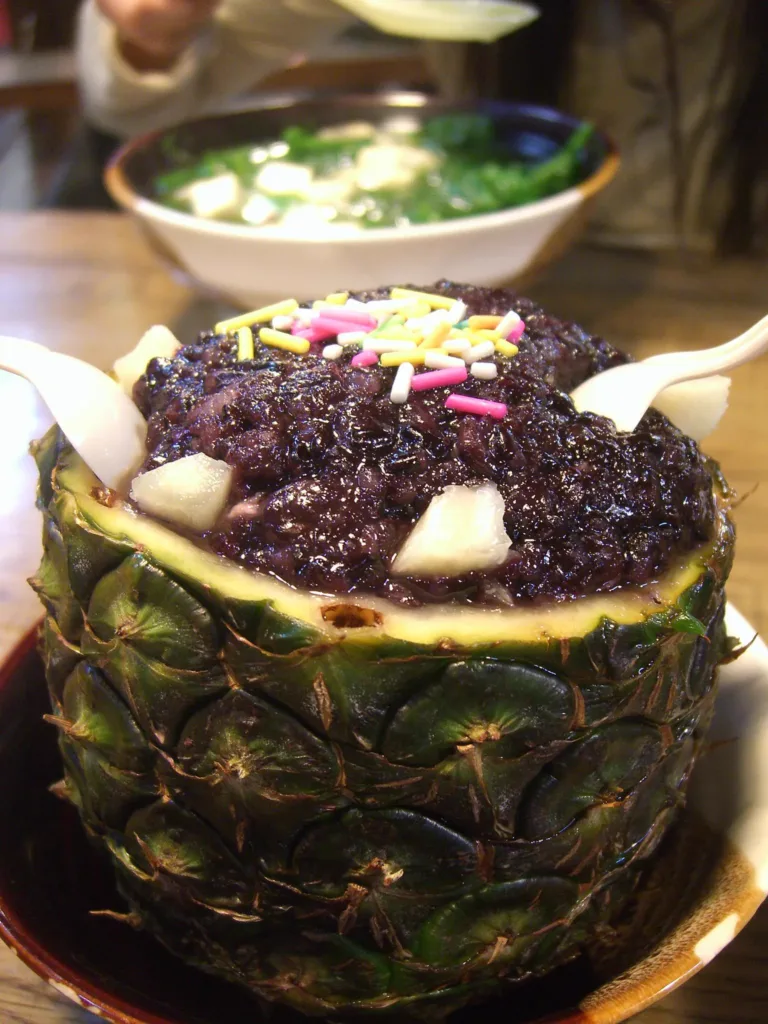
Purple Rice Steamed in Pineapple 菠萝紫米饭
A sweet Dai-style rice dish associated with Xishuangbanna: purple glutinous rice is steamed with pineapple in a hollowed fruit, creating a soft, fragrant sweet-sour bite and a purple-and-yellow presentation. Recipes vary, so the same name may arrive with different rice blends, sweetness, or optional nuts.
Tap any red Chinese text to hear it in Mandarin.
What makes it distinctive
Purple Rice Steamed in Pineapple is the version of 菠萝饭 worth seeking when you want to taste Xishuangbanna’s Dai cooking in one small serving. Local tourism coverage describes pineapple rice as a traditional Dai food and specifically notes purple-rice versions alongside the more usual white glutinous rice. The pineapple contributes fresh, fragrant, sweet-and-sour fruitiness; the rice contributes a soft, sticky chew.
The whole pineapple is more than decoration. A typical method hollows out the fruit, mixes its flesh with cooked or steamed glutinous rice, and steams the filled pineapple again. This lets the rice take on the fruit’s aroma while keeping the dish recognisably a rice preparation. Dai cooking’s use of plant containers is part of the same idea.
A Yunnan culture-and-tourism feature on traditional banquets places purple-rice pineapple rice among the dishes of Xishuangbanna’s Green Leaf Banquet, arranged with other foods in a peacock display. Treat that as a banquet presentation and cultural context, not as a fixed recipe or a promise that every restaurant serves it this way.
Do not confuse it with Thai-style savoury pineapple fried rice. The Dai version described in the English food feature is sweet-sour and oil-free, centred on rice and pineapple rather than shrimp, vegetables and pepper.
How to order and eat it
Keep the Chinese name 菠萝紫米饭 Bōluó Zǐmǐ Fàn on your phone. Menus may shorten it to 菠萝饭 Bōluó Fàn, so ask whether the rice is the purple-glutinous version and whether it will be served in a pineapple shell. A cookbook-based account recommends keeping pineapple pieces rather than turning them into juice; the chunks give the rice a clearer fruit texture.
It is sweet, but its place in a meal is not fixed. One account presents it as a festive sweet course, while the cookbook description treats it as part of the meal rather than a dessert. Either way, it works best as a small shared serving alongside savoury Dai dishes, not as a substitute for a plain bowl of rice.
Recipes are not standardised. Documented versions use purple or white glutinous rice and may add sugar or honey, salt, peanuts, raisins, almonds or coconut milk. If you have a nut or other food allergy, ask about that kitchen’s ingredients instead of assuming that the fruit bowl is plain.
Look for 菠萝紫米饭 Bōluó Zǐmǐ Fàn or 菠萝饭 Bōluó Fàn on Dai-style menus or banquet offerings in Xishuangbanna, and expect the sweetness, rice colour and serving vessel to vary. The 2024 local tourism feature highlighted it as a Xishuangbanna food to try around the Water-Splashing Festival.
Confirm the day’s menu and portion with the venue, then eat the rice while warm so the pineapple fragrance is easiest to notice.
Where to eat it
You can find Purple Rice Steamed in Pineapple all over Yunnan, so there is no need to seek out one particular restaurant. To find one near you, search for “菠萝紫米饭” in Meituan (美团) or Amap (高德地图) and check recent reviews, distance and opening hours.
Sources & reading
Image credits & notes (1)
- Sweet black glutinous rice served in a hollowed pineapple at Huguoqiaotou Snack Centre, Kunming, Yunnan; a regional example rather than a photograph from Xishuangbanna. Photo: Alpha (Flickr user avlxyz)Photo: CC BY-SA 2.0