

Nanmi Dipping Sauce 喃咪
Nanmi (喃咪) is a family of Dai dipping sauces associated with Xishuangbanna, not one fixed recipe. Vegetables, tomatoes, fruit, fish, shrimp or crab may be roasted, simmered, pounded, chopped or mixed into versions that run from sour and hot to fragrant, savoury, sweet or bitter; the sauce is eaten with vegetables, sticky rice and other table foods. Nanmi is best understood as a bowl that changes with its main ingredient. A local Xishuangbanna account lists green-vegetable, tomato, sour-bamboo-shoot, fish, crab and qingguo-fruit versions. The point is not a single “authentic” red sauce but the Dai practice of matching a fresh, grilled or sticky accompaniment with a strongly seasoned dip.
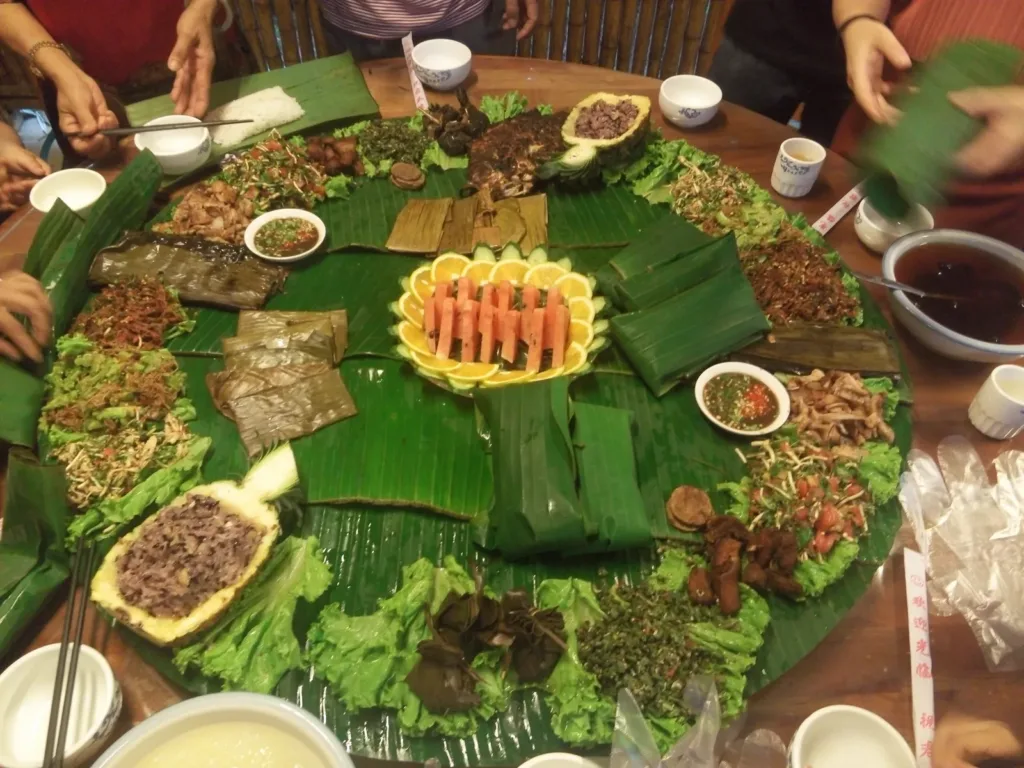
Nanmi is best understood as a bowl that changes with its main ingredient. A local Xishuangbanna account lists green-vegetable, tomato, sour-bamboo-shoot, fish, crab and qingguo-fruit versions. The point is not a single “authentic” red sauce but the Dai practice of matching a fresh, grilled or sticky accompaniment with a strongly seasoned dip.
How a tomato nanmi is made
Tomato nanmi is a clear first version to try. Tomatoes may be steamed or boiled, but the charcoal method described in local coverage chars the skins and cooks the tomatoes through; bird’s-eye chillies and peanuts can be warmed alongside. Ginger, garlic, coriander, chilli and peanuts are pounded in a mortar before peeled tomatoes and salt are worked in. Recipes vary, and other nanmi use different bases and techniques; fish, shrimp, crab, sour bamboo shoots and fruit are not interchangeable ingredients.
How to eat it
Use the Chinese name when asking: 喃咪. It is a dip rather than a standalone soup. Common pairings reported in Xishuangbanna include bitter bamboo shoots, fresh or blanched vegetables, fried cowhide and sticky rice. One seasonal combination described by local coverage is tomato nanmi with water coriander (水香菜), a riverside green associated in that account with the weeks around the Water-Splashing Festival. Treat that as a seasonal example, not a promise that every kitchen serves it year-round.
The local report says it is served not only in villages but also in cities, towns and scenic sites across Xishuangbanna. Look for 喃咪 on a Dai-style menu or ask what variety is available; a restaurant may offer tomato, peanut, sour-bamboo-shoot, fish or crab versions rather than a generic “dipping sauce.” Ask about the base before ordering: fish, shrimp, crab and peanuts are all documented ingredients, so the appearance alone cannot establish that a bowl is vegetarian or free of allergens.
The making technique of the Dai nanmi series was reported as a fourth-batch Xishuangbanna prefecture-level intangible-cultural-heritage project in 2013. That status belongs to the craft tradition, not to a promise that every modern serving follows one fixed recipe.
Where to eat it
You can find Nanmi all over Yunnan, so there is no need to seek out one particular restaurant. To find one near you, search for “喃咪” in Meituan (美团) or Amap (高德地图) and check recent reviews, distance and opening hours.
Sources & reading
Image credits & notes (1)
- A Dai-style green-leaf banquet in Mangshi, Dehong, with multiple bowls of dipping sauces; a regional Nanpie/Nanmi meal-context reference, not a photograph of a named Xishuangbanna restaurant. Photo: 瑞丽江的河水 (Theo Ho)Photo: CC BY-SA 4.0