

Lemon Sa Cold Dish 柠檬撒
Lemon Sa (柠檬撒) is the sour, lemon-dressed branch of Xishuangbanna’s Dai sapie tradition: rice noodles and changing side dishes are dipped into a sharp, chilli-seasoned sauce. Its appeal is the fresh contrast of citrus, herbs and heat rather than a single fixed recipe.
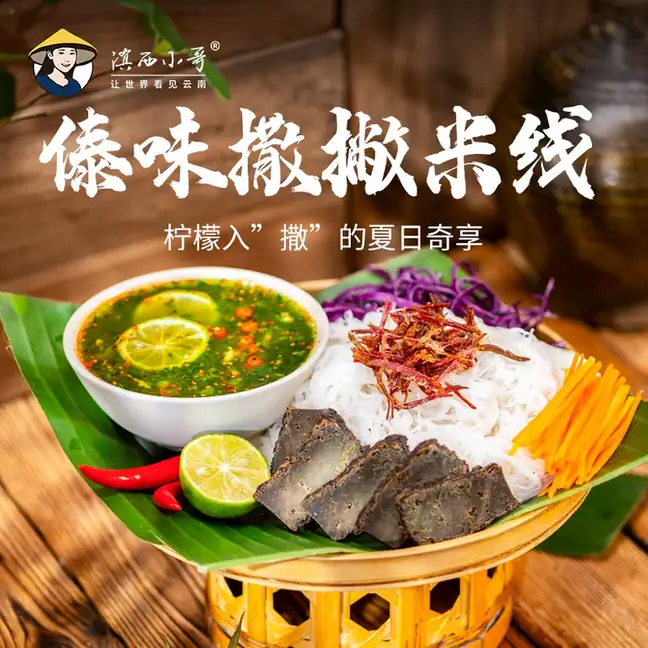
Image notes
Resized for the web; the photo itself has not been edited.
What it is
In Xishuangbanna, 柠檬撒 (Ningmeng Sa) is one of the local forms of 撒撇 (sapie), a Dai cold-mixed dish built from a main ingredient, side dishes and a separately prepared dipping sauce. Local reporting lists beef, lemon, fish, bitter and eggplant versions; another Yunnan source describes the lemon version as sour, while beef sapie takes on the bitterness of cattle-intestine water.
The useful distinction is between the sour dressing and the rest of the plate. Fine Dai rice noodles, cucumber, ciwujia (刺五加), water greens, bitter bamboo shoots and mati cai (马蹄菜) are among the reported accompaniments, but the mix changes by kitchen and by the main ingredient. This is why “Lemon Sa” is better understood as a flavour route within the sapie family than as one protected, identical recipe.
What to notice
The first impression is citrus acidity and chilli heat, with fresh herbs and crisp vegetables keeping the dish light. It is served as a cold or cool mixed dish rather than as a standard soup; the point is to coat a bite of noodle or side dish with the lemon sauce, then adjust the balance as you go. An English-language Yunnan food guide describes lemon sapie as lemon-based liquid served with rice noodles, shredded tripe or meat slices; use that as a serving pattern, not a promise about every bowl.
The contrast with bitter sapie is useful when ordering. A lemon-based sauce is usually the more immediately sour and bright option, while beef sapie may use filtered bitter liquid and meat-based ingredients. A recent local account of beef sapie in Menghai also stresses fresh market ingredients and careful handling of beef, tripe, herbs and bitter liquid. That account is for beef sapie, not proof that every lemon-sa serving contains any one of those ingredients.
How to eat it
Start with a small bite. Pick up some rice noodle or a side dish, dip it into the sauce, and taste the lemon, chilli and herbs together. If a stall serves a beef-sapie noodle bowl alongside it, local reports describe adding mint, lemon and broth to noodles and eating fried cowhide on the side; that is a related Menghai eating tradition, not a fixed definition of lemon sa.
Ask for 柠檬撒 (ningmeng sa) rather than relying on an English translation. If you need fully cooked food, avoid offal, or have allergies, ask whether the serving contains raw meat, beef-intestine bitter liquid, tripe or fish. The name alone does not guarantee vegetarian, fully cooked or allergen-free ingredients. Different kitchens and variants are explicitly reported, so confirm before eating.
Practical tips
In Jinghong or elsewhere in the prefecture, showing the Chinese name on your phone is the simplest way to ask. Expect the dish to be served as a fresh, assembled plate or bowl, and allow the cook’s current ingredients and preparation to define the version you receive.
Where to eat it
You can find Lemon Sa all over Yunnan, so there is no need to seek out one particular restaurant. To find one near you, search for “柠檬撒” in Meituan (美团) or Amap (高德地图) and check recent reviews, distance and opening hours.