

Explore the region
Tap any red Chinese text to hear it in Mandarin.
In brief: Shizhu Mountain is a 534-metre mountain west of Fuqing where a cliffside temple group, unusual rocks and caves, bamboo-covered slopes, and the waters of Dongzhang Reservoir meet. Its distinctive cultural thread is qimeng (祈梦), a local dream-praying tradition associated with the Nine He Immortals; the visit is best understood as both a mountain walk and an active religious landscape.
Read the mountain as a layered landscape
The name describes the setting: “stone” for the mountain’s strange rock forms and “bamboo” for its wooded slopes. The Fuqing government’s current tourism listing describes a 13.31-square-kilometre scenic area, a 534-metre elevation, and 128 named attractions, including Shizhu Temple and Lion Rock. The number is a current official description of the scenic area, not a promise that every minor feature is signposted or open on the day.
Begin with the temple group around Xianjun Tower, Guanyin Hall and Wenchang Pavilion. The buildings sit on the mountainside rather than in a flat urban compound, so pause at the approach to see how the architecture occupies the cliff and the forest. The religious landscape is primarily Daoist but also carries Buddhist and Confucian layers; an English account of the mountain describes the temple as a cliffside complex associated with the Nine He Immortals. China Daily likewise highlights the coexistence of Taoism, Buddhism and Confucianism here, alongside temples, caves, stones and towers.
The dream-praying tradition is the most specific way to observe the site’s living culture. Qimeng means seeking guidance through a dream, not watching a staged performance and not receiving a tourist guarantee. If you see worshippers making offerings, drawing lots or waiting quietly, keep a respectful distance and ask before photographing people, ritual objects or interiors. Follow posted instructions in active worship spaces; a visitor can appreciate the practice without presenting a personal belief as a proven prediction. The municipal tourism account calls Shizhu Mountain a source and continuing home of “dream culture.”
Then change the way you look. The mountain’s Daoist reference lists deep grottoes such as Ziyun Grotto and Peach Spring Grotto, named rocks, and cliff inscriptions associated with visiting scholars. These are details to look for along an open route, not a guarantee that every cave, inscription or interior can be reached. Do not climb beyond barriers or touch carved surfaces. From the lower slopes, Dongzhang Reservoir (also called Shizhu Lake in recent local reporting) gives the temple mountain a broad water setting; allow time to look back at the relationship between the wooded shore and the rising rock.
Getting there and getting back
For a rail-based visit, use Fuqing West railway station (福清西站). Public transport notices label the same hub 高铁西站 Gāotiě Xīzhàn. From there, bus 801 and bus 807 both continue to the terminal stop 石竹山 Shízhú Shān. The 801 route also runs through the city’s 龙江公交站(汽车站), while 807 runs from 龙山车场; the published stop lists place 高铁西站 immediately before 真丰新村 and 石竹山 on the approach.
At 石竹山, keep the Chinese destination name visible: 石竹山风景区 Shízhú Shān Fēngjǐngqū or 石竹山 Shízhú Shān. The public route notice confirms the terminal stop but does not establish a reliable walking-minute figure from the stop to the exact visitor gate, so do not plan around a guessed distance. For the return, board the opposite-direction 801 or 807 from the 石竹山 terminus only after checking the day’s direction and live service in Amap / Gaode.
If you arrive at 福清动车站 Fúqīng Dòngchēzhàn rather than 福清西站, the same transport notice lists bus 806 between 福清动车站 and 高铁西站. Treat it as a connection to the 801/807 leg, not as a direct bus to the mountain. Confirm the transfer and the last return departure before beginning the climb.
A 2023 route notice is useful for station names and route shape, but it is not a guarantee of 2026 departures, road conditions or a nighttime visit. The exact gate-side drop-off and the current operation of any sightseeing vehicle, cable car or elevator are not established by the sources used here.
Before you go
The Fuqing government page confirms the scenic area’s 4A status and cultural scope, but it does not state current opening hours, ticket rules or reservation requirements. Older promotional material and route reports should not be used to infer today’s charges. Check the current notice or ask the operator about the main gate, temple interiors, courtyards and any separately ticketed transport before setting out. Active worship areas may have their own access rules, and mountain weather can make steep or wet paths less comfortable.
Wear shoes suitable for steps and uneven rock. Treat the temple as a place of worship rather than a photo set: keep voices low, do not block offerings, and do not enter a closed hall. If a route or inscription is fenced off, read the landscape from the public path instead. The mountain is worth visiting precisely because its natural forms, reservoir view and religious practice remain connected rather than reduced to one monument.
Find Shizhu Mountain
石竹山 · 福清市
The pin marks the area, not the entrance.
Sources & visit information
Sources checked on 2 November 2026. Hours, tickets, reservations and transport can change; confirm with the operator before you go.
Image credits & notes (1)
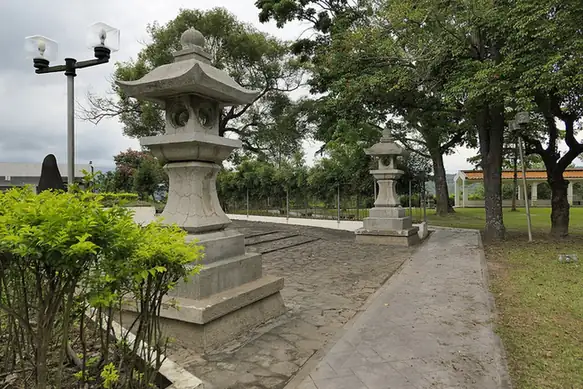
- Shizhu Mountain · 石竹山Photo: sohu.comResized for the web; the photo itself has not been edited.