


Explore the region
About Daxiangshan Grottoes
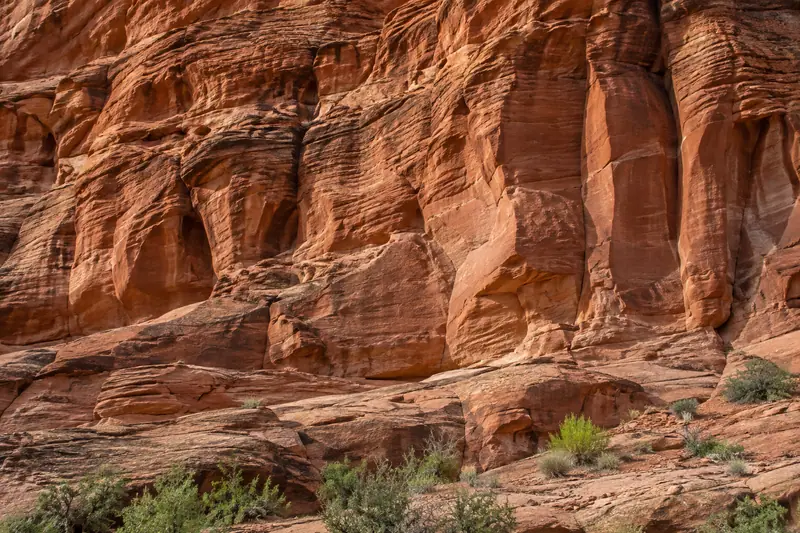
The mountain is widely covered by red sandy-conglomerate rock roughly 140 million years old, and the Gansu Daily feature records that its danxia landform is what made cave-cutting possible there. A stone-stepped ascent runs from the foot of the mountain to the summit, 1.5 km in total over about 640 mu, and the State Council declared the site a Major Historical and Cultural Site Protected at the National Level in 2001. The Tianshui municipal government portal gives the distance to the Maijishan Grottoes as 100 km to the east and to the Shuiliandong Grottoes at Wushan as 40 km to the west, and attributes the distinctive style and system of eastern Gansu's Buddhist cave art to the proximity and shared historical background of the three.
The site divides into a western and an eastern zone. The western zone carries a sequence of Ming and Qing structures that both cited pages list in order up the slope, including the Earth God temple, the Jieyin Buddha Hall, Lu Ban Hall, Guan Sheng Hall, Wuliang Hall and Shuangming Cave. The eastern zone holds 22 cave-shrines, all cut as roughly flat-ceilinged square caves with attached meditation cells, a form the Gansu Daily feature calls comparatively rare; Cave 6, the Dafo Hall, is the most important of them. Its niche lies at 1,516 m above sea level, 200 m above the ground, and measures 34 m high, 14 m wide and 4.5 m deep. Inside is a Tang-dynasty Buddha carved from the living rock and finished in clay, 23.3 m tall with shoulders 9.5 m across, seated on a lotus platform with each foot on a lotus base.
The Gansu Daily feature records, citing historical sources, that large-scale cave-cutting and image-making here began about in the Yao Qin period, that Buddhist activity flourished from the Northern Dynasties on, and that it peaked in the Tang.
What to look for
- The 23.3 m Tang-dynasty Buddha in Cave 6, the Dafo Hall, carved from the living rock and finished in clay, seated on a lotus platform in a niche 34 m high, 14 m wide and 4.5 m deep
- The niche's position, 1,516 m above sea level and 200 m above the ground
- The 22 cave-shrines of the eastern zone, cut as roughly flat-ceilinged square caves with attached meditation cells
- The Ming and Qing structures along the western zone's stepped ascent, among them the Earth God temple, Jieyin Buddha Hall, Lu Ban Hall, Guan Sheng Hall, Wuliang Hall and Shuangming Cave, among others
- The red sandy-conglomerate rock and danxia landform of Wenqi Mountain that the Gansu Daily feature says made the cave-cutting possible
Location & getting there
Getting to Daxiangshan Grottoes
Check which interiors and courtyards are accessible. Active places of worship and protected monuments may have different visitor rules.
- Search for 大像山石窟 with 天水市 and 甘谷县.
Find Daxiangshan Grottoes
大像山石窟 · 甘谷县
No reliable map pin yet: search by the Chinese name.
Sources & visit information
The linked sources support the identity and background described in this introduction. Opening hours, admission, activity availability and exact arrival arrangements have not been comprehensively checked. Confirm current visitor information with the venue; the original catalogue locality and editorial review flag are retained.
Image credits & notes (1)
- Daxiangshan Grottoes (大像山石窟), Gangu County. Photograph: "甘谷唐代大佛 2010.10 - panoramio".Photo: shannabian · CC BY 3.0Resized for the web; the photo itself has not been edited. Thumbnails may show a cropped view.
