


Explore the region
About Xianrenya Cliff Temples
The grottoes have stood in the Maijishan scenic area since the Northern and Southern Dynasties, more than 1,600 years. The China Gansu Net report states that building began in the late Northern Wei, that the site was called Huayan Temple in the Song, and that the Yongle emperor of the Ming bestowed the name Lingying Temple, and that Xianrenya Grottoes are part of the Maijishan Grottoes and share its listing as a Major Historical and Cultural Site Protected at the National Level. It has been a place revered by Buddhism, Daoism and Confucianism alike and is given as the seat of the Tianshui Buddhist Association; the report relates the name to immortals said to have emerged from the natural caves and lived there in retreat.
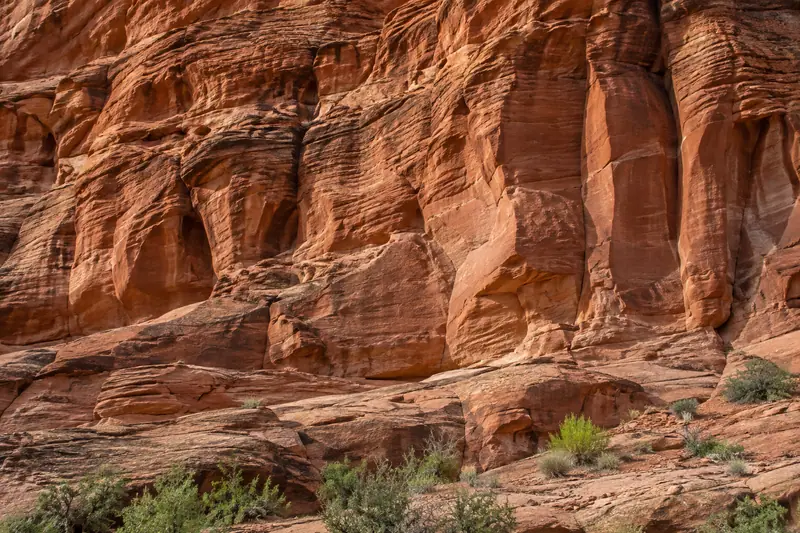
The site is made up of three cliffs, five peaks and six temples, with green peaks rising above the cliff tops and the temples and shrines built on the summits or in the overhanging faces. Naming them, the report gives the cliffs by direction — East, West and South — the peaks as Yuhuang, Baogai, Xianzhu, Dongya and Xianya, and the temples as Mulian, Shilian, Tielian, Hualian, Shuilian and Lingying. What survives, the report says, is 27 Ming and Qing buildings, 197 sculptures of the Northern and Southern Dynasties, Song, Ming and Qing, and 83 sq m of wall painting. The five peaks and the peaks of Luohan Gully are described as ranged in varied postures as if bowing to Yuhuang Peak, a sight known as 'eighteen arhats paying homage to the Buddha'.
The catalogue's highlight names danxia alongside the temples and caves, but neither cited page describes danxia landform at Xianrenya.
What to look for
- The three cliffs — East, West and South — with the temples and shrines built on the summits or in the overhanging cliff faces
- The five peaks: Yuhuang, Baogai, Xianzhu, Dongya and Xianya
- The six temples: Mulian, Shilian, Tielian, Hualian, Shuilian and Lingying
- The surviving 27 Ming and Qing buildings and 197 sculptures of the Northern and Southern Dynasties, Song, Ming and Qing, with 83 sq m of wall painting
- The peaks of Luohan Gully, which the report describes as ranged as if bowing to Yuhuang Peak, a sight it calls 'eighteen arhats paying homage to the Buddha'
Location & getting there
Getting to Xianrenya Cliff Temples
Check which interiors and courtyards are accessible. Active places of worship and protected monuments may have different visitor rules.
- Search for 仙人崖 with 天水市 and 麦积区.
Find Xianrenya Cliff Temples
仙人崖 · 麦积区
No reliable map pin yet: search by the Chinese name.
Sources & visit information
The linked sources support the identity and background described in this introduction. Opening hours, admission, activity availability and exact arrival arrangements have not been comprehensively checked. Confirm current visitor information with the venue; the original catalogue locality and editorial review flag are retained.
Image credits & notes (1)
- Xianrenya Cliff Temples · 仙人崖Photo: gansu.gscn.com.cnResized for the web; the photo itself has not been edited.