


Get to know Nanhai District
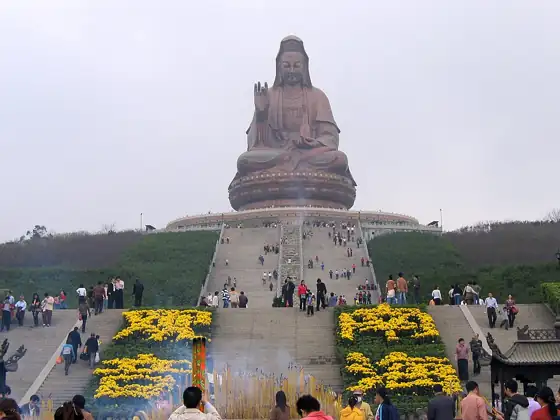
Photo adjustments
Resized and WebP compressed; subject not altered.
- Administrative area
- District · 市辖区
- Part of
- Foshan
- Chinese name
- 南海区
- Local areas
- District guide
Area & population
- Area in the source
- 1,074.00 km²
- Population · 2020 Census
- 3,667,247
Source: cited geographic source, as of the dates shown.
Setting and landscape
Nanhai lies on the delta plain, broken by isolated hills; the highest point, Gaoaoding (高凹顶), reaches 540 m. The main streams of both the Xi River (西江) and the Bei River (北江) cross the district, and to the west it faces Gaoming (高明) and Heshan (鹤山) across the river. Rain is concentrated from April to September, and typhoons often affect the area between July and October.
History
The name goes back to Nanhai Commandery, set up under the Qin in 214 BC; Nanhai County followed in 590 under the Sui. For centuries the county seat was inside Guangzhou: under the Qing, Nanhai and Panyu (番禺) were the two counties seated inside Guangzhou city, and the offices of the Liangguang governor-general and the Guangdong governor lay within Nanhai's part of it. The seat moved to Foshan in 1912 and to Guicheng in 1988; Nanhai became a county-level city in 1992 and a district of Foshan in 2002. Notable natives listed by the district include Kang Youwei (康有为), Zhan Tianyou (詹天佑), Wong Fei-hung (黄飞鸿) and He Xiangning (何香凝). Lion dance is widespread: Nanhai alone has more than 2,100 lion-dance troupes.
What to see
Mount Xiqiao is an ancient volcano about 45 million years old, rising to about 344 m, with 72 peaks, 36 caves and 28 waterfalls. It is a national scenic area and AAAAA tourist attraction, known as the hometown of Wong Fei-hung and a birthplace of southern lion dance. People made "double-shouldered" stone tools here about 6,000 years ago, and the hill is described as the largest ancient quarry site in South China. Ming and Qing academy ruins, cliff inscriptions and Baofeng Temple (宝峰寺), over 600 years old, survive on its slopes.
Songtang Village (松塘村), in Xiqiao town, dates from the Song dynasty and became a national historic and cultural village in 2010; its lanes face the pond, and it keeps wok-handle-gabled houses (镬耳屋) and the Ou Clan Ancestral Hall (区氏宗祠). Pingzhou Jade Street (平洲玉器街) in Guicheng is listed as one of China's four major jade markets and a base for processing and wholesaling Burmese jadeite. Nanhai Film and Television City (南海影视城) in Shishan (狮山), a production base of China Media Group opened in 1998, has imperial-palace, Jiangnan water-town and Hong Kong-Macau culture areas.
Food and local products
Jiujiang (九江) is known as China's home of largemouth bass (加州鲈), and Linyue (林岳) diaosi bamboo shoots (吊丝丹笋), crisp and sweet without fibrous residue, are in season from May to October.
Highlights
- Mount Xiqiao 西樵山: Ancient volcano about 45 million years old, a national scenic area with Baofeng Temple, cliff inscriptions and a prehistoric stone-tool quarry.
- Songtang Village 松塘村: Song-dynasty village in Xiqiao, a national historic and cultural village since 2010.
- Pingzhou Jade Street 平洲玉器街: Listed as one of China's four major jade markets, specialising in Burmese jadeite.
- Nanhai Film and Television City 南海影视城: Film base in Shishan opened in 1998, with imperial-palace, Jiangnan water-town and Hong Kong-Macau culture areas.
- Linyue diaosi bamboo shoots 林岳吊丝丹笋: Crisp, sweet bamboo shoots in season from May to October.
Sources for this guide
南海区 · 维基百科 (Chinese Wikipedia) · CC BY-SA 4.0
南海区区情概况 · 佛山市南海区人民政府
西樵山景区 · 佛山市南海区文化广电旅游体育局 (via 南海区人民政府)
西樵松塘翰林村景区 · 佛山市南海区文化广电旅游体育局 (via 南海区人民政府)
平洲玉器街景区 · 佛山市南海区文化广电旅游体育局 (via 南海区人民政府)
南海影视城景区 · 佛山市南海区文化广电旅游体育局 (via 南海区人民政府)
九江鲈鱼 · 佛山市南海区文化广电旅游体育局 (via 南海区人民政府)
平洲吊丝丹笋 · 佛山市南海区文化广电旅游体育局 (via 南海区人民政府)
Original English written from the listed sources and checked sentence by sentence against quoted extracts by a separate reviewer. Updated 2026-09-23.
Explore Nanhai District
Core places to explore, with English and Chinese names.
Places to explore around Nanhai District
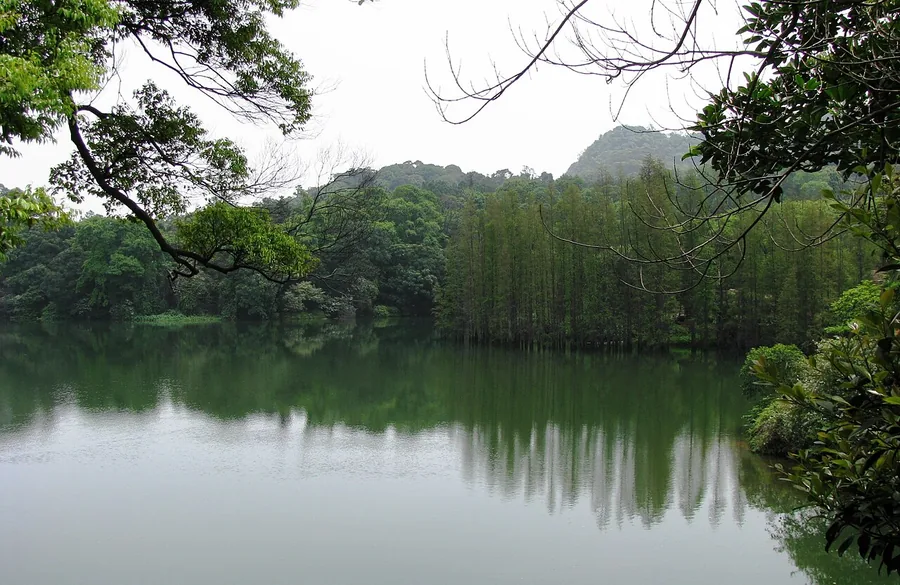 A wooded lake landscape on Mount Xiqiao, Foshan. Photographed on 6 April 2008.
Mount Xiqiao西樵山
Mount Xiqiao rises above the flat Pearl River Delta with wooded peaks, rock cavities and spring-fed scenery. Baiyun Caves occupy the northwestern foothills, while higher visitor areas include Baofeng Temple and the large seated…
Read the place guide →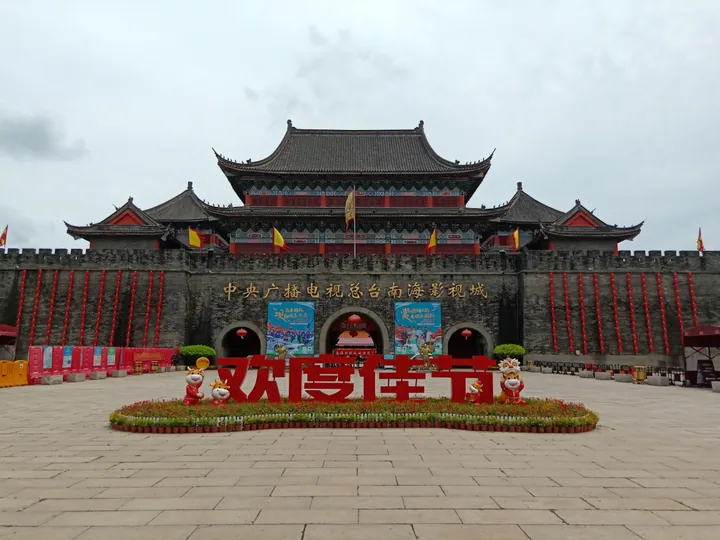 Main gate of CCTV Nanhai Movie and TV Town, Nanhai District · 南海区中央广播电视总台南海影视城大门 Source-recorded photograph date: 2021-05-20 13:58:44.
Nanhai Film and Television City南海影视城
China Media Group filming base in Nanhai, Foshan, with a replica Taiping palace, a Jiangnan water town and 1920s Hong Kong and Macau streets.
Read the place guide →Plan your visit
Getting there
Nanhai District is about 9 km in a straight line from central Foshan. Search for 南海区 in a map app to find stations and your accommodation.
Where to stay →Build your route
Mount Xiqiao and Nanhai Film and Television City are both listed here. The linked place guides have entrance and visit details.
Continue with Foshan →More in Foshan
Sources & geographic information
Administrative names and parent areas: Official geographic directory · Reference date 2026-09-06.
Some facts checked against 南海区 — Wikipedia contributors, CC BY-SA 4.0.
Photo: Mount Xiqiao · David Chen (东北虎 / Manchurian Tiger) · CC BY 3.0. Proportionally resized and converted to WebP without cropping, retouching or changing the photographed subject.

Photo: Nanhai Film and Television City · PQ77wd · CC BY-SA 4.0. Full frame retained; proportionally resized and converted to WebP. No retouching or changes to the photographed subject. Card displays may crop the view.

Map data © OpenStreetMap contributors. Pins mark approximate centres, not entrances or boundaries.