


Get to know Longmen County
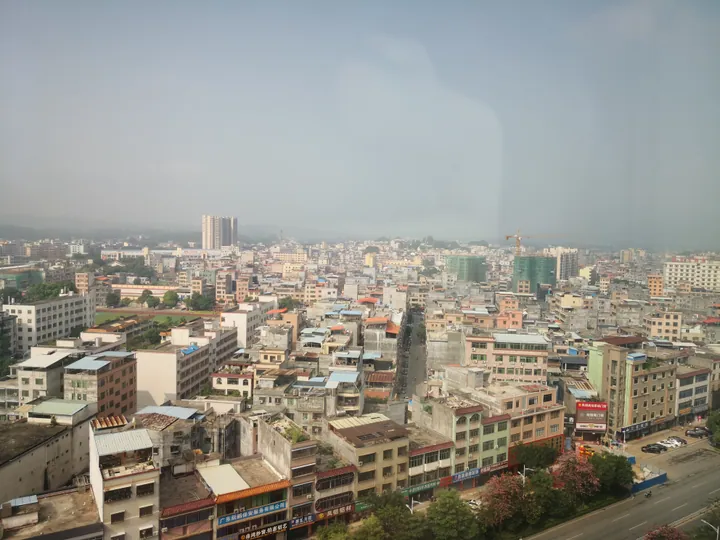
Photo adjustments
Full frame retained; proportionally resized and converted to WebP. No retouching or changes to the photographed subject. Card displays may crop the view.
- Administrative area
- County · 县
- Part of
- Huizhou
- Chinese name
- 龙门县
- Local areas
- County guide
Area & population
- Area in the source
- 2,295.00 km²
- Population · 2020 census
- 319,183
- Administrative seat
- Longcheng Subdistrict (龙城街道)
Source: cited geographic source, as of the dates shown.
Setting and landscape
The county sits between two mountain systems, the Jiulian (九连) and the Luofu (罗浮), and the county yearbook calls it a "land of mountains". Ground falls from the high northwest and southwest towards low hills and basins in the east and south, with ten river-valley basins of 5 to 70 square kilometres among the mountains and hills.
The Zeng River rises at Qixingling (七星岭) in Xinfeng and runs north to south through the whole county before joining the East River (东江) at Guanhaikou (观海口); 128.6 km of its course lies in Longmen. The county government named it the Longmen River in 1981, but the provincial place-name committee fixed Zengjiang as the standard name in 1990. The climate is south-subtropical monsoon with a mountain character: spring warmth comes late, autumn cool comes early, and winter brings wide day-night swings and some frost.
History
Longmen was carved out in 1496, the ninth year of the Ming Hongzhi reign, from three rural districts in the northeast of Zengcheng and a small part of Boluo (博罗). The land had been Zengcheng's "upper Longmen" area, which gave the county its name. It belonged to Guangzhou prefecture until the end of the Qing. In 1958 it was merged with Zengcheng, and it was re-established on 25 October 1961. It came under Guangzhou in January 1975 and has been part of Huizhou since April 1988.
What to see
Nankunshan National Forest Park (南昆山国家森林公园), set up in 1993 in the southwest of the county, lies on the Tropic of Cancer and is known as the "oasis on the Tropic of Cancer". Its main peak, Tiantangding (天堂顶), reaches 1,228 m, and the provincial government made the mountain a nature reserve in 1984; clouded leopards and forest musk deer are among the protected animals recorded there. Longmen Iron Spring (龙门铁泉), at Reshuiguo village (热水锅村) in Longtian town (龙田镇), is a hot-spring resort, and Tashan Forest Park (塔山公园) on the edge of the county town holds the Shuixi Pagoda (水西塔), first built in the Ming, destroyed during the Cultural Revolution and rebuilt in 1992.
Lantian Yao Ethnic Township (蓝田瑶族乡) is the only ethnic-minority township in Huizhou. In 2025 its blue-print cloth dyeing craft (蓝印花布印染技艺) and Lantian rice-fragrance tea (蓝田瑶乡米香茶) were listed as county-level intangible heritage.
Food and local products
Farming weighs heavily in the county. Its characteristic produce includes indica rice, bamboo shoots, longan, lychee, mango and honey, and its specialities include three-yellow bearded chicken (三黄胡须鸡), rice cakes (米饼) and honey vinegar (蜂蜜醋).
Highlights
- Nankunshan National Forest Park 南昆山国家森林公园: Forest park set up in 1993 on the Tropic of Cancer; main peak Tiantangding reaches 1,228 m.
- Longmen Iron Spring 龙门铁泉: Hot-spring resort at Reshuiguo village in Longtian town.
- Shuixi Pagoda 水西塔: Ming-dynasty pagoda in Tashan Forest Park, destroyed in the Cultural Revolution and rebuilt in 1992.
- Lantian Yao Ethnic Township 蓝田瑶族乡: The only ethnic-minority township in Huizhou; blue-print cloth dyeing is listed as county-level intangible heritage.
- Three-yellow bearded chicken 三黄胡须鸡: One of the county's named local products, with rice cakes and honey vinegar.
Sources for this guide
自然环境 - 龙门县人民政府门户网站 · Longmen County People's Government (from the Longmen Yearbook)
历史沿革 - 龙门县人民政府门户网站 · Longmen County People's Government (from the Longmen Yearbook)
民族宗教 - 龙门县人民政府门户网站 · Longmen County Ethnic and Religious Affairs Bureau
龙门县 - 维基百科,自由的百科全书 · Wikipedia (Chinese) · CC BY-SA 4.0
南昆山国家森林公园 - 维基百科,自由的百科全书 · Wikipedia (Chinese) · CC BY-SA 4.0
Original English written from the listed sources and checked sentence by sentence against quoted extracts by a separate reviewer. Updated 2026-09-23.
Explore Longmen County
Core places to explore, with English and Chinese names.
Places to explore around Longmen County
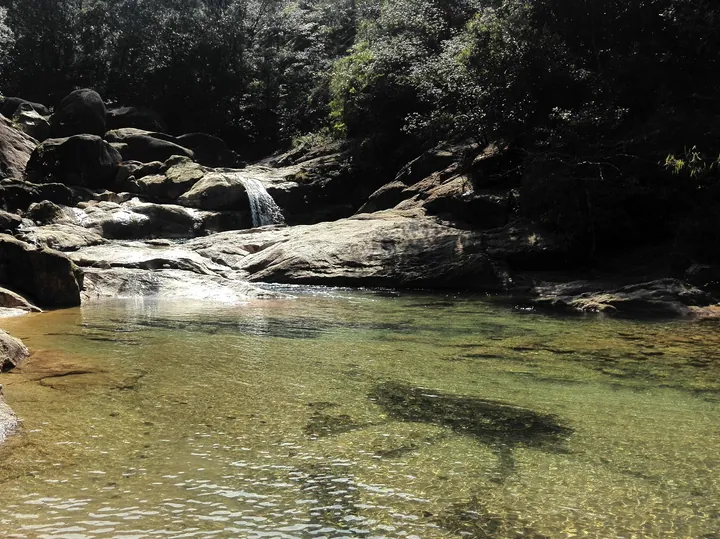 A forest stream tumbling over a small waterfall in Nankunshan National Forest Park, Longmen County, Huizhou ·
 Plan your visit
Getting there
Longmen County is about 70 km in a straight line from central Huizhou. Search for 龙门县 in a map app to find stations and your accommodation.
Where to stay →Build your route
Start with Nankun Mountain. The linked place guides have entrance and visit details.
Continue with Huizhou →More in Huizhou
Sources & geographic information
Administrative names and parent areas: Official geographic directory · Reference date 2026-09-06.
Some facts checked against 龙门县 — Wikipedia contributors, CC BY-SA 4.0.
Some facts checked against 南昆山国家森林公园 — Wikipedia contributors, CC BY-SA 4.0.
Photo: Nankun Mountain · Qiu Mao · CC BY 3.0. Full frame retained; proportionally resized and converted to WebP. No retouching or changes to the photographed subject. Card displays may crop the view.
.jpg)
Map data © OpenStreetMap contributors. Pins mark approximate centres, not entrances or boundaries.