


Photo adjustments
Full frame retained; proportionally resized and converted to WebP. No retouching or changes to the photographed subject. Card displays may crop the view.
Explore the region
About Lake Khanka
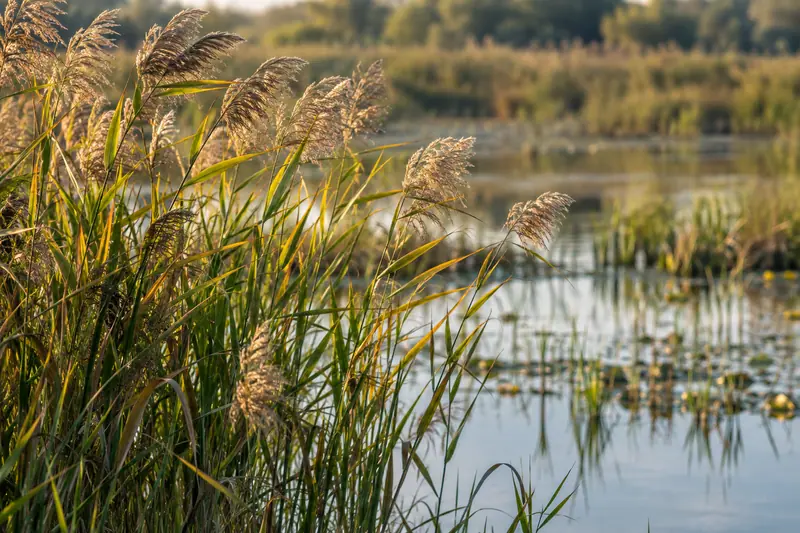
On the Chinese side, a wooded sandy ridge separates the main lake from Little Xingkai Lake, creating two very different water views within one landscape. Xinkailiu's observation platform makes that geography especially clear. The adjoining wetland routes bring the scale down to reeds, shallow water and bird habitat, providing a focused visit without attempting to follow the whole international shoreline.
Fishing and hunting peoples are recorded in the area since the Han dynasty, and the lake later lay within Balhae, the Liao, Jin, Yuan and Qing territories; under the Qing it was administered by the Jilin general. Its shape, likened to a yueqin (月琴) lute, gave it the Jin-era name 'North Qin Sea' (北琴海). Under the 1858 Treaty of Aigun and the 1860 Treaty of Beijing, Russia gained management and then sovereignty over most of the lake.
The lake is the source of the Songacha River (松阿察河), a tributary of the Ussuri River. Little Xingkai Lake, also called Dabuku Lake (达布库湖), lies entirely within China, covering 170 square kilometers with an average depth of 1.8 meters and connects to the larger lake through floodgates and the Xinkailiu channel. Big Xingkai Lake, the border section, spans 60 by 130 kilometers with a shoreline of more than 400 kilometers and reaches a maximum depth of 10 meters.
The lake's catchment covers 16,890 square kilometers, more than 97 percent of it in Russia, fed by 23 rivers, eight from China and fifteen from Russia. The Chinese side forms the main part of the Xingkai Lake Nature Reserve, an internationally important wetland, and the Russian side has a nature reserve of the same name.
What to look for
- The contrast between Great and Little Xingkai lakes from Xinkailiu's observation platform.
- The wetland boardwalk and reed-edge habitat in the Xinkailiu visitor area.
Background & history
Lake Khanka (Russian: о́зеро Ха́нка) or Lake Xingkai (simplified Chinese: 兴凯湖; traditional Chinese: 興凱湖; pinyin: Xīngkǎi Hú), is a freshwater lake on the border between Primorsky Krai, Russia and Heilongjiang province, Northeast China (at 45°0′N 132°25′E).
Excerpt from Wikipedia: Lake Khanka · Wikipedia contributors · CC BY-SA 4.0. Selected introductory sentences; formatting simplified. Background information, not current visitor-service advice.
Location & getting there
Getting to Lake Khanka
Travel from Mishan to the Xinkailiu scenic area on the ridge between Great and Little Xingkai lakes.
- Use the marked observation-platform and wetland entrances; the broad lake shoreline includes protected and border-controlled areas.
Combine your visit
Suggested order within this visit:
-
Xinkailiu observation platform
First understand the two lakes and separating ridge.
-
Wetland boardwalk
Continue at ground level through the permitted habitat-viewing area.
This sequence is an editorial suggestion based on the features described in the sources. Access to individual buildings or areas should be checked locally; no travel time or shared admission is implied.
Find Lake Khanka
兴凯湖 · 鸡西市
The pin marks the area, not the entrance.
Sources & visit information
The sources below support the place-specific description and arrival information. Suggested combinations are editorial planning ideas; confirm current opening, entry arrangements and transport services for your date.
- Wikipedia: 兴凯湖 ↗
- Xinhua on-site visitor guide: Xingkai Lake views and wetland paths ↗
- Jixi government: Xinkailiu wetland and observation-platform visitor sites ↗
Visitor information adapted and edited from Wikipedia contributors · CC BY-SA 4.0. Source revision 92434621.
Background paragraphs translated and condensed from Wikipedia contributors, "兴凯湖", Chinese Wikipedia · CC BY-SA 4.0. Source revision 92434621.