

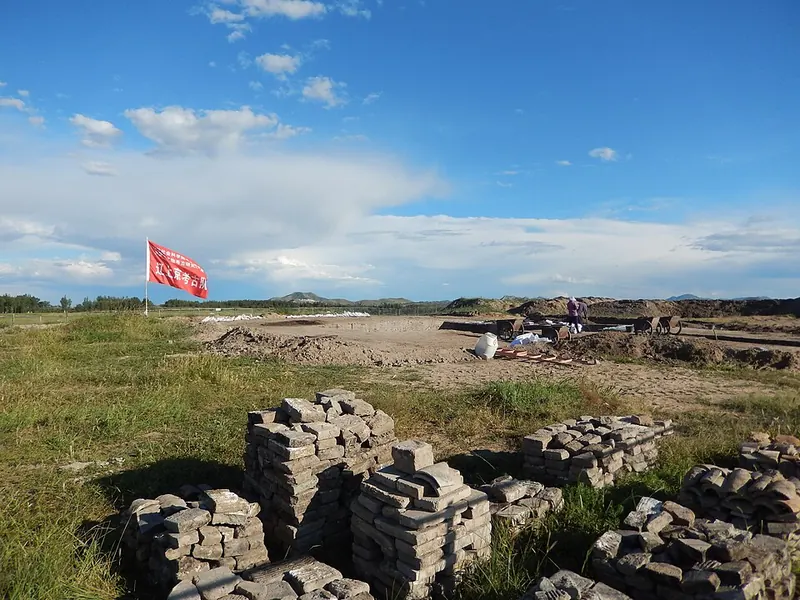
Photo adjustments
Full frame retained; proportionally resized and converted to WebP. No retouching or changes to the photographed subject. Card displays may crop the view.
Explore the region
About Liao Upper Capital Ruins
The site combined a northern imperial city with a southern settlement, and its surviving walls and gateways still reveal that division. The exposed remains are best understood after a museum visit: the Qian'de Gate area and palace foundations show the city's organisation even though the halls have disappeared. Follow the designated archaeological route rather than treating the enclosure as unrestricted open ground.
The site began as Longmei Palace (龙眉宫), built by the Liao founder Yelü Abaoji, who founded a city on its foundations in 918 under the name Huangdu, the first Liao capital. After defeating the state of Bohai, Abaoji returned in 926 and built the Tianzan Palace (天赞宫), whose three halls were used for monthly, festival and imperial memorial rites attended by officials from the Liao Eastern Capital. In 938 Huangdu was renamed Shangjing, with its seat called Linhuang, giving the name Shangjing Linhuangfu.
Jurchen forces under Wanyan Aguda (完颜阿骨打) captured the city in 1120, destroying its main buildings; it then served as the Jin dynasty's Beijing, or Northern Capital, from 1138 before being downgraded in 1150 and again in the early 1200s. Mongol forces destroyed the city in 1214, and it was never rebuilt; the land later passed to the Yuan official Xue Techan (薛特禅) and his descendants.
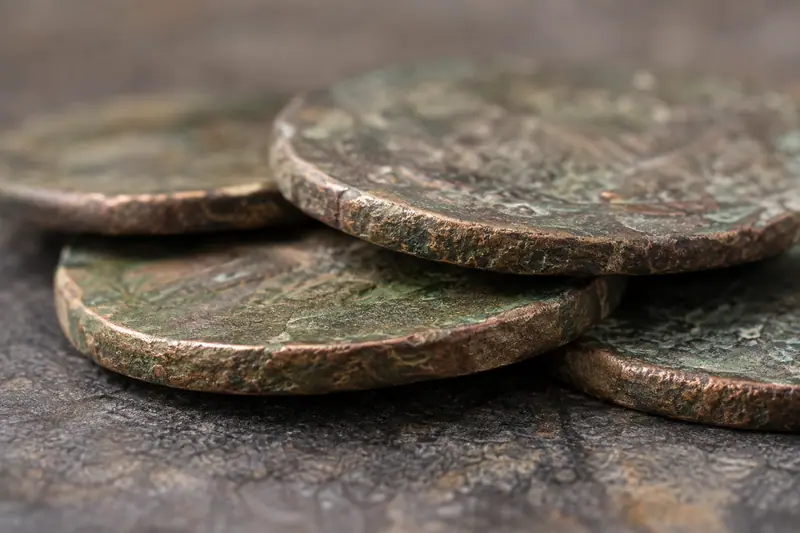
The ruins were rediscovered and identified in 1912 by the French Catholic missionary Min Xuanhua (闵宣化), and the site was listed as a Major National Historical and Cultural Site (全国重点文物保护单位) in 1961. Repeated archaeological excavations have recovered large numbers of coins and other artifacts, and in the 1980s archaeologists found numerous Han Chinese cremation burials of the Liao period near the city.
What to look for
- The imperial-city walls and Qian'de Gate remains.
- The palace-foundation area and the contrast between the northern and southern city layout.
Location & getting there
Getting to Liao Upper Capital Ruins
Approach the archaeological park beside Lindong Town in Bairin Left Banner; the Liao Shangjing Museum stands immediately west of the ruins.
- Start at the signed public park access and use the designated paths around excavated remains.
Combine your visit
Suggested order within this visit:
-
Liao Shangjing Museum辽上京博物馆
Read the capital's plan and material culture first.
-
Qian'de Gate archaeological route
See how the western gateway organised the approach.
-
Open palace-foundation viewpoint
Locate the imperial core within the surviving enclosure.
This sequence is an editorial suggestion based on the features described in the sources. Access to individual buildings or areas should be checked locally; no travel time or shared admission is implied.
Find Liao Upper Capital Ruins
辽上京遗址 · 赤峰
The pin marks the area, not the entrance.
More places nearby
Approximate straight-line distances between map pins, not travel distances.
Liao Shangjing Museum 辽上京博物馆
1 km awayLiao Shangjing Museum stands beside the ruins of the Khitan dynasty's first capital. Its strongest displays move beyond imperial names: tomb murals show clothing and daily activities, epitaphs preserve individual lives, and…
View guide →Hexigten Global Geopark 克什克腾世界地质公园
169 km awayHexigten Geopark is a dispersed geological landscape rather than a single enclosed park. Its best-known formations include the horizontally layered granite towers of Arshihaty and the rounded rock basins at Qingshan, with…
View guide →Khan Mountain 可汗山
183 km awayKhan Mountain is a modern monumental sculpture landscape north of Holingol. Large heads of Mongol and Yuan rulers rise on the hillside above ranks of sculpted warriors, turning the slope into an open-air historical tableau. The…
View guide →Sources & visit information
The sources below support the place-specific description and arrival information. Suggested combinations are editorial planning ideas; confirm current opening, entry arrangements and transport services for your date.
- Wikipedia: 上京临潢府 ↗
- Northern News on-site account: Shangjing archaeological paths and Qian'de Gate ↗
- Chifeng Culture and Tourism: museum west of the ruins ↗
Visitor information adapted and edited from Wikipedia contributors · CC BY-SA 4.0. Source revision 93493700.
Background paragraphs translated and condensed from Wikipedia contributors, "上京临潢府", Chinese Wikipedia · CC BY-SA 4.0. Source revision 93493700.