

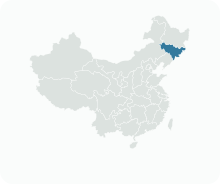
Get to know Panshi
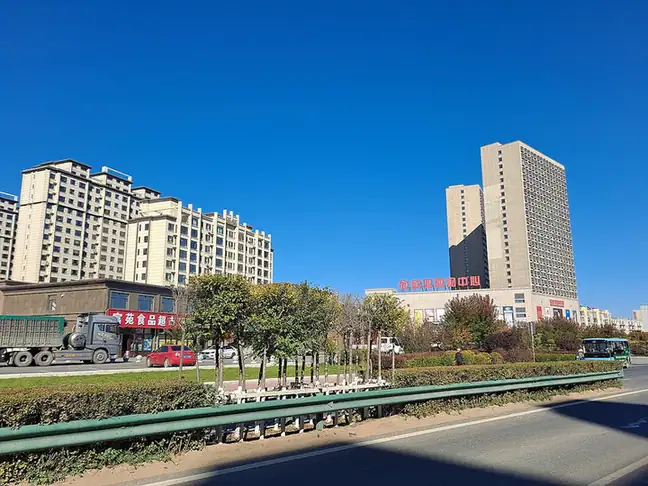
Photo adjustments
EXIF orientation normalized; resized without changing aspect ratio; converted to WebP. No subject edits.
- Administrative area
- County-level city · 县级市
- Part of
- Jilin
- Chinese name
- 磐石市
- Local areas
- County-level city guide
Area & population
- Area in the source
- 3,960.00 km²
- Population · 2017
- 528,000
- Administrative seat
- Henan Subdistrict (河南街道)
Source: cited geographic source, as of the dates shown.
Setting and landscape
The city government describes Panshi as hilly, semi-mountainous land drained by 65 rivers and streams. Rainfall averages 719 mm a year, rising from 624 mm in the northwest to 803 mm in the southeast. The fish the city lists as common in its waters include carp, crucian carp, catfish, black carp, Wuchang bream and loach.
History
The Hongshilazi anti-Japanese base (红石砬子抗日根据地) lies in the Hongshilazi hills at Hongshi village (红石村), north of the Panshi–Yitong road. Chinese Wikipedia describes it as the first anti-Japanese base the Chinese Communist Party set up in Northeast China. From 1933 the Panshi central county committee and the South Manchuria guerrillas led by Yang Jingyu (杨靖宇) ran a rear hospital and printing works there, and the guerrilla zone grew to cover Panshi, Yitong (伊通) and Shuangyang (双阳).
The main force broke out south in 1934 after Japanese attacks, while smaller units held on in the hills until 1936. The site was listed by Jilin province in 1981 and as a national key cultural relic site in 2019. Surveys by the Jilin provincial archaeology institute in 2021 recorded more than 3,000 features, including house sites, dugout shelters and fieldworks, and identified it as the largest group of Northeast Anti-Japanese United Army sites yet found.
What to see
The Panshi Museum (磐石市博物馆), which also carries the name Panshi Anti-Japanese Struggle Memorial Hall (磐石市抗日斗争纪念馆), moved in 2022 into a new building facing Xianren Lake (仙人湖). Its collection of more than 6,000 items includes archaeological finds from the Panshi area and objects excavated at the Hongshilazi base; 278 are on show in two floors of galleries.
Highlights
- Hongshilazi anti-Japanese base site 红石砬子抗日根据地: Guerrilla base from 1933; national key cultural relic site since 2019.
- Panshi Museum 磐石市博物馆: Opposite Xianren Lake since 2022; shows finds from the Hongshilazi base.
Sources for this guide
水资源 · Panshi Municipal People's Government
磐石市 · Chinese Wikipedia · CC BY-SA 4.0
红石砬子抗日根据地 · Chinese Wikipedia · CC BY-SA 4.0
磐石市抗日斗争纪念馆 · Chinese Wikipedia · CC BY-SA 4.0
Original English written from the listed sources and checked sentence by sentence against quoted extracts by a separate reviewer. Updated 2026-09-25.
Explore Panshi
Core places to explore, with English and Chinese names.
Plan your visit
Getting there
Panshi is about 110 km in a straight line from central Jilin. Search for 磐石市 in a map app to find stations and your accommodation.
Where to stay →More in Jilin
Sources & geographic information
Administrative names and parent areas: Official geographic directory · Reference date 2026-09-06.
Some facts checked against 磐石市 — Wikipedia contributors, CC BY-SA 4.0.
Some facts checked against 红石砬子抗日根据地 — Wikipedia contributors, CC BY-SA 4.0.
Some facts checked against 磐石市抗日斗争纪念馆 — Wikipedia contributors, CC BY-SA 4.0.
Map data © OpenStreetMap contributors. Pins mark approximate centres, not entrances or boundaries.