


Photo adjustments
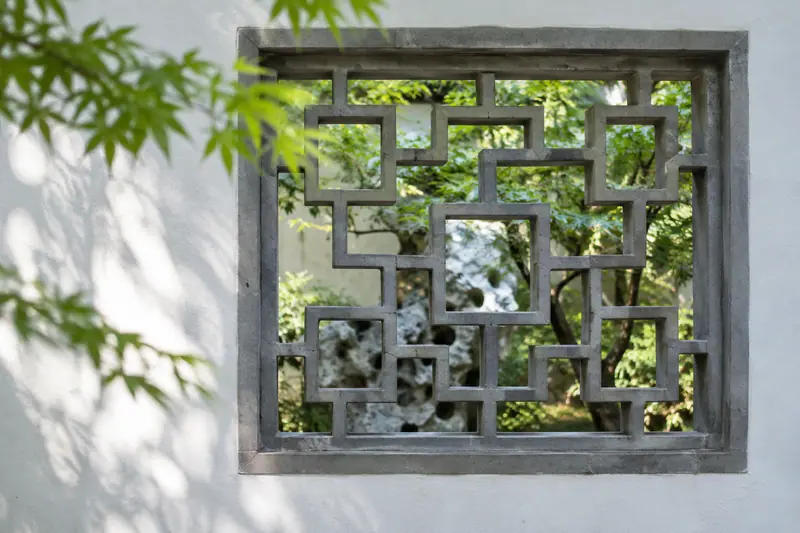
Full frame retained; EXIF orientation normalized, proportionally resized to at most 800 pixels and converted to WebP. No generated pixels or subject changes. Cards may crop the display.
Explore the region
About Baoguang Temple and Guihu Lake
The temple occupies 100,000 square metres with more than 20,000 square metres of floor area. Its principal buildings run in sequence along a central axis — including the mountain gate, the Hall of Heavenly Kings, the relic pagoda, the Hall of the Seven Buddhas, the Great Hall and the sutra library — with a bell tower and a drum tower to either side and sixteen courtyards including the eastern and western abbots' quarters, the guest hall, the ordination hall and the meditation hall. The Sichuan heritage bureau records that the plan keeps the early Buddhist monastery arrangement in which hall and pagoda form a single composition with the pagoda at the centre.
The Arhat Hall is laid out on a plan shaped like the Chinese character tian and holds 577 statues. Among the objects kept at the temple are a Thousand-Buddha stele of the Liang dynasty of the Southern Dynasties, a Tang stele recording the merit of a gift of robes, a Yuan copy of the Avatamsaka Sutra written in gold and silver, a Ming dharani pillar, a Qing Buddhist canon, and a carved stone relic pagoda with Buddhist relics. This catalogue record pairs the temple with Guihu, the classical garden nearby; the heritage entry cited here covers the temple alone and establishes nothing about the garden.
What to look for
- The Arhat Hall, on a plan shaped like the character tian, holding 577 statues.
- The relic pagoda on the central axis, standing between the Hall of Heavenly Kings and the Hall of the Seven Buddhas.
- The Thousand-Buddha stele of the Liang dynasty and the Tang stele recording the merit of a gift of robes.
- The Yuan-dynasty Avatamsaka Sutra written in gold and silver, and the Ming dharani pillar.
- The axial plan itself, which keeps the early arrangement of hall and pagoda as one composition with the pagoda at the centre.
Location & getting there
Getting to Baoguang Temple and Guihu Lake
Check which interiors and courtyards are accessible. Active places of worship and protected monuments may have different visitor rules.
- Search for 宝光寺与桂湖 with 成都市 and 新都区.
Find Baoguang Temple and Guihu Lake
宝光寺与桂湖 · 新都区
No reliable map pin yet: search by the Chinese name.
Sources & visit information
The linked sources support the identity and background described in this introduction. Opening hours, admission, activity availability and exact arrival arrangements have not been comprehensively checked. Confirm current visitor information with the venue; the original catalogue locality and editorial review flag are retained.