

Entry & permits for Tibet (Xizang)
Foreign tourists need Tibet entry approval, commonly called a Tibet Travel Permit, and an organised visit arranged through a specialist travel agency in China. Confirm your approved route before booking transport. Requirements differ for Taiwan residents and for travellers using mainland or Hong Kong/Macao Chinese resident documents; check the document guide before you book.
Check the travel-document requirements →Policy scope verified: 2026-09-06. UK FCDO: China regional travel advice ↗ State Council Taiwan Affairs Office: Tibet entry approval ↗ Xizang Department of Culture and Tourism: Medog border permit notice ↗
Explore the region
Tap any red Chinese text to hear it in Mandarin.
Why visit Zhaji Temple
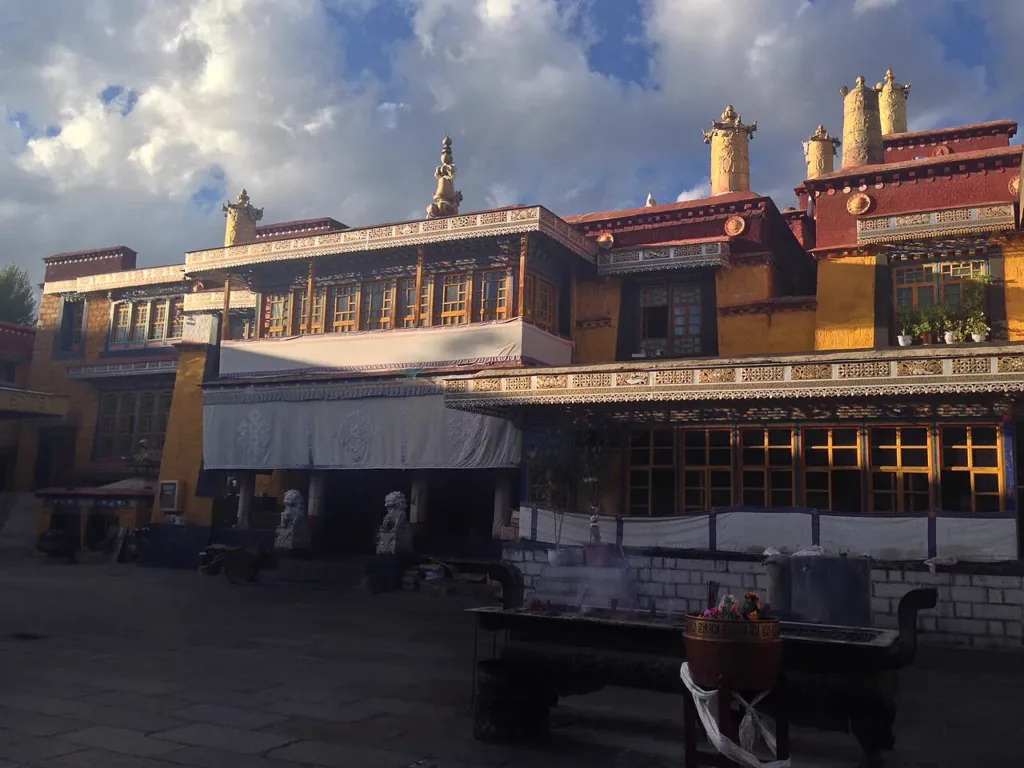
On Zhaji East Road in northern Chengguan District, Zhaji Temple is modest in scale but unusually concentrated in meaning. It belongs to the Sera Monastery tradition, and the draw is not a grand panorama or a long sequence of halls: it is the meeting of a working Gelug temple, a local protector cult, and Lhasa’s layered Qing-era history. The shrine of Zhaji Lhamo is associated with worldly protection and wealth, but the temple should be approached as an active religious place rather than as a novelty shrine.
A 2024 study published by the China Tibetology journal traces the temple’s earlier identity as Wanshou Temple (万寿寺). It links the site to the Qing garrison area around Zhaji, its construction under the patronage of the Qing resident commissioners Jifu and Funai, and the support of the Tibetan local government. The study places the building of the temple in 1761, while noting that an older temple record gives a different year. It also records that monks from Sera’s Je College served the temple. Later rebuilding in the 1980s and major restoration in 2004 help explain why a small, urban temple carries several historical layers at once.
What to look for
- Zhaji Lhamo (扎基拉姆): Just inside the main hall, the dark-faced, wide-eyed protector image is traditionally shown with a protruding tongue and chicken feet. The unusual iconography belongs to local stories about her arrival and transformation; do not treat those stories as a single settled historical biography. The 2024 study describes her worship as a later layer in the temple’s history and discusses both Tibetan and Chinese cultural strands in the tradition.
- The facing earth deity: The image opposite Zhaji Lhamo is identified in the same study as Trinring Gyalpo (真仁杰布). The author argues that this localised earth-god tradition preserves a connection with the older Guandi worship of the garrison area. It is a useful detail for understanding how religious traditions can be absorbed and reinterpreted, not a reason to rank one belief above another.
- Juniper smoke and the courtyard censer: A Xinhua report observed worshippers buying juniper branches, baijiu and khata scarves near the gate, then burning the branches in a censer in the south-east corner before entering. These are offerings within a living ritual, not props for visitors. Reports also associate Wednesday with particularly busy wealth prayers; that is a local pattern, not a guaranteed schedule for today.
- The temple’s written history: Look for the inscription on the gatehouse or main-hall entrance if it is open and staff permit viewing. It is a reminder that the site’s Qing-era history is part of the temple itself, rather than a separate museum display.
Visiting respectfully
Zhaji Temple is a functioning Buddhist temple. Keep your voice low, do not interrupt queues or prayers, and ask before taking photographs; the UK Foreign, Commonwealth & Development Office specifically advises asking before photographing in Buddhist monasteries. Do not touch statues, enter a closed room, or photograph worshippers at close range without permission. If you choose to buy an offering, treat it as a religious act and follow the monk’s instructions rather than presenting it as a performance.
Location, access and Tibet entry rules
The visitor destination is 扎基寺, 扎基东路, 城关区, 拉萨 Zhājī Sì, Zhājī Dōnglù, Chéngguān Qū, Lāsà. Search the Chinese name together with 城关区 Chéngguān Qū in Amap or Apple Maps. There is no verified metro or bus detail to print here. A taxi or ride-hailing car is the practical last leg: show the Chinese destination and ask for the temple entrance. Arrange a return car from the gate or use the same map app; do not rely on an unverified bus stop, fare or journey time.
For foreign visitors, Tibet access is a separate issue from the temple’s own admission. The UK FCDO states that travellers to Tibet and the Tibet Autonomous Region must obtain a permit through a specialist travel agent in China and travel on an organised tour. Confirm that the approved itinerary includes Lhasa and this stop before booking transport. This guide does not assume that independent travel is lawful and does not offer ways around permits or checks.
No reliable current source used for this guide confirms Zhaji Temple’s opening hours, booking procedure or present admission charge. An older 2012 Xinhua report described the temple as free to visit, but that is not a current ticket rule. Ask your authorised Tibet operator to confirm the day’s access arrangements. Allow yourself time to acclimatise after arriving in Lhasa, and follow local staff instructions if a queue, ceremony or security restriction changes the visit.
Find Zhaji Temple
扎基寺 · 城关区
The pin marks the area, not the entrance.
Sources & visit information
Sources checked on 23 October 2026. Hours, tickets, reservations and transport can change; confirm with the operator before you go.
Image credits & notes (1)
- Zhaji Temple's main courtyard and temple buildings in Chengguan District, Lhasa, photographed in 2013. Photo: Chen ZhiPhoto: CC BY 3.0