


Get to know Chengguan District
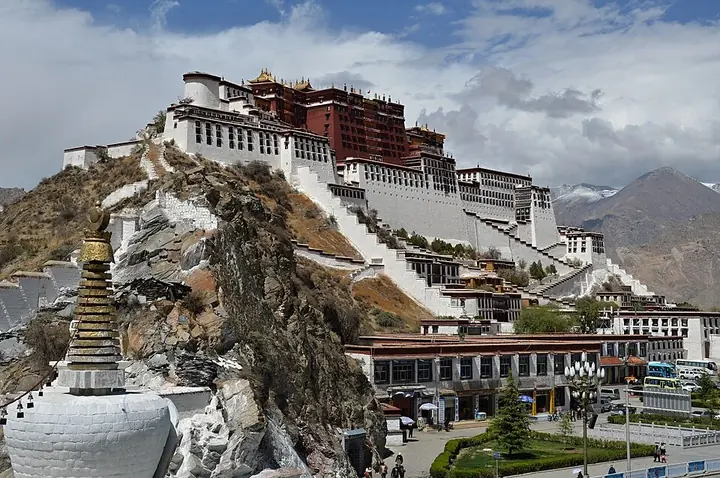
Photo adjustments
Full frame retained; proportionally resized and converted to WebP. No retouching or changes to the photographed subject. Card displays may crop the view.
- Administrative area
- District · 市辖区
- Part of
- Lhasa
- Chinese name
- 城关区
- Local areas
- District guide
Area & population
- Area in the source
- 525.00 km²
- Population · 2020
- 464,736
- Administrative seat
- Gyirai Subdistrict
Source: cited geographic source, as of the dates shown.
Setting and landscape
The Lhasa River, a tributary of the Yarlung Tsangpo (雅鲁藏布江), flows east to west through the district; the Nyenchen Tanglha range (念青唐古拉山脉) lies to the north and the Gangdise range (冈底斯山脉) to the south. The district government describes a sunny, semi-arid highland climate with more than 3,000 hours of sunshine a year, which has earned the district the name "日光城" ("sunlight city"). About 500 mm of rain falls a year, mostly between July and September and mostly at night. The Doide (夺底) valley, once eroded by wind and sand, has been replanted with Tibetan willow and sea buckthorn.
History
The district government dates the core of the city to the 630s, when Songtsen Gampo (松赞干布) moved his capital from the Yarlung valley to Rasa (逻些), building a palace on the Red Hill (红山) and the Jokhang and Ramoche (小昭寺) temples around it. The circuit walked around the Jokhang grew into the Barkhor. In 1727 the Qing set up the office of the imperial residents, the Ambans (驻藏大臣), north of the Barkhor. The city was divided into four urban districts in 1959, and these merged on 23 April 1961 to form Chengguan District.
What to see
The Potala Palace stands on Marpo Ri, the Red Hill, at about 3,700 m. The Fifth Dalai Lama began the present building in 1645, and it was inscribed on the UNESCO World Heritage List in 1994; the listed site now also covers the Jokhang and Norbulingka (罗布林卡), the Dalai Lama's former summer palace. The Jokhang, which the district government says was built by Songtsen Gampo and has more than 1,300 years of history, gave the city its name: the temple was first called Rasa (惹萨), and the name passed to the city. Pilgrims walk three circuits around it: the Nangkor (囊廓) around the inner hall, the Barkhor around its outer walls, and the Lingkor (林廓), a wide loop taking in the Potala, Chakpori (药王山) and Ramoche. Sera Monastery (色拉寺), Drepung Monastery (哲蚌寺) and Tsamkhung (仓姑寺) are also in the district.
Food and local products
Highland barley (青稞) is the district's traditional main crop, grown alongside wheat, rapeseed and broad beans.
Highlights
- Potala Palace 布达拉宫: Begun by the Fifth Dalai Lama in 1645 on Marpo Ri; on the UNESCO World Heritage List since 1994.
- Jokhang 大昭寺: Temple built by Songtsen Gampo whose first name, Rasa, became the city's name.
- Barkhor 八廓街: Pilgrim circuit around the Jokhang's outer walls, the heart of the old city.
- Norbulingka 罗布林卡: Former summer palace of the Dalai Lama, now covered by the Potala World Heritage listing.
- Sera Monastery 色拉寺: Monastery listed among the district's sights.
Sources for this guide
城关区 (拉萨市) - 维基百科,自由的百科全书 · Chinese Wikipedia · CC BY-SA 4.0
历史沿革-城关区人民政府 · Chengguan District People's Government, Lhasa
景点介绍-城关区人民政府 · Chengguan District People's Government, Lhasa
自然地理-城关区人民政府 · Chengguan District People's Government, Lhasa
Potala Palace - Wikipedia · English Wikipedia · CC BY-SA 4.0
Original English written from the listed sources and checked sentence by sentence against quoted extracts by a separate reviewer. Updated 2026-09-25.
Entry & permits for Tibet (Xizang)
Foreign tourists need Tibet entry approval, commonly called a Tibet Travel Permit, and an organised visit arranged through a specialist travel agency in China. Confirm your approved route before booking transport. Requirements differ for Taiwan residents and for travellers using mainland or Hong Kong/Macao Chinese resident documents; check the document guide before you book.
Check the travel-document requirements →Policy scope verified: 2026-09-06. UK FCDO: China regional travel advice ↗ State Council Taiwan Affairs Office: Tibet entry approval ↗ Xizang Department of Culture and Tourism: Medog border permit notice ↗
Explore Chengguan District
Core places to explore, with English and Chinese names.
Places to explore around Chengguan District
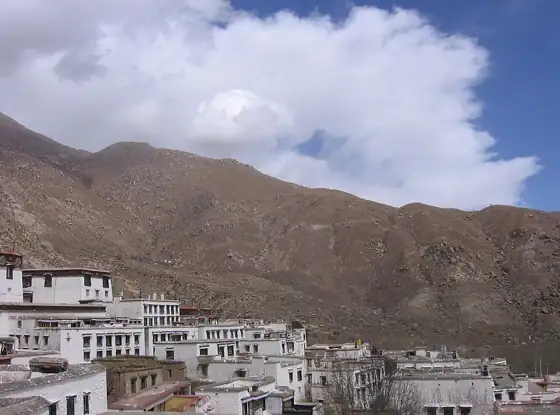 View of Tibet's Drepung ('Bras-spungs, Zhaibung) Monastery, on the outskirts of Lhasa, and the surrounding mountains. Prior to the modern exile period, the Drepung Monastery was closely associated with the Dalai Lama.
Drepung Monastery哲蚌寺
Drepung spreads across the foot of Mount Gephel west of Lhasa, its white monastic buildings giving substance to the name ‘Rice Heap’. Founded in 1416, it grew through colleges with distinct teaching traditions. The Ganden…
Read the place guide →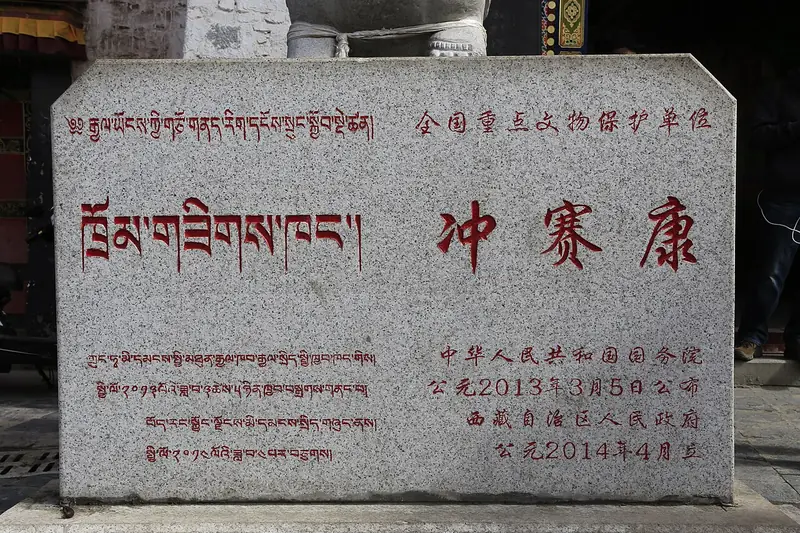 Jokhang Temple and Barkhor Street (大昭寺与八廓街), Chengguan District. Photograph: "Lhasa khrom gzigs khang 2014.09.23 11-06-52".
Jokhang Temple and Barkhor Street大昭寺与八廓街
Jokhang Temple and Barkhor Street names the Jokhang Temple, built by Tibetan king Songtsen Gampo more than 1,300 years ago at the centre of Lhasa's old town, and Barkhor Street, the circular street that formed around it from the seventh century onward, together making up the historic core of Chengguan District, Lhasa.
Read the place guide → Potala Palace · 布达拉宫
Potala Palace布达拉宫
The Potala rises from Marpo Ri, Lhasa’s Red Hill, as a stepped mass of white walls surrounding the crimson Red Palace. Its former residential and ceremonial spaces trace the history of the Dalai Lamas, while chapels and gilded…
Read the place guide →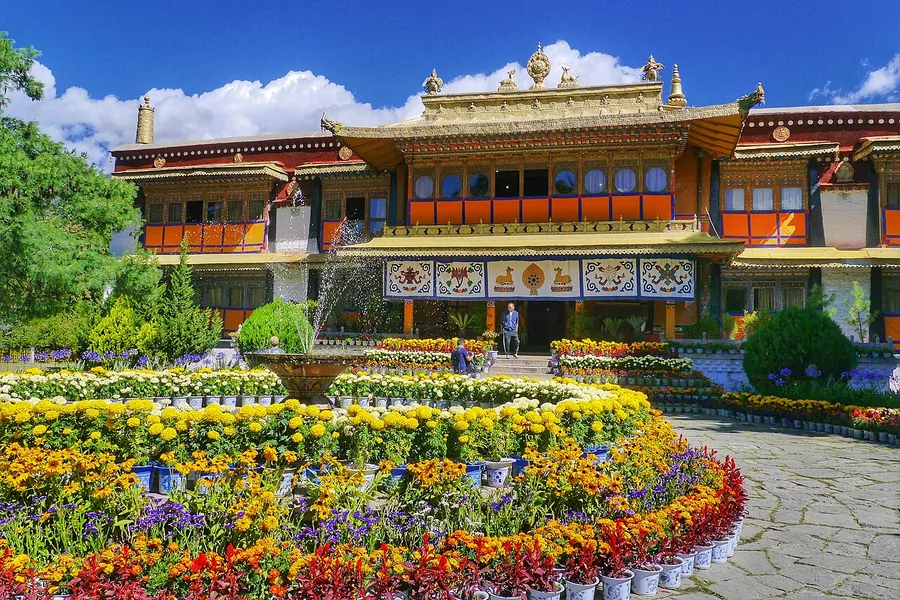 Palace frontage and flower beds at Norbulingka, Lhasa; 7 September 2017.
Norbulingka罗布林卡
Norbulingka combines summer palaces with gardens on Lhasa’s western side. The Kelsang Palace began the complex in the eighteenth century, while later Dalai Lamas added residences and pavilions. The Lake Palace introduces a…
Read the place guide →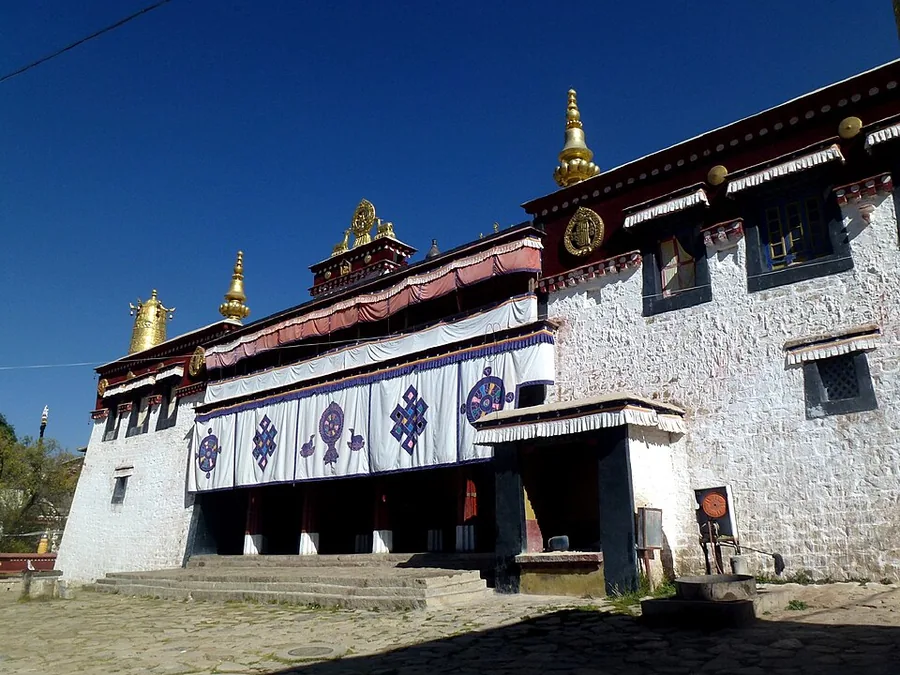 Sera Monastery, Lhasa, Tibet.
Sera Monastery色拉寺
Sera stands against the hills on Lhasa’s northern edge. Founded in 1419, the monastery developed as a centre of Buddhist study, with the Je and Me colleges devoted to philosophy and the Ngakpa college to tantric ritual. Its…
Read the place guide →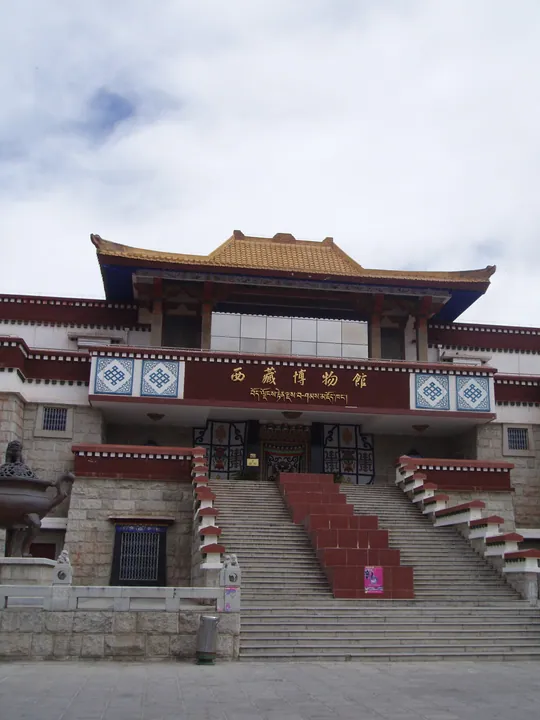 The entrance of the Tibet Museum in Lhasa · 西藏博物馆入口,拉萨市 Source-recorded photograph date: 2007-02-08.
Tibet Museum西藏博物馆
The Tibet Museum’s rebuilt galleries use archaeology, objects and reconstructed settings to introduce the region’s history and everyday life. The second-floor ‘Song of the Snowlands’ exhibition includes a reconstruction of a…
Read the place guide →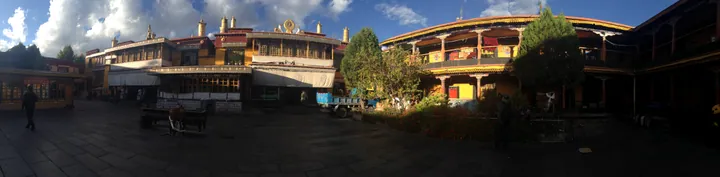 The courtyard and main halls of Zaki Temple (Zhaji Temple), Chengguan District, Lhasa · 拉萨市城关区扎基寺大殿及庭院 Source-recorded photograph date: Taken on 2 October 2013.
Zhaji Temple扎基寺
Small Gelug temple in Lhasa, founded under the Qing as Wanshou Temple, where people offer baijiu to the chicken-footed wealth goddess Zhaji Lhamo.
Read the place guide →Plan your visit
Getting there
Chengguan District is about 5 km in a straight line from central Lhasa. Search for 城关区 in a map app to find stations and your accommodation.
Where to stay →Build your route
Drepung Monastery and Jokhang Temple and Barkhor Street are both listed here. The linked place guides have entrance and visit details.
Continue with Lhasa →More in Lhasa
Sources & geographic information
Administrative names and parent areas: Official geographic directory · Reference date 2026-09-06.
Some facts checked against 城关区 (拉萨市) — Wikipedia contributors, CC BY-SA 4.0.
Some facts checked against Potala Palace — Wikipedia contributors, CC BY-SA 4.0.
Photo: Drepung Monastery · Nat Krause · Public domain. Resized and WebP compressed; subject not altered.

Photo: Jokhang Temple and Barkhor Street · Zhangzhugang · CC BY-SA 3.0. Full frame retained; EXIF orientation normalized, proportionally resized to at most 800 pixels and converted to WebP. No generated pixels or subject changes. Cards may crop the display.

Photo: Potala Palace · Lhasa Government · CC BY-SA 4.0. Wikimedia thumbnail; fitted to the ranking-card frame.

Photo: Norbulingka · travel oriented · CC BY-SA 2.0. Proportionally resized and converted to WebP without cropping, retouching or changing the photographed subject.

Photo: Sera Monastery · Hiroki Ogawa · CC BY 3.0. Proportionally resized and converted to WebP without cropping, retouching or changing the photographed subject.
.jpg)
Photo: Tibet Museum · Fanghong · CC BY-SA 3.0. Full frame retained; proportionally resized and converted to WebP. No retouching or changes to the photographed subject. Card displays may crop the view.

Photo: Zhaji Temple · Chen Zhi · CC BY 3.0. Full frame retained; proportionally resized and converted to WebP. No retouching or changes to the photographed subject. Card displays may crop the view.
.jpg)
Map data © OpenStreetMap contributors. Pins mark approximate centres, not entrances or boundaries.