

Entry & permits for Tibet (Xizang)
Foreign tourists need Tibet entry approval, commonly called a Tibet Travel Permit, and an organised visit arranged through a specialist travel agency in China. Confirm your approved route before booking transport. Requirements differ for Taiwan residents and for travellers using mainland or Hong Kong/Macao Chinese resident documents; check the document guide before you book.
Check the travel-document requirements →Policy scope verified: 2026-09-06. UK FCDO: China regional travel advice ↗ State Council Taiwan Affairs Office: Tibet entry approval ↗ Xizang Department of Culture and Tourism: Medog border permit notice ↗
Explore the region
A village shaped by water and incense
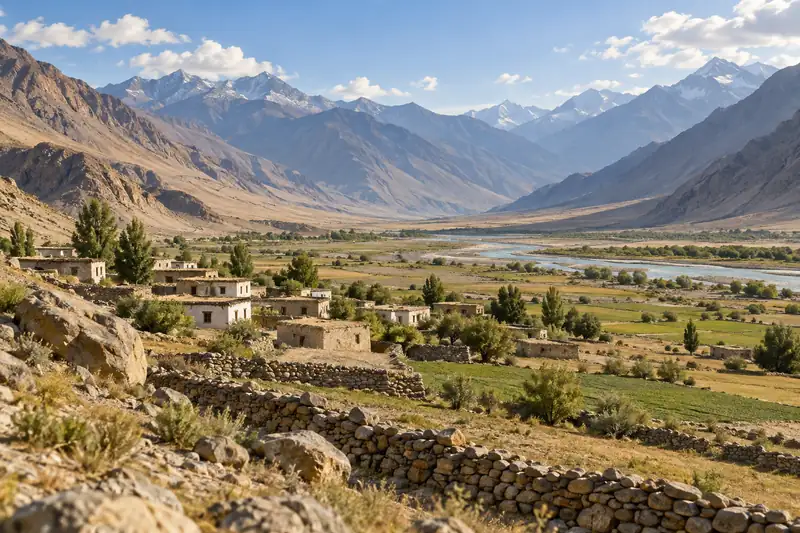
Tunba Old Village is Tunda Village in Tunba Town, Nyêmo County, within Lhasa’s administrative area but well outside Lhasa’s urban centre. Meltwater streams gather in the Tunba valley and feed the Tunqu River. Along those channels, wooden water mills grind cypress wood for incense: the sound of moving water and the scent of drying wood are part of the working landscape, not a staged theme-park effect.
The village is also associated with Thonmi Sambhota, traditionally credited with creating the Tibetan script and with developing Tibetan incense. Nyêmo incense-making was added to China’s national-level intangible cultural heritage list in 2008. Local reporting describes the craft as a living livelihood: families still make incense, while newer cooperatives and workshops are adding demonstrations and visitor experiences.
What to look for
Start with the Water-Mill Corridor. Water turns wooden mechanisms that reduce cypress wood to a wet pulp; the pulp is dried into blocks, mixed with fragrant or medicinal ingredients, pressed into straight sticks, and dried before bundling. Local accounts mention ingredients such as saffron and Tibetan medicinal plants, while older descriptions list much wider household-specific combinations. Recipes are not a single fixed formula, so ask what a particular workshop is using rather than treating one ingredient list as universal.
The named cultural stops include Tunba Manor, described as Thonmi Sambhota’s former residence, and the Tibetan Script Museum. Together they give the village a second focus: the relationship between a local workshop tradition and the history of Tibetan writing. The exact group of buildings open on the day, interpretation language and any separate admission should be confirmed locally.
The regional tourism department describes current visitor experiences that can include watching incense being made and, when arranged, trying steps such as kneading and squeezing the mixture. That does not guarantee a walk-in demonstration at every household. Arrange the experience through your approved itinerary or confirm with the workshop before setting out. Do not enter a family courtyard uninvited, and ask before photographing residents, workers, homes or ritual use of incense.
Getting there and visiting responsibly
Tunba is reached from the Lhasa–Shigatse direction on or near G318. A regional tourism guide suggests roughly two hours by car from Lhasa to a Tunba incense workshop; an English travel guide gives a longer planning estimate of about 110 km and 2.5 hours. Treat both as estimates: the destination may be a particular workshop or scenic-area entrance, and road, weather and stop conditions change. Use the Chinese destination 吞巴古村(尼木县吞巴镇吞达村) and arrange a reliable return vehicle rather than assuming there is a convenient public-bus connection.
For foreign visitors, the route into Tibet is a separate legal and administrative matter. Current UK government travel advice says that visitors must obtain a Tibet permit through a specialist travel agent in China and travel on an organised tour. Do not treat a village or scenic-area ticket as that permit, and do not assume that a standard sightseeing reservation makes independent travel in the Tibet Autonomous Region lawful. Confirm the approved route and document requirements with the authorised travel agency before booking transport.
The regional government’s 2025 list includes Nyemo Tunba (尼木吞巴) as a 3A tourist attraction, but that listing does not provide a current ticket price, opening hours or a combined ticket for the village, museum, manor and workshop. Check those items separately, and keep enough time for the return to Lhasa or the next approved stop. This is high-altitude country; plan the visit after acclimatisation and follow your guide’s advice if you feel unwell.
Find Tunba Old Village
吞巴古村 · 尼木县
The pin marks the area, not the entrance.
Sources & visit information
Sources checked on 23 October 2026. Hours, tickets, reservations and transport can change; confirm with the operator before you go.
- Lhasa government: The culture and industry of Tunda Village ↗
- Xizang Department of Culture and Tourism: Nyemo Tunba’s intangible-heritage incense ↗
- Xizang United Front: Tibetan-incense industry in Tunda Village, Nyemo County ↗
- China Intangible Cultural Heritage Network: A Tibetan incense inheritor in Xizang ↗
- Tibet Discovery: Nyemo Tunba – Birthplace of Tibetan Incense ↗
- Xizang Department of Culture and Tourism: Ten intangible-heritage experiences ↗
- Xizang Department of Culture and Tourism: Regional A-rated tourist attractions ↗
- UK FCDO: China regional risks ↗