

Entry & permits for Tibet (Xizang)
Foreign tourists need Tibet entry approval, commonly called a Tibet Travel Permit, and an organised visit arranged through a specialist travel agency in China. Confirm your approved route before booking transport. Requirements differ for Taiwan residents and for travellers using mainland or Hong Kong/Macao Chinese resident documents; check the document guide before you book.
Check the travel-document requirements →Policy scope verified: 2026-09-06. UK FCDO: China regional travel advice ↗ State Council Taiwan Affairs Office: Tibet entry approval ↗ Xizang Department of Culture and Tourism: Medog border permit notice ↗
Explore the region
Tap any red Chinese text to hear it in Mandarin.
Why this place matters
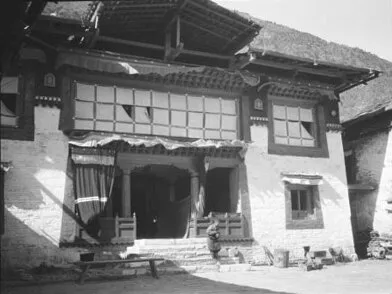
Dungkar Monastery, also called Dongga Tashilhunpo Monastery (东嘎·扎什伦布寺), stands on the slope of Dongga Mountain in Rubinggang Village, Shang Yadong Township, Yadong County. The mountain is said to resemble a conch, which explains the name “Dongga”. The monastery is a branch of Tashilhunpo Monastery in Shigatse and is associated with the Gelug school of Tibetan Buddhism. A detailed account places its foundation in the early seventeenth century: it began with a small prayer hall and a few monks, then was expanded and brought into the Gelug tradition under the influence of the Fourth Panchen Lama’s lineage.
The site is also tied to a major episode in modern Tibetan history. Published accounts place a 16 July 1951 meeting between Zhang Jingwu, the Central People’s Government representative, and the Fourteenth Dalai Lama in the upper level of the main hall. Treat this as a historical site, not as a stage for political performance; read the local interpretation, keep your voice low, and do not photograph people or ritual activity without permission.
What to look for
Start outside and read the monastery as a compact mountain compound rather than as a single façade. The main Tsokchen Hall (措钦大殿) is described as a two-storey building: a prayer hall below and a Buddha chapel above. The surrounding courtyard, gate, stepped entrance, and attached monastic rooms show how worship, study, storage, and residence were arranged together. Published descriptions also record a large carved boulder at the gate with Tsongkhapa and his two chief disciples above a blue, bull-headed protector figure. These are details to look for only where the current visitor route allows them.
If the monastery is open to you, observe from the public edge first. Follow a monk’s or guide’s direction about which rooms may be entered, walk quietly, keep clear of offerings and ritual objects, and ask before taking interior photographs. Do not treat a service, pilgrimage, or resident community as a photo opportunity. The historic inventory of statues, scriptures, ritual instruments, and a large late-Qing thangka comes from older published descriptions; it is not a guarantee that every item remains on display or that every room is open today.
Entry, permits, and practical access
This is not a currently confirmed walk-in attraction for international visitors. Tibet travel guidance says international tourists need a Tibet Travel Permit and a pre-arranged tour with a guide, driver, and private vehicle; the same guidance lists Yadong County among areas that may be closed to international visitors. A local government travel notice also states that foreign visitors, Taiwan visitors, and overseas Chinese visitors may not travel independently in Tibet and need organised travel with the relevant Tibet entry approval.
There is an additional current warning. The National Immigration Administration announced that, from 28 August 2026, issuance of electronic border-management-area passes for travel to Shigatse was suspended, with the resumption date to be announced separately. The notice does not name Dungkar Monastery or explain the exact treatment of a future foreign-tour itinerary. Before booking, ask a licensed Tibet tour operator to verify in writing the specific route to 东嘎寺, the foreign-visitor approval, any border-area or other local permit, and whether the route is open on your travel dates. A Chinese visa, a Tibet entry permit, or a previously issued pass should not be treated as proof that this monastery can be visited now.
If that approval is confirmed, the site is described as about 13 km from Yadong County’s seat, on the road toward Shang Yadong Township and Rubinggang Village. Keep the Chinese destination name 东嘎寺(东嘎·扎什伦布寺) and the location 西藏自治区日喀则市亚东县上亚东乡如丙岗村 Xīzàng Zìzhìqū Rìkāzé Shì Yàdōng Xiàn Shàngyàdōng Xiāng Rúbǐnggǎng Cūn for the operator or map search. The reliable sources reviewed here do not establish a current public-bus stop, operating timetable, exact final walking approach, or a dependable return service. Arrange the same authorised road vehicle for the return to the county seat, and confirm the entrance point and road condition before leaving. Do not set out on a border road or mountain path independently.
Yadong is a high-altitude Himalayan county. Build in acclimatisation, avoid rushing uphill, protect yourself from sun and cold, and stop if you develop symptoms of altitude illness. A guide and driver should also confirm weather, road, and local security conditions on the day.
Current information to confirm
Opening hours, admission charges, reservations, internal photography rules, the currently accessible buildings and objects, foreign-visitor eligibility, and the exact road-and-return arrangement were not confirmed by the sources read for this page. Treat the cultural description above as a reason to ask for access, not as a promise of entry.
Find Dungkar Monastery
东嘎寺 · 亚东县
The pin marks the area, not the entrance.
Sources & visit information
Sources checked on 2 November 2026. Hours, tickets, reservations and transport can change; confirm with the operator before you go.
Image credits & notes (1)
- The entrance to Dungkar Monastery's main shrine room in the Chumbi Valley, photographed on 30 January 1927; the abbot's house is at right. Photo: Arthur J. HopkinsonPhoto: Public domain