

Explore the region
Tap any red Chinese text to hear it in Mandarin.
Nannuo Mountain is not best understood as one walled attraction. It is a broad tea-growing landscape in Geladehe Hani Township, with Nannuo Mountain village and other Hani communities spread across the slopes. The township government lists Nannuo Mountain among its five village committees and describes the area as a Hani-majority mountain community; a People’s Daily report follows the road from the foothills past villages, tea gardens and small processing sites.
Tea is the reason to come, but the useful detail is how close the crop remains to daily life. Tea bushes sit among forest and houses, and local processing turns fresh leaves into rough tea rather than treating the mountain as a decorative plantation. In spring, visitors may find tea-picking and tea-making experiences; in the rainy season, mist and wet mountain roads become part of the conditions, not a promise of a fixed programme.
What makes it special
The strongest landmark is in Banpo Old Village (半坡老寨). The current township profile describes one cultivated ancient tea tree there as more than 800 years old. That is a specific tree claim, not a reason to assume that every tree on the mountain is ancient or that the tree is always reachable; ask the local host whether the route is open before setting out.
Nannuo’s character comes from the relationship between tea and Hani villages. The township profile reports a large area of century-old tea gardens, while local accounts describe tea as an important household livelihood and document small-scale processing, including withering, pan-firing, rolling and drying. You can learn more by watching the work at a village or cooperative processing site than by looking only for a viewpoint.
The mountain is also part of a developing tea-and-village tourism network. Provincial tourism guidance describes a route from Jinghong through Geladehe and Nannuo Mountain, while a provincial ethnic-affairs report describes the village’s tea gardens, old tea trees, Hani culture and growing homestay cluster as tourism resources. A current resort-arranged half-day outing lists a Hani cultural park, a walk to Banpo Old Village, an old tea forest, the tea-tree landmark and a village market. Treat that itinerary as an example of a hosted experience, not as a public timetable or a guarantee that every stop is open on your day.
How to visit
Start with a confirmed local host, tea cooperative, village stay or tour rather than arriving with the assumption that “Nannuo Mountain Ancient Tea Gardens” is a single ticketed park. A good visit might combine a village walk, a short tea-garden walk and a tea-making or tasting session. Ask where the visitor path begins, whether the tea garden is working land, and which activities are available that day.
Look for the changing relationship between shade trees, tea rows and homes on the slope. If a processing room is open to visitors, observe first and ask before touching leaves, tools or batches. Tea tasting is a chance to ask how the leaves were picked and processed, not proof that one cup represents every tea from the mountain.
These are lived-in Hani communities and working gardens. Ask before entering a plot, a house, a processing room or a market stall; ask before photographing residents, children, ceremonies or private interiors. Do not pick leaves, climb an old tree or follow an unmarked path into forest. Local rules and conservation boundaries take priority over a visitor’s planned route.
Getting there
Approach by road from Jinghong or Menghai into Geladehe Hani Township, then continue uphill to the particular village, tea garden or host address confirmed for your visit. The provincial tourism department gives the broader sequence as Jinghong → Geladehe Nannuo Mountain → Hekai and other tea areas; the township profile records a road network serving its villages and natural settlements.
Plan the final leg as a private-car, driver or hosted-transfer journey rather than a rail or metro connection. A current resort experience explicitly includes round-trip transport to Nannuo Mountain, but it does not establish a public bus timetable or a single mountain entrance. Give the driver the Chinese destination 南糯山村 Nánnuò Shān Cūn or the exact village name supplied by your host, and keep the host’s Chinese phone number and return meeting point available.
There is no reliable unified opening schedule, admission price or public entrance information to publish for the mountain area as a whole. Before leaving, confirm the exact village or tea garden, the legal visitor path, whether the Banpo Old Village tea-tree route is open, any local arrangement or tasting charge, and how you will return to Jinghong or Menghai. Do not treat a map pin or a hotel itinerary as proof that every tea garden is open to independent visitors.
Spring is the clearest season to ask about fresh-leaf work, while wet-weather conditions can change mountain walking and road access. The day’s activity, trail and return plan still need confirmation locally.
Find Nannuo Mountain Ancient Tea Gardens
南糯山古茶园 · 勐海县
No reliable map pin yet: search by the Chinese name.
Sources & visit information
Sources checked on 24 October 2026. Hours, tickets, reservations and transport can change; confirm with the operator before you go.
Image credits & notes (1)
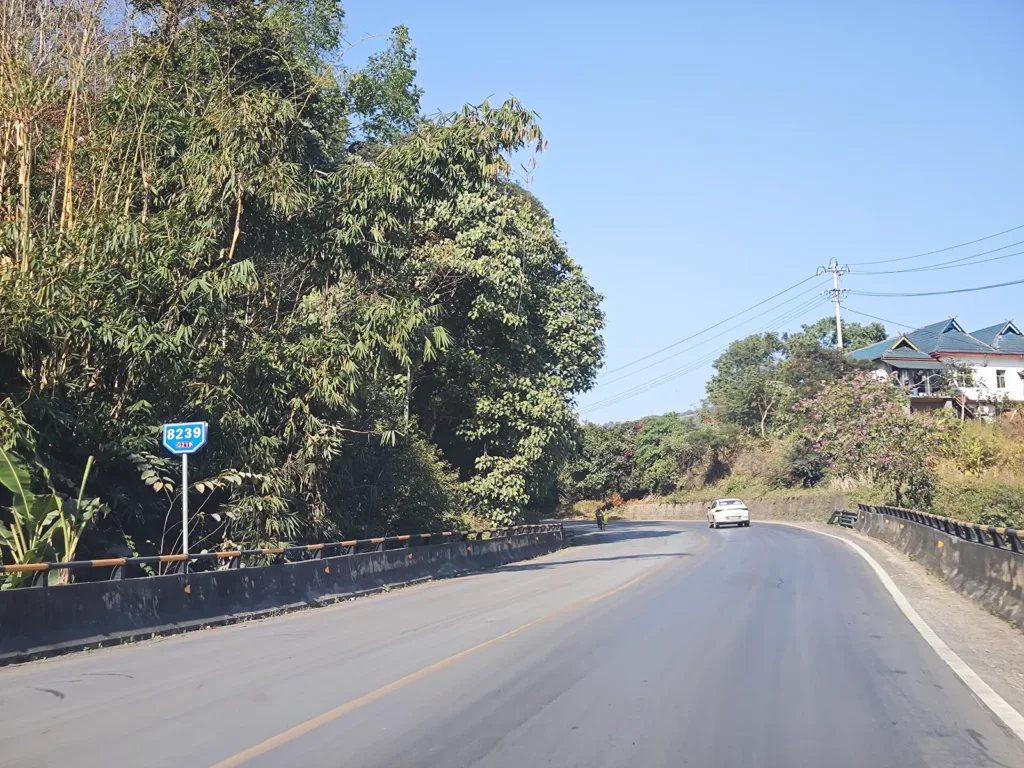
- A road on National Highway G219 through the Nannuo Mountain area of Menghai County, Xishuangbanna. Photo: LiuxingyPhoto: CC BY-SA 4.0