

Explore the region
What makes Qiantong different
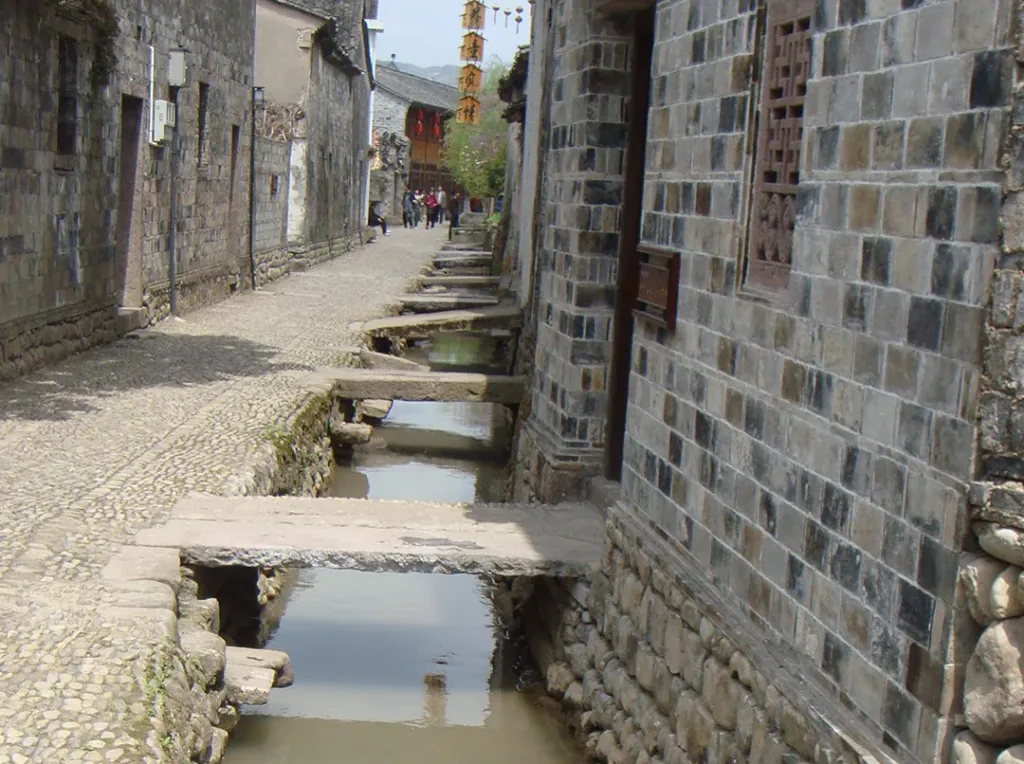
Qiantong is a village-scale historic landscape rather than a single monument. The old settlement sits between Ta Mountain and Lu Mountain, with White Creek and Lianghuang Creek around it. Water channels run through the lanes and beside houses, while pebble paving, grey brick, dark tile and carved details keep the experience close to the texture of an inhabited village. The county government describes more than 150 preserved courtyard compounds and more than 2,000 rooms in the historic core; the official site highlights the same combination of water, stone and domestic architecture.
Walk slowly enough to read the surfaces. Look for black-and-white pebble patterns in courtyards, pink stone “flower windows”, carved timber screens and rooflines with raised inscriptions. The attraction is the relationship between a doorway, a courtyard, a narrow lane and a water channel—not simply a row of façades. The settlement grew from the Tong clan during the Southern Song and developed a strong local tradition of clan, study and craft culture.
A practical walk
Begin with the main visitor route, then take the smaller passages that branch from it. The official site names Mingjing Hall (明经堂), Zhisi Qiju (职思其居) and Qunfeng Zanhu (群峰簪笏) among the houses and exhibition spaces to look for. The Folk Customs Museum adds everyday objects and local craft context; the Tong Clan Ancestral Hall, Tong Yanfang Art Galleries, Poetry Road Digital Museum and Drum Pavilion Hall are separate stops rather than one combined building. Check which interiors are open when you arrive.
Qiantong remains a lived settlement. Keep to public lanes, ask before entering a courtyard that appears residential or working, and do not treat residents or household activity as a performance. Trip.com’s current listing flags the Tong Clan Ancestral Hall as temporarily closed, so do not plan the visit around that interior without checking again.
Local food to look for
The official food guide calls old tofu, pressed tofu and hollow fried tofu (前童三宝) the town’s three tofu specialities. They are made and served in different forms: tender tofu, seasoned dried tofu and a crisp, hollow fried piece. Local “ten-flavour tofu” dishes extend the same ingredient into soups, fried dishes and stuffed preparations. Wheat flatbreads, rice cakes and seasonal sesame or pine-pollen pastries are other local snacks, but availability varies by shop and season.
Do not assume a tofu dish is vegetarian. The same official list includes pork, lard, egg, fish, chicken stock and salted egg yolk in different preparations. Ask about the exact dish and cooking fat, especially if you avoid meat, seafood, eggs or dairy.
Tickets and timing
The official booking page currently lists a standard ticket at CNY 60 and a child or senior ticket at CNY 30. It offers same-day booking, fast entry and conditional changes or refunds. The page lists age- and document-based concessions in Chinese, but it does not explain a passport-specific booking or admission process; international visitors should confirm the accepted ID and entry procedure with the ticket office before paying.
A current Trip.com listing checked on 24 October 2026 displays 08:00–16:30 and gives the ticket enquiry numbers +86-574-65370300 and +86-574-65372030. Treat the hours, individual-house openings and any event schedule as changeable rather than as a guarantee for every building.
Getting there and back
There is no useful metro connection to this rural town. The simplest arrival is Ninghai Railway Station (宁海站) followed by a taxi to “前童古镇(前童镇中心,宁海县)”. The scenic area’s own transport page estimates about 25 minutes by car from Ninghai Station. A current station transport listing also shows bus 628 between 宁海站 and 前童车站, but the official scenic page does not publish a timetable; confirm the bus and its last return before setting out.
If you use the bus, get off at 前童车站 and follow local signs or the venue’s Chinese-name listing to the visitor area. For the return, leave enough time to confirm a 628 service back toward Ninghai Station, or pre-arrange a taxi from the old-town area. The scenic area also lists coach services through Ninghai Center Station (宁海中心站/客运枢纽) and Ninghai East Bus Station (宁海汽车东站); its published hotline is 0574-65578933, open 07:00–17:00. Exact same-day departures are not published on the page.
By car, the official route comes off the G15 at Ninghai South (Chalu) and continues on the 214 provincial road toward Qiantong. From Ningbo Lishe Airport (宁波栎社国际机场), the same guide estimates roughly 1.3 hours by car, subject to traffic.
Find Qiantong Ancient Town
前童古镇 · 宁海县
The pin marks the area, not the entrance.
Sources & visit information
Sources checked on 24 October 2026. Hours, tickets, reservations and transport can change; confirm with the operator before you go.
- Qiantong Overview — Qiantong Ancient Town official site ↗
- Qiantong Ancient Town official home page ↗
- Things to do — Qiantong Ancient Town official site ↗
- Tickets — Qiantong Ancient Town official site ↗
- Transport guide — Qiantong Ancient Town official site ↗
- An ancient village made a town famous — Ninghai County Government ↗
- Qiantong Ancient Town — Trip.com ↗
- Ninghai railway station — Chinese Wikipedia ↗
- Qiantong Ancient Town — CITS China Travel Guide ↗
Image credits & notes (1)
- A pebble-paved lane and open water channel between grey-brick houses in Qiantong Ancient Town. Photo: SiyuwjPhoto: CC BY-SA 3.0