

Scallion-oil noodles 葱油拌面
A Shanghai comfort-food classic of wheat noodles tossed with fragrant scallion-infused oil and soy sauce. Look for the glossy brown coating, gently fried scallions and, in some versions, dried shrimp; recipes vary by shop and household.
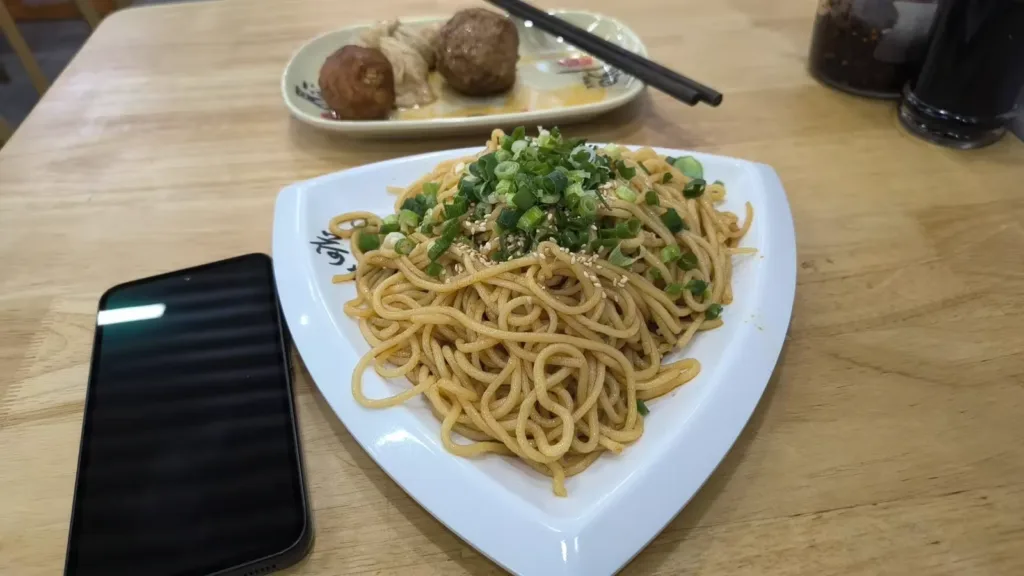
What is in the bowl
葱油拌面 (cōngyóu bànmiàn) means noodles mixed with scallion oil. The core idea is straightforward: cooked wheat noodles are coated in oil scented by slowly fried scallions, then seasoned with soy sauce. Shanghai government food guides identify scallion oil and soy as the defining flavor pairing and describe the dish as part of Shanghai home-style cooking.
A common base is thin wheat noodles, scallions, cooking oil and light and/or dark soy sauce. Light soy brings salt and savouriness; dark soy deepens the brown colour. Sugar appears in many recipes and gives the dressing a rounded sweet edge, but it is not universal. Some household or restaurant versions use lard, Shaoxing wine, or both vegetable oil and pork fat; these are recipe choices, not requirements for every bowl.
How the scallion oil is made
Scallions are cut into lengths and fried gently in oil until the pale parts turn golden and the greens dry, crisp or lightly browned. The oil takes on their aroma. Soy sauce is then combined with the infused oil—some cooks briefly heat the seasonings together, while others toss them with hot, drained noodles. A careful, unhurried fry is what develops a sweet, toasted allium fragrance without turning the scallions bitter.
Fresh-cut noodles are common in Shanghai accounts, while thin wheat noodles are a practical choice in home recipes. The cooked strands are drained and tossed until the dressing reaches across them. Expect a glossy amber-to-deep-brown sheen, a savoury soy taste with optional sweetness, and a pronounced fried-scallion aroma. The noodles should feel smooth and lightly springy or chewy rather than crisp; the oil and soy cling to the strands, so this is a dry mixed noodle, not a soup.
Versions and how to eat them
Some bowls are served simply with fried scallions. 开洋葱油拌面 (kāiyáng cōngyóu bànmiàn) adds kaiyang—small dried shrimp—for a more seafood-like savoury note. Shanghai’s municipal guide lists dried shrimp as an optional topping and gives examples of local shops serving it; it is a variant, not a condition that every bowl must meet. Other shops may add an egg or a braised topping, but those extras are likewise shop-specific.
Use chopsticks to lift and turn the noodles from the bottom until the coating is even; do this before eating, while the noodles are hot and loose. Eat promptly, since mixed noodles can cool and clump.
For dietary questions, do not assume the dish is vegetarian from its simple appearance: the base usually contains wheat and soy, and some recipes use lard or dried shrimp. Ask whether the oil is animal or vegetable, whether shrimp or other toppings are included, and whether the noodles or seasonings contain ingredients you avoid.
More dishes to compare
Explore related local specialties and compare their names, preparation notes and ordering guidance.
Pork-intestine noodles 大肠面 →
Pork intestine is cleaned, cooked and commonly braised until flavorful, then sliced over wheat noodles in broth or sauce. A specialist shop may offer different cuts or mixed toppings. The intestine is rich and chewy, with a stronger character than lean pork. Soft noodles and broth temper the concentrated topping.
Crisp noodles with topping 两面黄 →
Cooked noodles are browned on both sides into a crisp bed, then covered with a hot savory topping and sauce. The topping softens parts of the noodles while leaving other sections crunchy. This creates the central contrast: brittle browned strands, chewy softened noodles and moist vegetables or meat above.
Sources & reading
Recipes and servings vary between kitchens.
Image credits & notes (1)
- A serving of scallion-oil noodles with a glossy soy-colored coating, chopped green scallions and sesame; this photograph shows one presentation rather than a fixed Shanghai recipe. Photo: SuginamiPhoto: CC0 1.0