

Hakka Taro Dumplings 芋子包
Hakka Taro Dumplings is featured among the local specialties of Fujian.
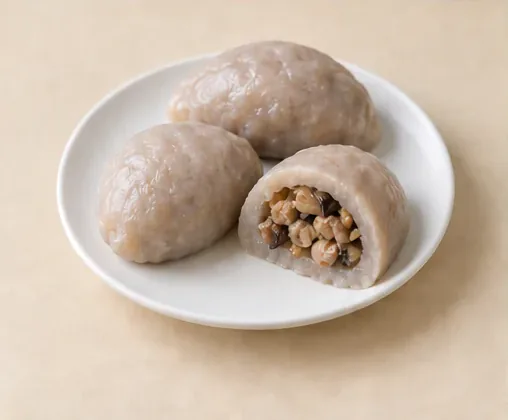
Hakka yu zi bao uses taro to form the wrapper as well as to flavour it. The official western Fujian recipe cooks and peels the taro, pounds it while warm and works it together with tapioca starch until the mixture can be shaped. Small portions are hollowed out, filled and closed before steaming. The result is a smooth, dense and tender skin, with a different structure from an airy wheat bun or a thin wonton wrapper.
Flavour, texture & local variations
The documented filling combines chopped pork, beef, squid, shiitake and bamboo shoot, cooked and seasoned before it is enclosed. This mixture gives the dumpling a rich savoury centre beneath the mild taro skin. The source places the tradition in the Hakka cooking of western Fujian and discusses a Yongding taro variety. An opened dumpling is helpful for understanding that relationship between wrapper and filling. Ask what a vendor puts inside before ordering, since a taro-based exterior alone does not identify the meat, seafood or seasonings in its centre.
How it is prepared
Cooked taro is pounded with starch, shaped around cooked filling and steamed.
Ingredients to check
Taro and tapioca starch skin; the documented filling includes pork, beef, squid, shiitake and bamboo shoot.
Ordering this dish
Check the filling as carefully as the wrapper, particularly if avoiding beef, pork, squid or oyster sauce.
More dishes to compare
Explore related local specialties and compare their names, preparation notes and ordering guidance.
Fotiaoqiang 佛跳墙 →
A rich broth-based dish combines multiple ingredients in one pot. Discuss the actual version, price and portion before making it the centerpiece of dinner.
Fuzhou sweet taro paste 芋泥 →
Taro is mashed into a smooth sweet dessert. Ask whether the preparation contains lard if that matters to you.
Dingbian rice-flake soup 鼎边糊 →
Fresh rice-batter sheets are scraped into a savory soup. Try it as a light Fuzhou breakfast.
Sources & reading
Identity and the described preparation reviewed against the linked government culinary sources on 9 September 2026. The illustrated preparation is a documented example; vendors may use different ingredients and presentation. Ordering suggestions are editorial guidance. No recipe testing, exclusive origin, current availability or dietary certification is claimed.
Recipes and servings vary between kitchens.