

Fotiaoqiang 佛跳墙
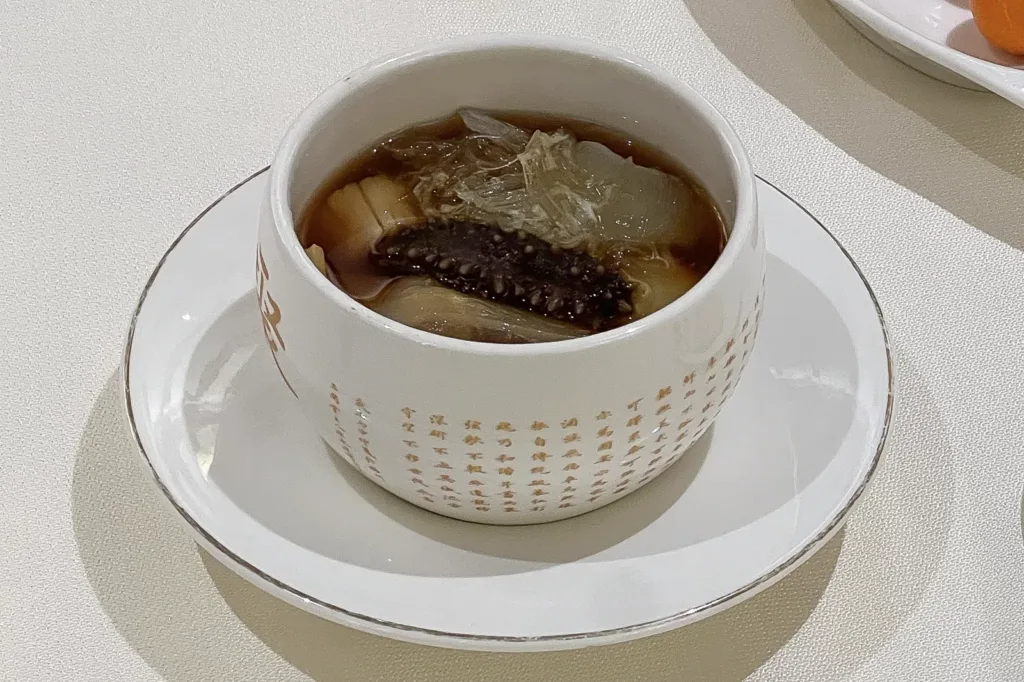
Fotiaoqiang, or Buddha Jumps Over the Wall, is a Fuzhou banquet dish built around many separately prepared land and sea ingredients, layered in a wine jar and slowly braised. It is worth trying as a lesson in Min cuisine, but each serving can differ in ingredients, portion and preparation.
Tap any red Chinese text to hear it in Mandarin.
Why it belongs to Fuzhou
Fotiaoqiang is associated with Fuzhou and is recognized as a national-level intangible cultural heritage under traditional craftsmanship. The name is best understood as a dish family rather than a single universal recipe: the documented heritage tradition uses more than thirty ingredients and combines meat, seafood and plant ingredients, while present-day restaurant and prepared-food versions vary.
That variety is part of the experience. A bowl may include ingredients such as abalone, sea cucumber, dried scallops, fish maw, meat and mushrooms, but the name alone does not promise a particular premium seafood list. Ask what is actually in the serving before ordering.
How it is made and how to taste it
In the traditional workflow, ingredients are prepared separately through multiple preliminary steps, then layered in a Shaoxing-wine jar and slowly cooked over low heat. The method is designed to bring different textures together without treating every ingredient as if it needed the same cooking time.
Look for a concentrated savoury broth with wine fragrance and a range of textures: tender meat, soft or springy seafood, and gelatinous elements from collagen-rich ingredients. A reported traditional workflow can take about eight days from preparation to serving, whereas a pre-prepared portion may simply be reheated before it reaches the table. These are different eating experiences, not proof that one format is the only authentic one.
Because the recipe is not fixed, do not assume that a version is vegetarian, halal or free of allergens. Confirm the ingredients, cooking wine and any animal products with the staff, especially if you have a dietary restriction.
How to order and find it nearby
Show the Chinese name 佛跳墙 Fótiàoqiáng when ordering. Before you pay, ask which ingredients are included, the serving size, the full price, and whether the portion is cooked to order or reheated from a prepared product.
Search for 佛跳墙 Fótiàoqiáng on Meituan (美团) or Gaode/Amap (高德地图) to find nearby places serving it; add 福州 Fúzhōu if the results are ambiguous. Check the current menu, recent reviews, opening information and same-day availability rather than treating search ranking as a quality or authenticity claim.
佛跳墙 is a dish, not a fixed attraction, so there is no single metro station, exit, entrance or return route that applies to every serving. After choosing a venue, verify that venue’s current address and arrival directions, then check the return service from that venue on the day.
More dishes to compare
Explore related local specialties and compare their names, preparation notes and ordering guidance.
Sea clams in chicken broth 鸡汤汆海蚌 →
Sea clams are briefly heated in a carefully prepared chicken broth. The broth is made in advance so the clams need only a short cooking time at the end. The liquid is clear but savory, while the clams should remain tender and gently sweet rather than rubbery. This is a restrained dish, not a heavy seafood stew.
Lychee pork 荔枝肉 →
Pork is cut so it curls during frying, then coated with a sweet-and-sour sauce. The resulting rounded pieces resemble lychees; potatoes may also appear in some versions. The pork is crisp at first, with tender meat beneath and a glossy tangy-sweet coating. It is a savory meat dish even though its name is fruity.
Sources & reading
Recipes and servings vary between kitchens.
Image credits & notes (1)
- A serving of Fotiaoqiang (Buddha Jumps Over the Wall) at Juchunyuan in Fuzhou. Photo: N509FZPhoto: CC BY-SA 4.0