

Sweet-water noodles 甜水面
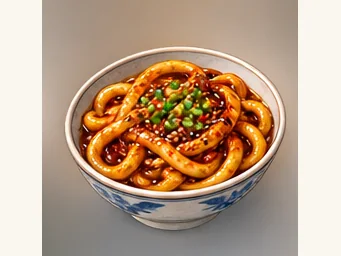
A Chengdu snack of thick, springy wheat noodles coated in sweet-spiced soy sauce and chilli oil. Mix the small bowl thoroughly so the dark sauce, garlic, pepper and other toppings cling to each strand; recipes vary by kitchen.
What to expect
Despite the English name, this is not a bowl of sweet noodle soup. Tian shui mian is a Chengdu street snack: substantial, hand-cut wheat noodles are served without a broth and dressed in a concentrated sauce. A 2024 report filmed at a Chengdu snack shop describes the house-made strands as roughly a centimetre thick, firm and unusually chewy; a Sichuan cooking writer likewise describes chopstick-thick noodles. The exact thickness and whether a shop serves them warm, lukewarm or cooled are not fixed standards.
The dough is usually a simple flour-and-water mixture, sometimes salted. Firm dough is kneaded and rested, rolled or pressed into a thick sheet, cut into broad strips and boiled. In the shop documented by Bon Appétit, the cook worked the stiff dough repeatedly, cut and stretched the strands, then cooled and oiled them. Those are observations of that kitchen, not a promise that every vendor uses the same sequence or makes noodles by hand.
Sauce, flavour and how to eat it
The defining sauce is fùzhì jiàngyóu (复制酱油), a reduced, sweetened soy sauce infused with aromatics. Brown or rock sugar, soy sauce, ginger, scallion and warm spices such as star anise, cinnamon, fennel or Sichuan pepper appear in published versions, but recipes differ. It gives the noodles a glossy deep brown-to-red coating. Chilli oil and garlic add savoury heat; Sichuan pepper can bring a tingling note. Sesame paste or sesame seeds and crushed roasted peanuts add a nutty, creamy or crisp contrast. A shop may use only some of these, and the balance of sweet, salty, hot and numbing flavours varies.
When the bowl arrives, stir from the bottom until the sauce and seasonings coat the noodles evenly. This makes the first bite representative: the thick strands have a firm, bouncy chew, while their ridged or cut surfaces hold the sticky sauce. The flavour moves from sweet-savoury soy and toasted aromatics to chilli warmth, garlic and, where used, the tingle of Sichuan pepper. It is commonly served as a small-eats portion rather than a large soup course; order 甜水面 if you want to ask for it by name.
Where to eat it
You can find Sweet-water noodles all over Chengdu, so there is no need to seek out one particular restaurant. To find one near you, search for “甜水面” in Meituan (美团) or Amap (高德地图) and check recent reviews, distance and opening hours.
More dishes to compare
Explore related local specialties and compare their names, preparation notes and ordering guidance.
Dandan noodles 担担面 →
A small portion of wheat noodles is tossed with a concentrated sauce and savory toppings, often minced pork and preserved vegetables. Chili oil, Sichuan pepper and sesame-based additions vary between kitchens. The noodles combine springy chew with spicy, aromatic and deeply savory seasoning. Sauce can collect underneath, so the first unmixed bite may be misleading.
Chengdu maocai mixed spicy bowl 成都冒菜 →
The kitchen cooks the chosen ingredients in a shared cooking broth and serves them as a finished bowl, rather than leaving raw ingredients for diners to cook at the table. The broth coats many contrasting textures, from crunchy lotus root to soft tofu and tender meat. Chilli and peppercorn strength can often be adjusted.
Sources & reading
Recipes and servings vary between kitchens.