

Dough Pieces in Pickled Vegetable Broth 酸菜面块
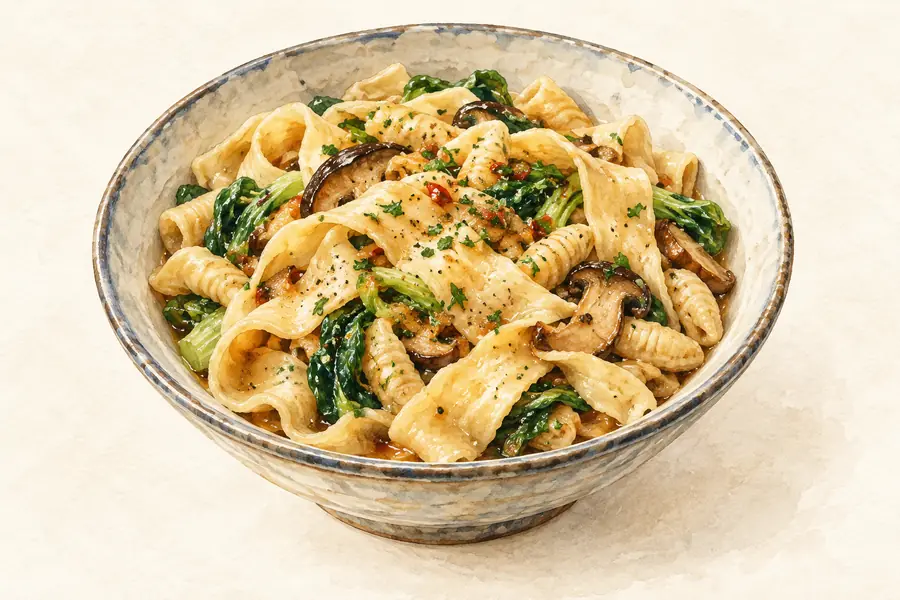
Suancai miankuai (酸菜面块) is an Aba Tibetan evening meal built from pickled vegetables, substantial dough pieces, potatoes and either air-dried cured meat or fresh yak meat. Its appeal is the sour, savoury broth and the way a simple household soup carries both a filling meal and a gesture of hospitality.
What it is
In Aba Tibetan food culture, suancai miankuai is a regional bowl rather than a single restaurant signature. The Aba Local Chronicles Office describes it as a traditional Tibetan evening meal, and says that hosts commonly serve it when guests visit. The prefecture’s own cultural account also stresses that Tibetan food habits differ between local communities and landscapes, so one town’s bowl should not be treated as a fixed recipe for the whole prefecture.
The official ingredients are plain but substantial: pickled vegetable leaves form the base, while local air-dried cured meat or fresh yak meat, potatoes, dough pieces, salt and scallions are cooked in the same soup. The result is a meal you can taste as a whole—sharp vegetable acidity, a savoury meat stock when meat is used, soft potato and chewy pieces of cooked dough—rather than as a separate topping on noodles.
What makes it distinctive
The sourness is prepared ahead of time. The leaves are boiled until nearly cooked, cooled, packed into a jar or wooden barrel, sealed and left in a cool place for about a week. They then go into the pot first, before the meat, potatoes, dough pieces, salt and scallions. That order explains why the broth is the centre of the dish: the pickled vegetables season the cooking liquid while the dough and potatoes make it filling.
This is a useful dish to seek out when you want to understand Aba through an ordinary meal, not only through scenic viewpoints. A 2005 Aba tourism document listed suancai miankuai among the staple foods it encouraged local tourism restaurants to serve, while a 2019 prefectural government report recorded a bacon version being prepared at a Tibetan-Qiang food event. Those records show a documented regional food tradition, not proof that every restaurant uses the same meat or method.
How to eat it
Treat it as a one-bowl meal. Spoon up some broth with a dough piece, potato and the meat or other ingredients in the bowl, then adjust the balance as you go: the pickled vegetables bring the sourness, while the dough and potato soften the sharper edge. If a Tibetan host offers it, accept the bowl as a home-style welcome rather than expecting a standardized tasting portion.
The documented version includes cured meat or fresh yak meat. If you are vegetarian, avoid meat, or have an allergy, ask what is in the pot before ordering and ask whether a suitable version is actually available. Do not assume that a bowl looks meat-free or that a kitchen follows one universal recipe.
Where to eat it
You can find Suancai miankuai all over Sichuan, so there is no need to seek out one particular restaurant. To find one near you, search for “酸菜面块” in Meituan (美团) or Amap (高德地图) and check recent reviews, distance and opening hours.