

Khampa Tibetan Cuisine 康巴藏餐
Khampa Tibetan Cuisine is a regional Tibetan food tradition associated with Garzê, not one standardized plate: roasted barley, yak dairy, meat, tea, and simple wheat or vegetable dishes appear in different combinations. The most useful introduction is to taste tsampa at its intended texture, then compare the tea, dairy, and preserved foods offered by that particular kitchen.
Tap any red Chinese text to hear it in Mandarin.
What the name means
康巴藏餐 is best read as a regional table rather than the name of one recipe. Official Garzê cultural material describes Kham culture in the prefecture through several local traditions, including Jiarong, Muya, Zhaba, Yalong, and nomadic communities. Their languages, landscapes, and food customs are not identical. The label therefore gives you a cultural and geographic direction, not a promise of one fixed set menu.
The connection with Garzê is real, but it should not be turned into a claim that every item is unique to the prefecture. A Garzê government food guide places yak meat, smoked beef, dried meat, butter tea, and barley-fermented drinks among local foods and customs, while also describing different county-level practices. In practice, a “Khampa Tibetan cuisine” menu may combine a shared highland pantry with a kitchen’s own town, family, or restaurant style.
What to look for on the table
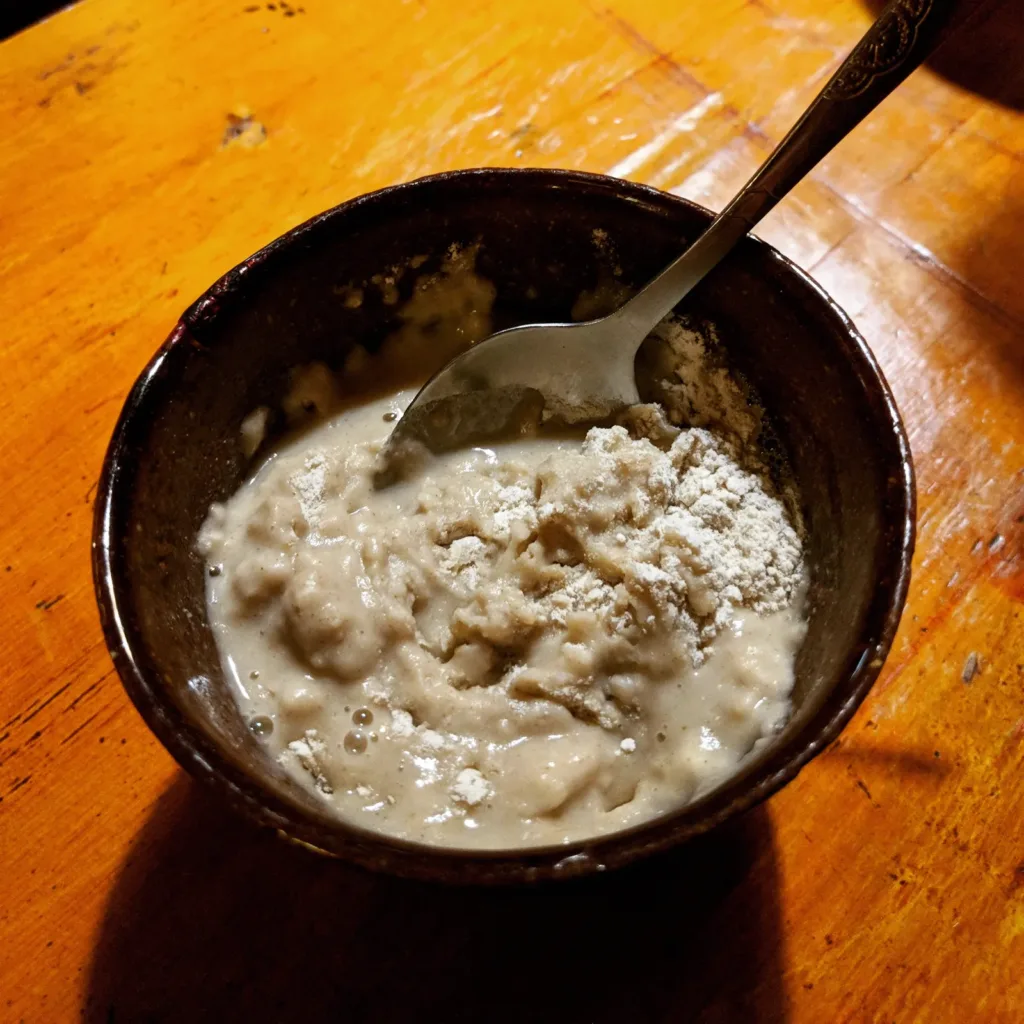
Tsampa, 糌粑, is the clearest way to see how the meal works. It is roasted highland barley milled into flour. A detailed government food account describes barley being prepared, roasted, sifted, and ground before it is mixed in a bowl with butter tea; a diner adds the liquid gradually and works it to the texture they want. That account records a traditional process in another Tibetan area, so treat it as a useful explanation of the technique, not as a single compulsory Garzê recipe.
The result should show the toasted grain first. A little tea makes the flour bind; more liquid makes it softer, while less leaves a drier, crumbly mixture. The same table may bring dairy, meat, tea, or wheat items in different combinations. A Smithsonian Folklife account from Tibetan communities in Gansu describes yak milk or butter tea, tsampa, Tibetan cheese, and noodles with mutton, pork, or yak; it is a cross-regional foodways account rather than a menu guarantee for Garzê.
Tea is worth tasting separately. The Garzê government’s account of Danba butter tea uses brewed tea, butter, salt, milk powder, and ground nuts or seeds, whisked together until smooth and kept warm. The result is savoury, fatty, and fragrant rather than a sweet café milk tea. Other kitchens may use a simpler formula, so ask what is in the pot if you have a dairy, nut, or salt restriction.
Meat can be served fresh, simmered, smoked, or dried. The Garzê guide specifically describes Kangding beef in cooked, smoked, and dried forms, so a firm preserved slice should not be judged by the standard of a tender steak. Barley and dairy also have real variations: plain tea may be offered instead of butter tea, and vegetables or wheat foods are more likely to appear in some towns than in a pastoral household. The right question is “What is in this version?” rather than “Is this the authentic version?”
How to order and eat it
Start with the exact Chinese name 康巴藏餐 Kāngbā Zàngcān. Ask whether the order is a single item, a small tasting plate, or a set meal, and ask which components are available today. If you are sensitive to dairy, nuts, salt, meat, or wheat, say so before the bowl or pot arrives. Tibetan food is not automatically vegetarian, and a dish that looks plain may contain butter, milk, cheese, meat stock, or shared cooking equipment. If you avoid alcohol, ask whether 咂酒 (barley-fermented drink) is included or offered separately; it is a distinct local drink, not an ingredient you should assume is absent.
Search for “康巴藏餐” on Meituan (美团) or Amap / Gaode Maps (高德地图) to find nearby places serving this dish. Check menus, recent reviews, opening information and today’s availability before choosing.
There is no single address, entrance, or transit route for this cuisine category. Availability changes by town, season, and kitchen, so the map search is a way to find current options, not a ranking of quality or proof of regional authenticity.
More dishes to compare
Explore related local specialties and compare their names, preparation notes and ordering guidance.
Chuanchuan 串串香 →
Chuanchuan (串串香) is the opposite approach within the same province: skewered pieces cooked in a heavily seasoned pot at the table. Setting a Khampa table beside it shows how differently Sichuan eats at altitude, where grain, dairy and preserved meat carry the meal rather than chilli and oil.
Sources & reading
Image credits & notes (1)
- A bowl of tsampa being blended with yak butter tea, illustrating the gradual mixing described in the article. This is a cross-regional Tibetan foodways photograph; the source record does not identify Garzê as the location. Photo: JpatokalPhoto: CC BY-SA 4.0