

Chuanchuan 串串香
A Chengdu-associated, hot-pot-style meal of meat, vegetables and tofu threaded on skewers and cooked in seasoned broth. Pick a mix of textures; shops differ in how they cook, season and serve it.
What to expect
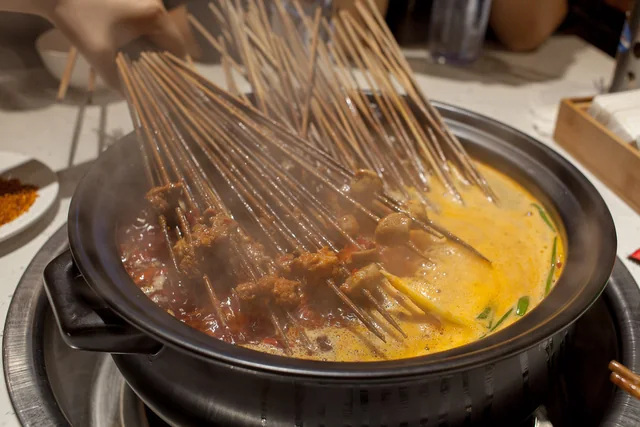
In the familiar hot-pot format, small portions of meat, vegetables and tofu products are threaded onto bamboo sticks and dipped into a bubbling, often red, spicy broth. Diners can build a meal from many different ingredients rather than order one fixed dish. A 2020 Sichuan report describes skewers of meat and vegetables plunged into red broth; a 2018 People’s Daily Overseas feature likewise describes assorted meat and vegetables cooked in hot-pot seasoning.
Look for contrasts in the basket: lotus-root slices can stay crisp, while meat and tofu products offer softer or chewier bites. The broth brings chili fragrance, heat and a numbing sensation; the exact spice mix and intensity are not a city-wide formula. Some shops offer a sesame-oil dip with garlic, spring onion and chili, which adds a fragrant, savory coating. Ask what is available before choosing, especially if you prefer mild food.
A self-cook restaurant may let you choose skewers and cook them at the table. In the cold-pot style, the ingredients are cooked first and served already dressed in a seasoned pot or bowl; diners may add dips to taste. These are related but distinct ways to serve skewered hot-pot foods, and the second is not necessarily a pot kept boiling at the table. Displays, menus, broth choices, spice levels and charging methods vary by restaurant; confirm them there rather than assuming a per-skewer price or a standard recipe.
Place and ordering
串串香 is strongly associated with Chengdu. A 2018 People’s Daily Overseas article calls it a food born in Chengdu and singles out the Yulin-style name as especially well known. A separate 2016 report describes cold-pot chuanchuan as originating in Chengdu and Leshan, so origin stories should be treated as reported local associations rather than a settled account for every regional variant.
Where to eat it
You can find Chuanchuan all over Chengdu, so there is no need to seek out one particular restaurant. To find one near you, search for “串串香” in Meituan (美团) or Amap (高德地图) and check recent reviews, distance and opening hours.
More dishes to compare
Explore related local specialties and compare their names, preparation notes and ordering guidance.
Sichuan brined pickled vegetables 四川泡菜 →
Vegetables are prepared and held in seasoned brine until they develop the desired sourness and texture. Some are served after a short time for a fresher crunch, while others are fermented longer or reserved for cooking. Expect acidity, salt and a clean vegetable snap. Longer-held vegetables can be softer and more sour. Red oil on a serving plate is an added dressing, not the only way paocai is made.
Cabbage in clear consommé 开水白菜 →
Tender cabbage is served in a carefully clarified meat stock that looks almost like plain water. The stock requires separate preparation so it can remain clear while carrying concentrated flavor. The cabbage is delicate and sweet, while the transparent liquid has a deep savory taste without a heavy texture.
Sources & reading
Recipes and servings vary between kitchens.
Image credits & notes (1)
- Bamboo skewers of meat cooking in a steaming chuanchuan hotpot with red and pale brothPhoto: George N (G.A.I.N) · CC BY 2.0Resized for the web; the photo itself has not been edited.