

Butter tea 酥油茶
Butter tea is featured among the local specialties of Tibet (Xizang).
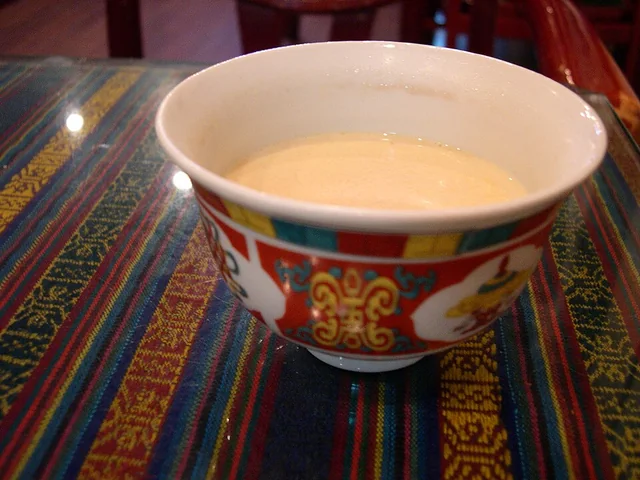

Photo adjustments
EXIF orientation applied where present; resized proportionally to at most 640 px on the long edge and encoded as WebP. No crop, retouching, recoloring or subject changes.
Tea blended with butter and salt; savoury and rich, unlike a sweet milk tea. Try it as a drink, without treating it as altitude medicine.
How it is made
Strong tea is blended with butter and salt until the fat is dispersed through the liquid. It is served warm and may be replenished during a meal or visit.
Flavour & texture
The flavor is savory, tea-bitter and rich, with a smooth fatty mouthfeel rather than the sweetness of commercial milk tea.
Local roots & traditions
Butter tea is central to many Tibetan food and hospitality traditions and also accompanies barley flour. It should be understood as a drink and food pairing, not an altitude treatment.
How to order Butter tea
Start with a small cup and sip slowly.
More dishes to compare
Explore related local specialties and compare their names, preparation notes and ordering guidance.
Lhasa sweet tea 拉萨甜茶 →
Strong black tea is mixed with milk and sugar, then kept hot for pouring into small cups. The milk type and sweetness vary between teahouses. The drink is mellow, sweet and milky, with enough tea strength to remain noticeable beneath the dairy.
Tibetan butter-and-curd cake 藏式酥酪糕 →
The ingredients are worked into a cohesive sweet or rich cake-like preparation and portioned for serving. Expect a dense dairy richness with a different texture from an airy baked sponge cake.
Questions before you order
What name should I show when ordering?
Show 酥油茶 for Butter tea. Start with a small cup and sip slowly.