

Highland-barley flatbread 青稞饼
Highland-barley flatbread (青稞饼) is a Tibetan barley-based flatbread with a grain-forward texture and kitchen-to-kitchen variations in flour, sweetness, fillings and cooking method. In Lhasa, treat it as a food to ask for at a Tibetan restaurant or tea house, not as a dish with one fixed recipe or one guaranteed shop.
Tap any red Chinese text to hear it in Mandarin.
What to look for
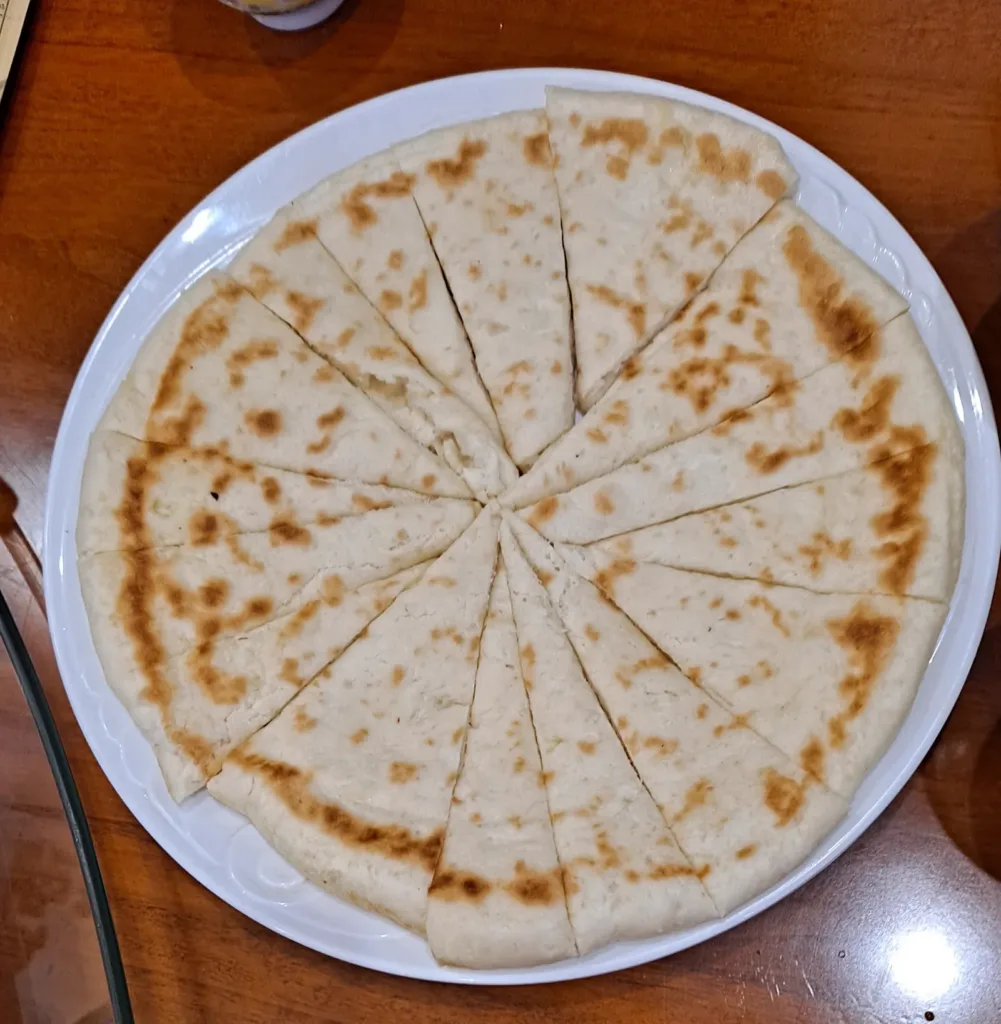
青稞饼 is best understood as a cooked flatbread built around highland barley flour. A 2026 food feature from Shannan’s culture-and-tourism bureau describes it as a portable, easy-to-eat dry food and pairs a griddled cake with butter tea. That practical pairing helps explain why it belongs beside a hot drink rather than only on a formal restaurant menu.
Highland barley is not a decorative label. It is one of Tibet’s important food crops, with cultivation documented in the Lhasa area as well as other parts of the plateau. The grain also connects this bread to tsampa, the roasted-barley flour food described by the Smithsonian as a Tibetan Plateau staple when mixed with butter and water. Tsampa is mixed and shaped in a bowl; 青稞饼 is a bread-like preparation that is shaped and cooked. They share a grain tradition but are not the same dish.
Look for a warm, substantial piece with a toasted grain aroma and a firm or crisp edge. A documented commercial process specifically aims for a crisp texture, but that does not make every household or tea-house version identical. Do not use the name to predict one exact crumb: some versions are plainly savoury, while others are sweetened, enriched with fat, or filled.
How it is made
The dependable description is simple: barley flour is moistened, worked into a dough or dough-like mixture, shaped, and cooked. A published Tibetan food patent records one commercial-style process that grinds barley, adds water, cooks the mixture through staged heating, forms it, and may finish it by baking. It allows barley to make up at least 80 percent of the raw material and describes a possible all-barley version. That is a documented production method, not a universal Lhasa recipe.
The same patent lists possible additions such as sugar, wheat gluten, egg, oil and salt. Other kitchens may blend barley with wheat or use dairy or a filling. The useful conclusion for a visitor is not a fixed ingredient list but a question to ask before ordering: what is in this batch, and was it cooked on a griddle or in an oven? Recipes and serving styles vary between kitchens.
Flavour, texture and dietary questions
Expect the barley to remain noticeable rather than disappearing into a soft wheat-bread profile. A plain piece can be grainy and dense; added oil or butter can make it richer, while sugar or a filling moves it toward a snack or breakfast pastry. It is natural to drink it with butter tea, but that does not mean butter or dairy is necessarily baked into every piece.
Show the Chinese name 青稞饼 Qīngkē Bǐng when ordering. You can ask: 这是青稞饼吗?是原味、甜味还是夹馅?里面有小麦粉、鸡蛋、奶或酥油吗? (“Is this qingke bing? Is it plain, sweet or filled? Does it contain wheat flour, egg, milk or butter?”) Ask whether it is served warm. Do not assume that a plain-looking cake is vegetarian, dairy-free or gluten-free; check the recipe and possible cross-contact if that matters to you.
Tibet entry and respectful eating
For visitors travelling on foreign passports, a restaurant menu or a dish article cannot establish permission to enter Tibet. Arrange the current Tibet entry permit or entry-confirmation process and reception arrangements through an appropriately licensed Tibet travel provider and official channels before travel. A 2026 notice published through the Xizang culture-and-tourism system lists an Entry-to-Tibet Confirmation Letter among the documents required for foreign tour groups applying under that programme. This confirms that a separate entry-confirmation process exists in a relevant current administrative context; it is not a complete statement of every traveller’s rules.
In a tea house, ask before photographing people or food preparation, and treat ordinary diners as residents rather than part of a performance.
Where to eat it
You can find Highland-barley flatbread all over Tibet (Xizang), so there is no need to seek out one particular restaurant. To find one near you, search for “青稞饼” in Meituan (美团) or Amap (高德地图) and check recent reviews, distance and opening hours.
More dishes to compare
Explore related local specialties and compare their names, preparation notes and ordering guidance.
Tsampa 糌粑 →
Roasted barley is ground into flour and mixed with tea, butter or other dairy ingredients to make a cohesive dough. Diners may combine it in the bowl by hand according to local practice. The flavor is distinctly toasted and grainy, with richness from butter and a texture that changes with added liquid. It is substantial rather than a light powder garnish.
Tibetan broth noodles 藏面 →
Prepared wheat noodles are served in a savory meat broth, commonly with yak or beef components and small toppings. The noodle-making and cooking method can give them a firmer texture than many Chinese soup noodles. The broth is meaty and warming, with relatively straightforward seasoning. The noodles may retain a firm center as part of the style.
Sources & reading
Recipes and servings vary between kitchens.
Image credits & notes (1)
- Sliced highland-barley flatbread (青稞饼) served on a plate at Huang Hada in Jiuzhaigou County, a regional reference photograph for the dish rather than a Lhasa venue photo. Photo: EditQPhoto: CC BY-SA 4.0