

Boiled Smoked Horse Meat 煮熏马肉
Boiled Smoked Horse Meat is featured among the local specialties of Xinjiang.
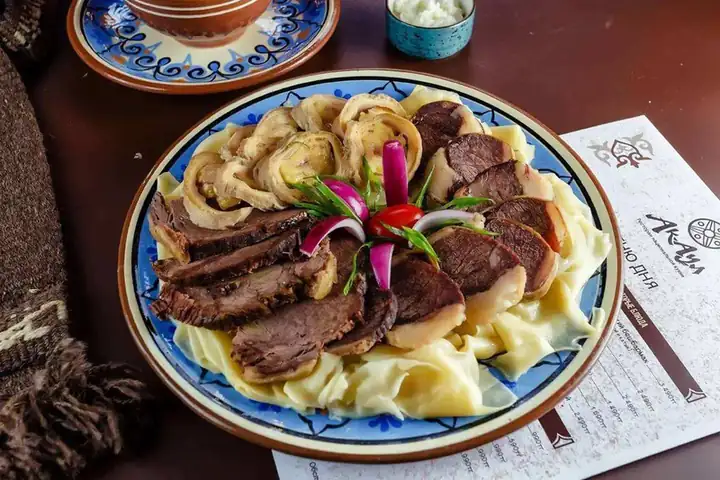
Image notes
Resized for the web; the photo itself has not been edited.
Boiled Smoked Horse Meat (煮熏马肉) is a Xinjiang meat entry whose name describes a sequence: 煮 means boiled, 熏 means smoked and 马肉 is horse meat, so cured meat is simmered before serving.
The second stage
This is the second stage of a preserved product. The meat is salted and smoked first, then simmered in water until it softens enough to slice, which is what the 煮 in the name adds. Boiling also pulls some salt out of the cure and turns a dense, chewy piece into something closer to a hot meat dish, and the broth is often served alongside.
Smoke, softened by the pot
The smoke is still evident but softer than in the cold cured slice, and the meat is more tender and less aggressively salty. Because the simmering liquid carries some of the cure away, the flavour is rounder and the texture is sliceable without being dry. The dish is served hot with simple seasoning, so the smoke remains the leading note.
One preparation, two names
The catalogue files 煮熏马肉 under Xinjiang, and the neighbouring 熏马肉 entry shows the same product before the boiling step. The two names together describe one preserved preparation and its two serving forms, while the region marks where the meat is catalogued. Ask whether the boiled version is served with its broth, because that changes the plate.
Cured meat and water
Cured horse meat and water are the base, with onion, a few spices or a root vegetable sometimes added to the pot. Because the meat is already salted and smoked, the broth can be salty too, and a dip adds more. Ask about the salt level and ask whether the broth is served, so you can plan the rest of the meal.
Ask about the broth
Ask 带汤吗 (does it come with broth) and 咸不咸 (is it salty) before ordering, because this is a preserved meat and the salt is high. Ask for it sliced rather than in large pieces if the table is sharing, and ask how it should be eaten. It pairs well with plain rice, noodles or flatbread.
Hot, sliced and confident
The meat arrives hot in slices or pieces, sometimes in its broth, and is eaten with a dip or with the broth spooned over rice. Take small pieces, because the flavour is concentrated, and keep the meat warm so it stays tender. If a broth is served, drink it at the end rather than at the start.
The simmering liquid itself is worth keeping, because it takes on both smoke and salt from the meat. Cooking rice or noodles in it afterwards is a practical way to finish the meal without leaving the pot behind.
More dishes to compare
Explore related local specialties and compare their names, preparation notes and ordering guidance.
Smoked Horse Meat 熏马肉 →
Smoked Horse Meat (熏马肉) is the neighbouring Xinjiang entry for the same preserved meat before it goes into the pot. Comparing the two names shows that 煮 is the only difference between a cold cured slice and a hot simmered dish, and that the same preparation can sit on a menu twice under two service forms.
Questions before you order
Why boil 煮熏马肉 if it is already smoked?
Simmering softens the cured meat so it can be sliced and eaten hot, and it removes some of the salt. Without that step the piece stays dense and very salty.
Does the broth come with the meat?
Often, but the record does not settle it. Ask 带汤吗 if you want the broth, since it carries both flavour and salt from the cure.
Sources & reading
The supplied food list supports this name and regional association. The culinary terms below are explained as menu vocabulary; a local recipe, origin story and venue availability have not been independently verified.