

Mongolian Milk Tea 蒙古奶茶
Mongolian Milk Tea is featured among the local specialties of Xinjiang.
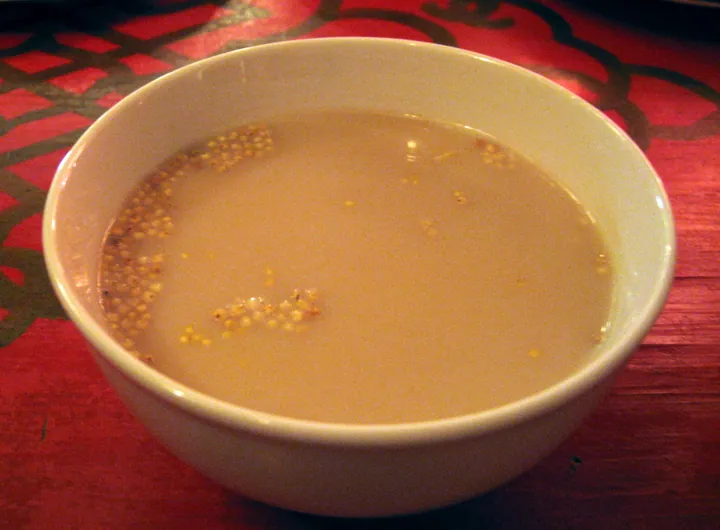
Mongolian Milk Tea (蒙古奶茶) is Mongol milk tea, in Mongolian сүүтэй цай: tea with milk, salted rather than sweetened, set down for Bortala Mongol Autonomous Prefecture.
Brick tea, milk and salt
The base is brick tea. The source notes that Mongol families particularly favour 青砖茶 and 花砖茶, the pressed brick forms of tea that travel and store well, and that the finished drink is a salted milk tea. Brick tea is dense and is broken up and boiled to draw out its strength before the milk goes in, which is why the drink is cooked rather than simply brewed in a pot of hot water.
A savoury drink
The important thing for a visitor is that this tea is salty, not sweet. The source's phrase 咸奶茶 is literal: salted milk tea. Expect a warm, slightly creamy drink with the deep, tannic body of brick tea underneath and salt carrying the aroma, so it works with food in the way a broth does rather than the way a dessert drink does.
Tea at every meal
The source describes milk tea as an important part of Mongol food culture and a common drink in the etiquette of receiving guests, and records the strength of the habit plainly: milk tea is drunk with all three meals of the day. It also describes the welcome itself – when a guest arrives, the host pours the tea personally to show that the visitor is welcome. Its recorded home, Bortala Mongol Autonomous Prefecture in Xinjiang, sits within that Mongol setting.
Ingredients and dietary questions
Tea, milk and salt are the structure of the drink, which means dairy is present by definition and the drink is not suitable for a dairy-free diet unless a substitute is used. The salt level is a genuine variable, and it is high enough in some households that a first-time drinker needs a moment to adjust. Ask whether the milk is fresh or dried before the bowl is poured if you are uncertain about dairy.
How to ask for it
Say 蒙古奶茶 or simply 奶茶 in a Mongol household, and expect a bowl rather than a cup. Ask 咸的还是甜的 if you are not sure whether the version in front of you is salted, because the same phrase 奶茶 covers sweetened milk tea elsewhere in China. A second bowl is normal hospitality, so leaving a little in the bowl does not end the serving.
How it is drunk
Milk tea is drunk hot, in bowls, throughout the day and alongside food – the source's point that it appears at all three meals is the practical guide here. It is also the drink of arrival: a bowl poured by the host is the gesture that opens a visit, which is why accepting and drinking it matters more than the taste on a first encounter.
More dishes to compare
Explore related local specialties and compare their names, preparation notes and ordering guidance.
Salted Milk Tea 奶茶 →
Salted Milk Tea (奶茶) is the general milk-tea name, which in much of China means a sweetened tea with milk, hot or iced. 蒙古奶茶 is the specific Mongol form of the same phrase: salted, brewed from brick tea, and drunk in bowls with meals rather than as a sweet treat. Comparing them shows why the general name alone does not tell a drinker what will arrive.
Questions before you order
Is Mongol milk tea sweet?
No. The source calls it 咸奶茶, salted milk tea, and records that Mongol families drink it with all three meals. If you are used to sweet milk tea, expect a savoury drink instead and taste it before adding anything.
What tea goes into 蒙古奶茶?
Brick tea. The source says Mongol people are particularly fond of 青砖茶 and 花砖茶, the pressed brick teas, which are boiled before the milk is added to make the drink.
Source introduction: Wikipedia contributors: 蒙古奶茶 · CC BY-SA 4.0. English translation and adaptation of the cited introduction, with additional preparation and ordering guidance.

Sources & reading
Named culinary source added during the audit. Source origin and local variants remain distinct; this is not a claim that all preparations have been individually verified.
Image credits & notes (1)
- A bowl of Süütei tsai (Mongolian salted milk tea), the everyday beverage of Mongolian communities. · 蒙古奶茶(咸奶茶),蒙古族日常饮品。 Source-recorded photograph date: 10 February 2008 (upload date).Photo: user:takoradee · CC BY-SA 3.0Resized for the web; the photo itself has not been edited. Thumbnails may show a cropped view.
